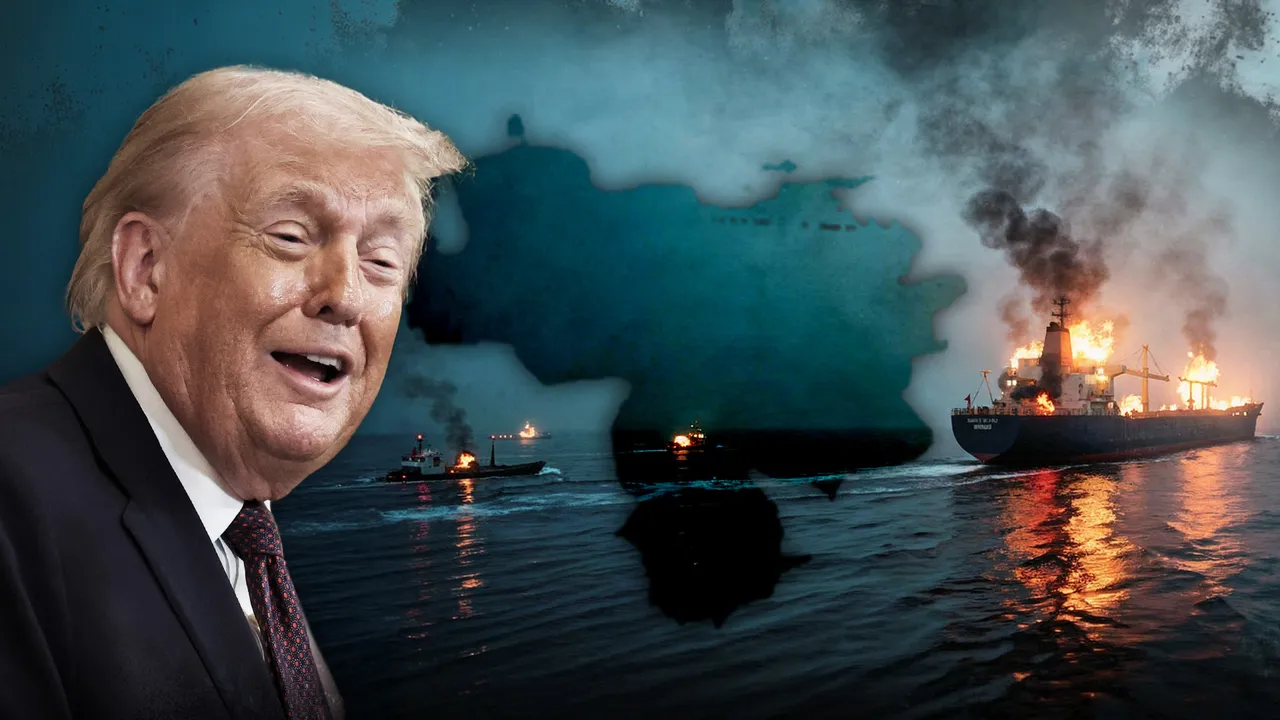
While President Donald Trump has cast the US military strike and removal of Venezuelan leader Nicolas Maduro as part of a sweeping campaign against drugs, international reports and expert assessments suggest the narrative is thinner than the rhetoric.
The US case rests on narcotics and the smuggling routes that are used to smuggle illicit substances into the country.
Two substances dominate Washington’s claims and America’s overdose crisis: cocaine and fentanyl. Their origins, production chains, and path into the United States are well-documented. And they point largely away from Venezuela.
Venezuela is neither a major producer of cocaine nor the main transit route through which these narcotics enter the US.
“The most common misconception is the role Venezuelan criminal organisations play in international trafficking,” says Steven Dudley, the co-founder of InSight Crime, a think tank that investigates organised crime in the Americas.
“The Venezuelan criminal groups are not major international players; they are largely local,” he tells TRT World.
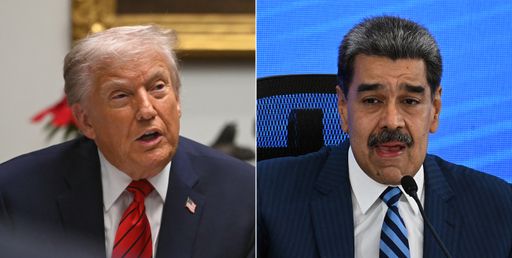
The January 3 military operation in which Maduro was abducted, leaving nearly 100 people dead, was followed by a series of controversial airstrikes on boats in the Caribbean Sea and the Pacific Ocean.
The Trump administration alleged the vessels were being used to smuggle drugs into the US. Around 35 such airstrikes were carried out between September 2025 and January 2026, killing dozens of people, their final moments captured by drone-mounted thermal cameras.
But geography complicates the claim about the severity of Venezuela’s involvement.
According to The Washington Post, most of the strikes took place in the Eastern Pacific, near the coasts of Colombia and Mexico. Venezuela’s coastline lies on the Caribbean Sea, part of the Atlantic Ocean.
Where and how cocaine is produced makes case against Venezuela even weaker.
Almost all of the world’s cocaine is produced and manufactured in the Andean region, primarily in Colombia, Peru, and Bolivia.
The UN Office on Drugs and Crime (UNODC) publishes a comprehensive global assessment of narcotics production and trafficking routes each year. Venezuela is not listed among the principal producers of cocaine.
References to the country appear sparingly in UNODC reports, largely in discussions of regional transit rather than production.
UNODC’s World Drug Report 2025 includes a visualisation of trafficking routes showing that Venezuela is not the primary corridor through which cocaine reaches the United States.
In response to questions from TRT World, the UNODC press office referred to its latest publications, including the World Drug Report and the Global Report on Cocaine.
“Venezuela accounted for 43.7 tonnes of cocaine seized in 2023, representing 1.9 percent of global seizures,” the UNODC told TRT World.
Even the US Drug Enforcement Administration’s (DEA) own fact sheet states that most cocaine entering the US passes through Mexico.
Professor Guadalupe Correa-Cabrera, an expert on Latin American drug cartel networks, says that while Venezuela is used as a trafficking route, the scale and timing of its role remain contested.
She notes that the US narrative may reflect geopolitical interests as much as drug statistics.
At the same time, Colombia, Venezuela’s neighbour and the world’s largest cocaine producer, has been central to US drug policy for decades.
Since returning to office in January 2025, Trump has declared a renewed war on narcotics. In 2024, more than 80,000 Americans died from drug overdoses, most linked to synthetic opioid fentanyl, according to the US Centers for Disease Control and Prevention.
Unlike cocaine, fentanyl is not grown.
Most of the world’s fentanyl is manufactured in Mexico, using precursor chemicals largely sourced from China. From there, the final product is smuggled across the US-Mexico border.
Venezuela plays a little role in this supply chain.
Trump himself has suggested the operation against Venezuela was about more than drugs.
He has said the US intends to “run” Venezuela and even posted an image on Truth Social referring to himself as the country’s “acting president”.
He has also met with executives from Exxon, Chevron, and Conoco in Washington, seeking to encourage up to $100 billion in investment in Venezuela’s oil sector.





Within Venezuela, cocaine use remains relatively low. UNODC estimates past-year prevalence at 0.82 percent of the population. Seizures of fentanyl have been minimal.
Neither a cartel powerhouse
Experts broadly agree that Venezuela functions, at most, as a marginal transit, storage, and departure point for cocaine.
Quantifying trafficking flows is inherently difficult, Dudley notes, because seizure data is uneven and enforcement priorities shape what is detected.
Even the much-cited Cartel de los Soles is described by him as a loose network tied to state structures rather than a vertically integrated cartel controlling international routes.
“Other, perhaps more famous groups like the Tren de Aragua, do not play a role in international drug trafficking,” he says.
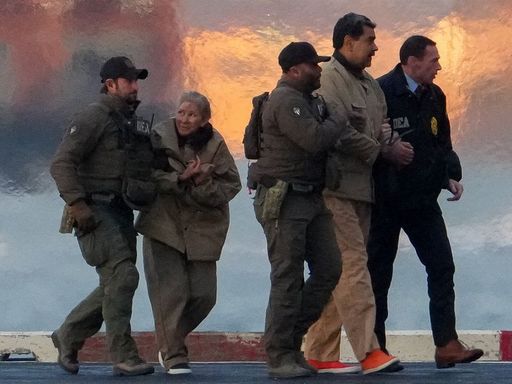
In a 2020 indictment, US prosecutors accused Maduro and senior officials of belonging to the so-called Cartel de los Soles, repeatedly describing it as a drug trafficking organisation.
But in a revised indictment unsealed on January 3, 2026, the US Justice Department quietly abandoned language portraying it as a structured cartel.
Instead, the indictment refers to a system in which “powerful Venezuelan elites enrich themselves through drug trafficking and the protection of their partner drug traffickers”.
Experts have long argued that Cartel de los Soles is not the name of a real cartel but Venezuelan slang dating back to the 1990s, used to describe officials accused of corruption.
“Many people have questioned the existence of Cartel de los Soles, and even within the US government, different terms are being used (for the Cartel) at present,” Correa-Cabrera notes.
Between those uncertainties lies a deeper issue. Not whether illicit networks exist, but how political power, geography, and enforcement priorities shape the story that gets told.
“That Venezuela is a route for drug trafficking does seem to be true,” Correa-Cabrera says. “The question is at what point it became more connected to drug trafficking — and whether this happened with Chavismo or before. It’s very difficult to tell.”
US, European reports mirror global findings
European and US research aligns with that assessment.
A 2024 brief by the European Parliamentary Research Service found coca cultivation concentrated overwhelmingly in Colombia, followed by Peru and Bolivia.
Research by the Washington Office on Latin America shows that cocaine flows through Venezuela rose alongside Colombian production between 2012 and 2017, then declined as production slowed.
“What we see is that investigations are more targeted against Venezuela,” Correa-Cabrera explains. “That makes this a difficult question to answer honestly, because enforcement attention shapes the evidence that gets produced.”
The DEA’s latest assessment identifies Mexican criminal organisations as the primary drivers of fentanyl availability and overdose deaths in the US. It also confirms Colombia as the main source of cocaine, followed by Peru and Bolivia.
Venezuela is not mentioned.
Approximately 84 percent of cocaine samples seized in the US in 2024 were of Colombian origin.
Drug policy and geopolitics
Correa-Cabrera says the portrayal of Venezuela as a major hub reflects political framing as much as law enforcement data.
“Drug trafficking and illicit economies have historically shaped US policy toward Venezuela,” she says. “But many people have questioned that framing. Even within the US government, different terms are being used.”
“DEA investigations and US law enforcement participation abroad have been used for geopolitical purposes,” she says. “This is not limited to Venezuela. It has happened in Mexico and elsewhere in the region.”
She points to cases such as Honduran former president Juan Orlando Hernández, who was prosecuted, convicted, and then later pardoned by Trump.
She adds that US investigations often intensify around countries of strategic importance, including those with vast oil reserves like Venezuela.
“This is what the United States is presenting,” she says. “But that doesn’t mean the scale has changed in the way it’s being portrayed.”
Strip away the rhetoric, and the evidence points elsewhere. Cocaine flows from the Andes. Fentanyl from Mexico. Both enter the US through the Pacific and the southern border. Venezuela is not the source. It is the alibi.