 Eisa Dafallah
Suleiman Abdeljabbar remembers when Kandowa Forest was so dense with acacia and mahogany that the walk from his neighbourhood in Majok felt like entering another world.
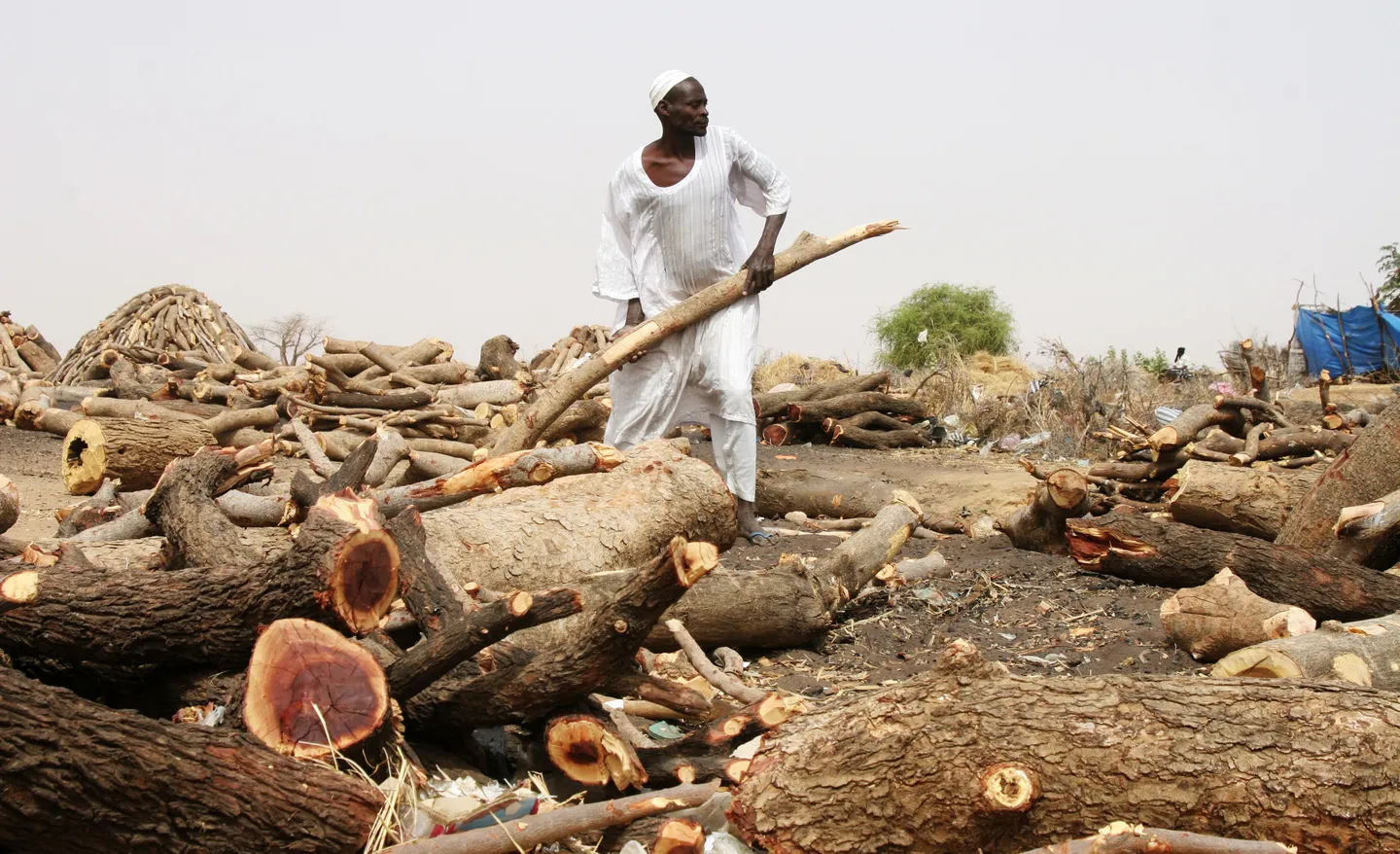
For years, he made the seven-kilometre trek west from his home, carefully selecting only the dead and fallen trees to sell as firewood in the markets of Nyala, South Darfur’s capital.
"In the beginning, we only went after the dry trees," said Abdeljabbar, 47, his hands calloused from decades of labour. "No one wanted to destroy the forest. We just took what nature had already given up."
By 2015, Kandowa Forest – all 1,385 hectares of it – had vanished entirely.
The disappearance of forests like Kandowa reflects a broader environmental catastrophe unfolding across South Darfur, where more than 70 percent of tree cover has been lost over the past decade, according to local forestry officials.
What was once one of Sudan's densest woodland belts, with forests blanketing 63 percent of the state, has been reduced to scattered groves and bare earth, stripped by years of conflict, mass displacement, and an acute shortage of cooking fuel.
According to locals, forests in South Darfur are among the region’s most vital natural resources, underpinning the state’s economic, social, and environmental life.
The trees help stabilise soil, reducing erosion caused by heavy rains and strong winds, while also moderating temperatures and increasing humidity, conditions that support both rain-fed and subsistence agriculture for communities who rely on the land for their livelihoods.
The violence that erupted between Sudan's army and the Rapid Support Forces in April 2023 has only accelerated the destruction, pushing desperate families deeper into what remains of the forests. With gas supplies cut off and charcoal prices soaring fivefold, survival itself now depends on felling trees.
A crisis decades in the making
The decline began long before the current war. The Darfur conflict that erupted of 2003 triggered waves of displacement that put unprecedented pressure on the region's woodlands. Kandowa Forest, planted in 1956 and once stretching across 1,355 hectares of mahogany, combretum, and acacia, saw its nurseries and wells destroyed in the violence.
Across South Darfur, officials acknowledge that 73 reserved forests have been degraded or erased. Global Forest Watch, an online forest monitoring and alert system, has recorded the loss of 10,500 hectares, roughly the size of Barcelona, over the past two decades alone.
The crisis reached a breaking point when fighting shut down the Al-Jili oil refinery near Khartoum last year. The facility had supplied 50 percent of Sudan's cooking gas. Almost overnight, families who had relied on affordable gas cylinders found themselves with no choice but to return to firewood and charcoal.
"That shortage has driven many young men into the forests to cut down trees and sell the wood, either for carpentry or as fuel," said Shakir Omar, 41, an environmental studies teacher in Nyala.
A single bag of charcoal now costs around $8.3, almost eight times the $1 it used to cost before the war. For young men facing unemployment in a collapsing economy, the forests offer one of the few remaining sources of income.
Omar said many in his neighbourhood faced a grim choice: either join the fighting or head to the forests with an axe.
Massive displacement has compounded the pressure. The sprawling Kalma camp, home to tens of thousands who fled the Darfur conflict, sits just two kilometres from where Kandowa Forest once stood. Its residents, like displaced people throughout the region, depend almost entirely on wood and charcoal for cooking and heating.
"The demand for wood in camps like Kalma was enormous," said Khaldi Fathi Salim, an agricultural engineer with South Darfur's Ministry of Agriculture. "Entire forests were wiped out to meet the need for shelter, cooking and heating."
“When the forests die, we die too.”
Abdeljabbar said the transformation of the firewood trade has haunted him. Before 2003, only a handful of people in Nyala made their living selling wood. After the conflict began, hundreds joined the business as traditional livelihoods disappeared.
Now, with most accessible forests already gone, traders who once prided themselves on harvesting only dead wood have been forced to cut living trees. The nearest forests lie increasingly far from the city, and what remains grows thinner each season.
"We don't want to harm the land," Abdeljabbar said. "But when the forests die, we die too."


Environmental experts say this pattern has repeated itself across the region. Aladdin Yousif, who has studied Sudan's forests for years, noted that Karadeto Forest in Central Darfur, Tor Forest in West Jebel Marra, and dozens of others have been systematically cleared as conflict persisted.
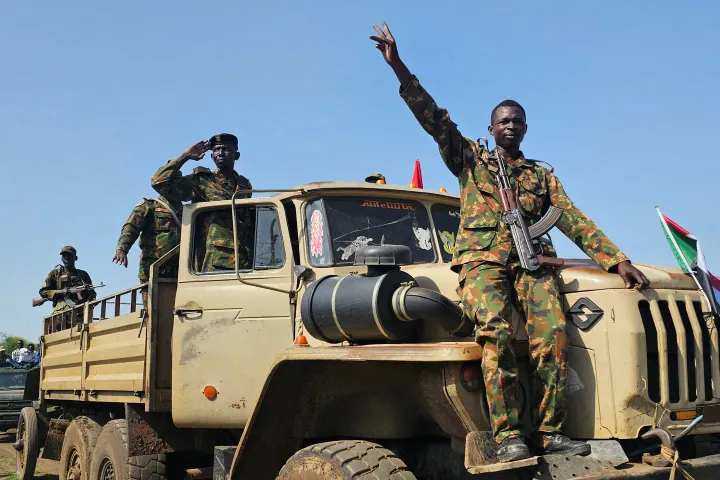
Even Sudan's armed forces contributed to the destruction, he said. Some military units felled trees to clear roads for operations in the Jebel Marra mountains, while others engaged in commercial logging, capitalising on the region's valuable coniferous timber.
"Conflict doesn't just destroy lives," Yousif said. "It destroys the very land that sustains those lives."
Renewed fighting that began in April 2023 has brought fresh devastation. Neem Forest in South Darfur, where families once rested in the shade during the long dry season and children played beneath hanging fruit on branches, has been stripped bare. In Ad al-Fursan, about 67 percent of tree cover vanished in just two years.
With environmental and forestry offices paralysed by war, tree cutting now happens without permits or oversight, Omar said. Local residents confirm that regulations have collapsed.
"No one is allowed to touch a single tree without a permit from the Forests Department," said Omar Adam, who lives near one of the remaining forests. "But now, with the war and the collapse of local administration, there's no one to stop them. People are just taking advantage of the chaos."
Salim, who also serves on the presidential council of the Parallel Founding Alliance government, described her state as facing "an unprecedented environmental collapse." The consequences, she warned, extend far beyond South Darfur's borders.
Deforestation releases decades of stored carbon into the atmosphere, contributing to global warming, while disrupting rainfall patterns, accelerating soil erosion, and destroying habitats.
South of Nyala, in Buram, even the acacia and talh trees that once fueled Sudan’s Gum arabic trade are disappearing, threatening the livelihoods of farmers and herders.
"Without trees, the land dries, the wind strips the soil, and the crops fail," Salim said. "It's a chain reaction."
In Ton, a rural area about 30 kilometres west of the city, she estimates that forests covering nearly 9,700 hectares have almost completely vanished, while those in Hamada and Kass have suffered widespread destruction.
A difficult path forward
Restoring South Darfur's forests amid ongoing violence, state collapse, and deep poverty presents an enormous challenge, but experts believe some measures could slow the destruction.
Yousif advocates for introducing alternative income sources to reduce pressure on forests, promoting biogas and improved cookstoves to lessen dependence on wood fuel, and encouraging community-led reforestation through local farming groups.
"People in Darfur have always lived close to their land," he said. "If we can give them the means to protect it, they'll be the first to bring it back."
Salim outlined a more comprehensive approach: making alternative energy sources like gas and solar power affordable, launching large-scale reforestation with drought-resistant native trees, and enforcing stronger environmental laws to combat illegal logging and timber smuggling. Public education about why forests matter, she added, is as vital as enforcement itself.
Ultimately, she argued, environmental recovery depends on addressing the conflict that drives the destruction.
"If people have no peace, no jobs, no energy, they will keep cutting trees," she explained. "The war on the environment will only end when the war on people does."
The Rapid Support Forces, which have controlled South Darfur since October 2024, issued a statement in response to public outcry, denying involvement in recent logging and insisting that "only two trees" had been cut, both already dead from recent fighting.
For many residents of Nyala, such assurances ring hollow.
"It always starts with a few trees," Adam said, shaking his head. "Then one day you wake up, and the forest is gone."
This article is published in collaboration with Egab.