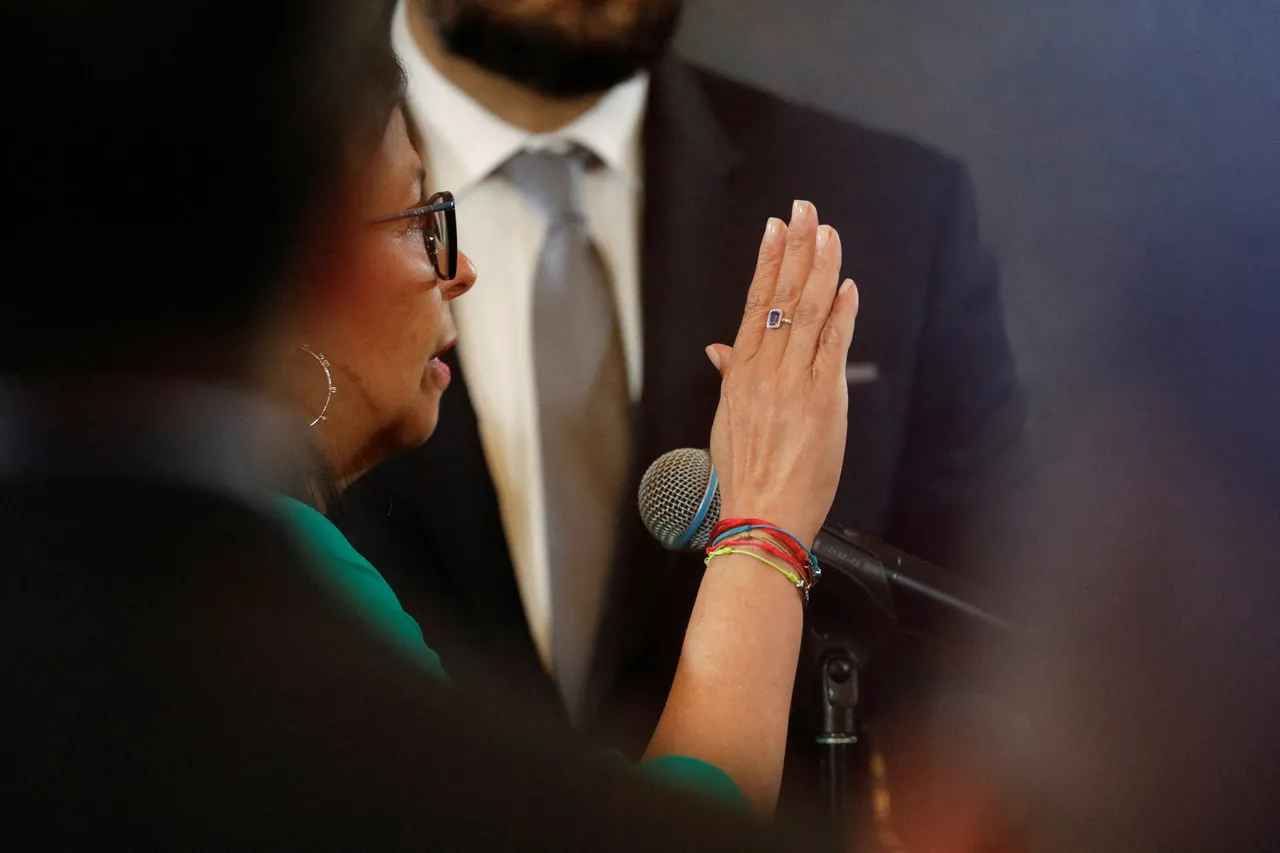
The EU will not recognise Venezuela's newly sworn-in interim President Delcy Rodriguez, but it will continue targeted engagement with the country's authorities, an EU Commission spokesperson said on Tuesday.
Speaking at a midday press briefing, Anitta Hipper reiterated the EU's longstanding position that Venezuelan authorities "derive their mandate from an electoral process that failed to respect the will of the people for democratic change."
Hipper emphasised that the EU supports an inclusive dialogue leading to a democratic transition in Venezuela, involving all actors committed to democracy, including "democratically elected opposition leaders."
She said the EU does not recognise the legitimacy of Nicolas Maduro or Delcy Rodriguez, while continuing limited engagement with Venezuelan authorities to protect its interests and principles
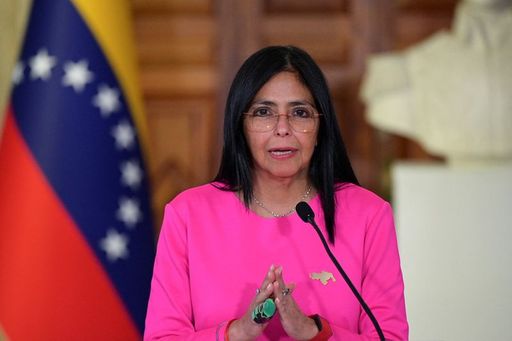
The remarks came amid political turmoil in Venezuela following Rodriguez's appointment and a US military operation that abducted President Maduro.
Maduro and his wife, Cilia Flores, are currently held in the US, facing federal charges related to drug trafficking and alleged cooperation with terrorist-designated groups.
Greenland Hipper also addressed security concerns in the Arctic, underscoring that "territorial integrity and sovereignty are fundamental principles of international law."


"These are principles which are key, not only in the eyes of the European Union, but in the eyes of the nations of the entire world. We would like to prove our unwavering solidarity with Denmark and the people of Greenland," she added.
US President Donald Trump has repeatedly expressed his desire to take control of Greenland, a self-governing territory within Denmark, and has not ruled out doing so with military force.
A day after the US military operation in Venezuela that abducted Maduro, Trump on Sunday renewed his calls for an American takeover of Greenland for the sake of US security interests.
Several European countries, as well as the EU, voiced strong support for Denmark and Greenland on Monday, rejecting any suggestion that the island’s future could be decided by outside powers and stressing respect for sovereignty and territorial integrity.
When asked about the EU institutions' absence in the recent joint statement on Greenland released by six member states' leaders and the UK prime minister, the spokesperson noted that the EU does not typically comment on statements immediately after their release, but reaffirmed that its position on key principles "remains clear."
Hipper emphasised the importance of working closely with allies to ensure security across the Arctic region, describing collaboration with the bloc as “essential” in maintaining stability and support in the area.