 Umer Bin Ajmal
New Delhi would like to be perceived as South Asia’s net security provider and eventually the natural leader of a stable, prosperous neighbourhood. Yet from the Bay of Bengal to the Himalayas, India’s meddling and policies have fuelled anger.
India’s heavy-handed tactics — from unilaterally suspending the Indus Waters Treaty with Pakistan to imposing economic blockade on Nepal, and political interference in Bangladesh — are breeding resentment in smaller states.
The starkest evidence of Indian hegemony and the backlash it invites is visible in Bangladesh.
A troubled relationship
For decades, Bangladesh and India enjoyed what leaders in New Delhi proudly called their “closest partnership” in South Asia. India supported Bangladesh’s independence in 1971, when the country separated from then West Pakistan, backed the popular Awami League party politically, and enjoyed deep influence over Dhaka’s security and economic policies.
That carefully built strategic capital collapsed in 2024, when Bangladesh’s then Prime Minister Sheikh Hasina, who was widely viewed as India’s most trusted political ally in the region, was ousted after a student-led uprising against the corrupt and brutal political system.
Instead of standing with the people demanding their rights, New Delhi froze visas to Bangladeshis, slowed routine diplomacy and gave asylum to Hasina, who has been sentenced to death for the killing of people during the uprising.
Dr Nazmus Sakib, a political scientist at the University of Kentucky, pulls no punches. “It was India that enabled flagrant authoritarianism in Bangladesh, Sri Lanka, and the Maldives,” he tells TRT World.
According to Sakib, in Bangladesh, this has led public opinion to turn increasingly against India.
“Now that India is sheltering a convicted fugitive sentenced for crimes against humanity, it faces clear obligations under the bilateral Extradition Treaty,” Sakib says.
Bangladesh’s interim government has requested India to hand over Hasina, who was sentenced to death in absentia over a crackdown on the 2024 uprising that led to the deaths of over 1,400 people, according to the UN.
In the past, Bangladesh itself had honoured sensitive Indian requests, Sakib notes, including handing over Anup Chetia, one of the founding leaders of the United Liberation Front of Asom (ULFA), an armed separatist organisation operating in the northeast Indian state of Assam.
Dhaka’s decision to extradite him in 2015 was seen as a major goodwill gesture. But Sakib says India is highly unlikely to return the favour now by handing over Hasina.
“If India fails to fulfil its treaty obligations, it will signal that India is an unreliable ally.”
The damage to India’s reputation would be significant, he says. “Current and potential partners will observe this behaviour and adjust their expectations accordingly.”
Not so quiet on the Western front
Pakistan has been India’s number-one rival in the region ever since the two states emerged from British India in 1947.
The nuclear-armed neighbours have fought three major wars, primarily over the disputed region of Kashmir.
Although Pakistan’s ties with India have long been frozen, analysts say the situation has now deteriorated in unprecedented ways.
In 2025, New Delhi suspended the Indus Waters Treaty — the World Bank-brokered water-sharing agreement from 1960 that had survived three wars. The move shocked experts on both sides.
It came in the wake of a deadly terror attack in Pahalgam that New Delhi blamed on Pakistan, after which India launched cross-border strikes on multiple locations inside Pakistani territory, claiming to target alleged militant camps.
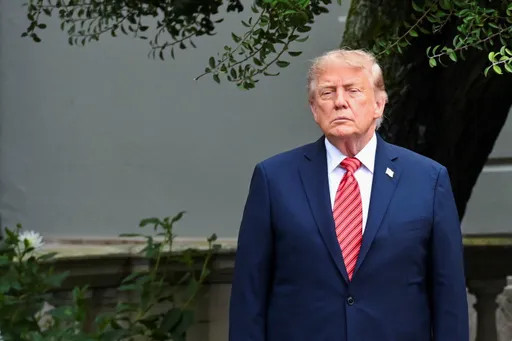
Islamabad rejected the accusations, condemned the Indian strikes, and retaliated with strikes of its own and shot down Indian jets, including a Rafale, arguing it was acting in self-defence. The tit-for-tat attacks threatened to escalate until US President Donald Trump announced that he had brokered a ceasefire between the two countries.
With diplomatic channels frozen, trade halted, and even the niceties of cricket — the region’s so-called gentlemen’s game — on hold, Islamabad sees little incentive for rapprochement.
Disputes aplenty
Fewer countries depict the ebb and flow of India’s neighbourhood dominance as clearly as Nepal.
Historically, Nepal was a Hindu kingdom closely aligned with India, with open borders and deep cultural ties. That changed after the 1996-2006 civil war, the rise of Maoist forces and the eventual abolition of the monarchy in 2008. Since then, Kathmandu has pursued a more independent foreign policy, much to the dismay of New Delhi.
The breaking point for public opinion came in 2015, when Nepal accused India of imposing an unofficial blockade during protests by Madhesi groups residing in the southern border region and maintaining close ties to India, who were unhappy with Nepal’s new constitution.
Fuel, medicine and essential supplies that flowed into Nepal from India ran dangerously low. India denied orchestrating the blockade, but the damage to its image was serious and lasting.
The 2025 political uprising in Nepal revived these resentments. Leaders seen as too close to New Delhi were swept aside, and the new administration revived China’s Belt and Road Initiative (BRI) projects that were shelved earlier. Kathmandu also renewed pressure on border disputes with India in Kalapani territory and Lipulekh pass.
Much of the anger centres on India’s construction of an 80-km road to the Lipulekh Pass, a strategic Himalayan route near the India-China-Nepal tri-junction. The pass is used for trade and as a pilgrimage route to Mount Kailash. Nepal argues that the road violates the 1816 Sugauli Treaty and encroaches on its territory.
This controversy helped fuel Nepal’s online “#BackOffIndia” mobilisation before the more recent version was seen in the Maldives.





Echoes of #IndiaOut
India and the Maldives have long maintained close strategic, military, economic and cultural relations.
But that all changed in 2023 when the island nation elected a new president, Mohamed Muizzu, whose campaign centred on moving the Maldives away from India’s sphere of influence.
The Maldives’ #IndiaOut campaign, which peaked around 2022-2023 and regained momentum under Muizzu, centred on allegations that India exerted undue influence over defence and domestic politics through its soldiers that were deployed on Maldivian soil.
Even though the number of Indian personnel was small, mostly helicopter and aircraft technicians, the political fallout was large.
Muizzu capitalised on this narrative, openly pushing for the withdrawal of Indian troops and turning to China for infrastructure and security partnerships.
Political tightrope
Sri Lanka’s nationalist and leftist politicians have often used anti-Indian rhetoric to win votes close to elections. This has strained diplomatic relations with India in the past.
The country’s 2022 economic collapse, triggered by a depletion of foreign reserves, soaring inflation, fuel and medicine shortages, and a political meltdown that forced the former leader Gotabaya Rajapaksa from office, was one of South Asia’s worst crises in decades.
During that period, India emerged as the first responder, providing $4 billion in credit lines, fuel shipments and essential supplies.
“In those desperate months, most accepted the narrative of India as the first responder, and their role cannot be understated,” says Malinda Meegoda, senior programme coordinator at Verite Research in Colombo.
But controversies soon followed.
One major flashpoint was the Adani wind-power project in Mannar and Pooneryn. Critics in Sri Lanka alleged that New Delhi lobbied heavily for the deal and that the tariff structure was significantly higher than local alternatives.

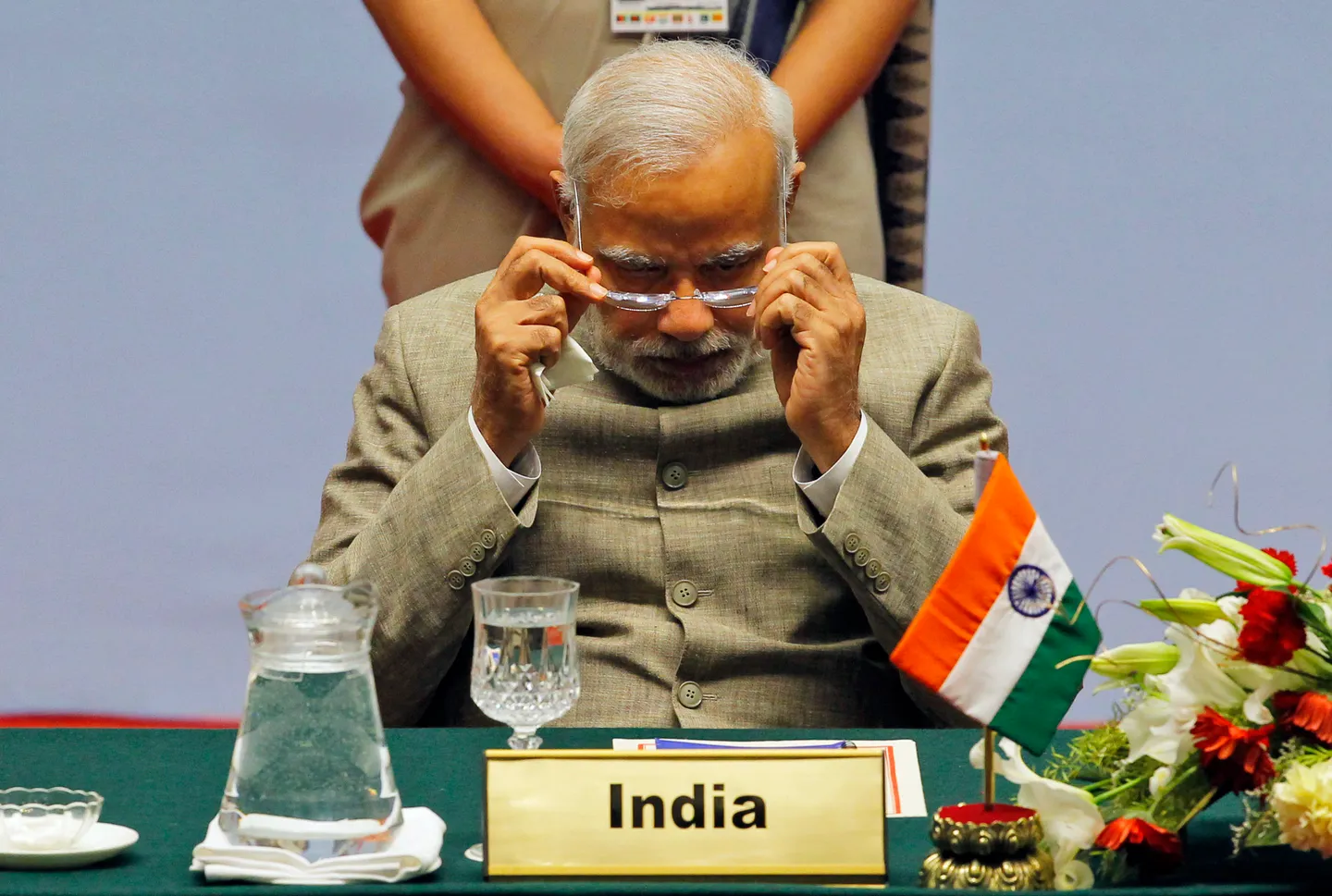
Opponents of Indian Prime Minister Narendra Modi argue that his relationship with Gautam Adani stretches back almost twenty years, to Modi’s time as chief minister of Gujarat — the home state they both share. They also accuse Modi’s government of shielding Adani and his business empire from scrutiny over alleged bribery and fraud, allegations that both men firmly reject.
There were also allegations that some Indian credit lines were used to repay older debts to Indian institutions before Sri Lanka’s formal default. Colombo has not clarified or commented on these claims.
These episodes, Meegoda says, “muddy perceptions”.
But he is quick to add that resentment towards the Adani projects may not have arisen entirely from anti-India sentiment, but also from concerns over transparency and perceived political influence.
“Both India and China have faced criticism in Sri Lanka for opaque financing, unsolicited proposals and poor oversight, which contributed to failed or stalled projects and public distrust,” he says.
Relations between India and Sri Lanka have been shaped by periods of warmth and strain, with the island’s civil war casting the longest shadow.
In the late 1980s, New Delhi deployed the Indian Peace Keeping Force after brokering an agreement between Colombo and Tamil separatists — a move that quickly entangled India in the conflict and damaged bilateral trust.
Ties took a different turn under President Mahinda Rajapaksa in the mid-2000s.
As Sri Lanka pushed to end the civil war between 2006 and 2009, India offered discreet support through intelligence sharing and diplomatic cover, even as it urged caution over civilian harm.
Once the fighting ended, however, Colombo’s growing embrace of Chinese-backed infrastructure projects reignited Indian concerns about Beijing’s expanding footprint in the Indian Ocean.
Even today, Sri Lanka walks a tightrope.
Its decisions to shelve the proposed India-Sri Lanka land bridge and revisit the Adani wind-power project show that Colombo wants to safeguard its economic autonomy.
At the same time, the Sri Lankan government quietly capped Chinese research-vessel visits, a strategy which analysts say is aimed at appeasing India’s security concerns.
“Sri Lanka is trying to avoid choosing sides, but its limited capacity, economic dependency and inconsistencies in diplomatic messaging make its non-aligned position vulnerable and sometimes incoherent,” says Meegoda.
‘A train wreck’
From Dhaka to Kathmandu, Colombo to Male, analysts say the strategic trajectory appears to be unmistakable, in the sense that the harder India squeezes, the faster neighbours look for another partner in the region.
This regional pushback comes at perhaps a critical moment for India’s global ambitions.
As New Delhi positions itself as a counterweight to Beijing and seeks a bigger voice in everything from the G20 to the UN Security Council, its immediate neighbourhood is increasingly sceptical of its leadership model.
India showcases humanitarian missions, maritime patrols and peacekeeping abroad. But at home, critics say, it behaves like a dominant regional power shaping domestic politics, defence choices and trade decisions of smaller states.
“I think Indian foreign policy in its neighbourhood in recent years is a train wreck,” Sakib says.