 Noureldein Ghanem
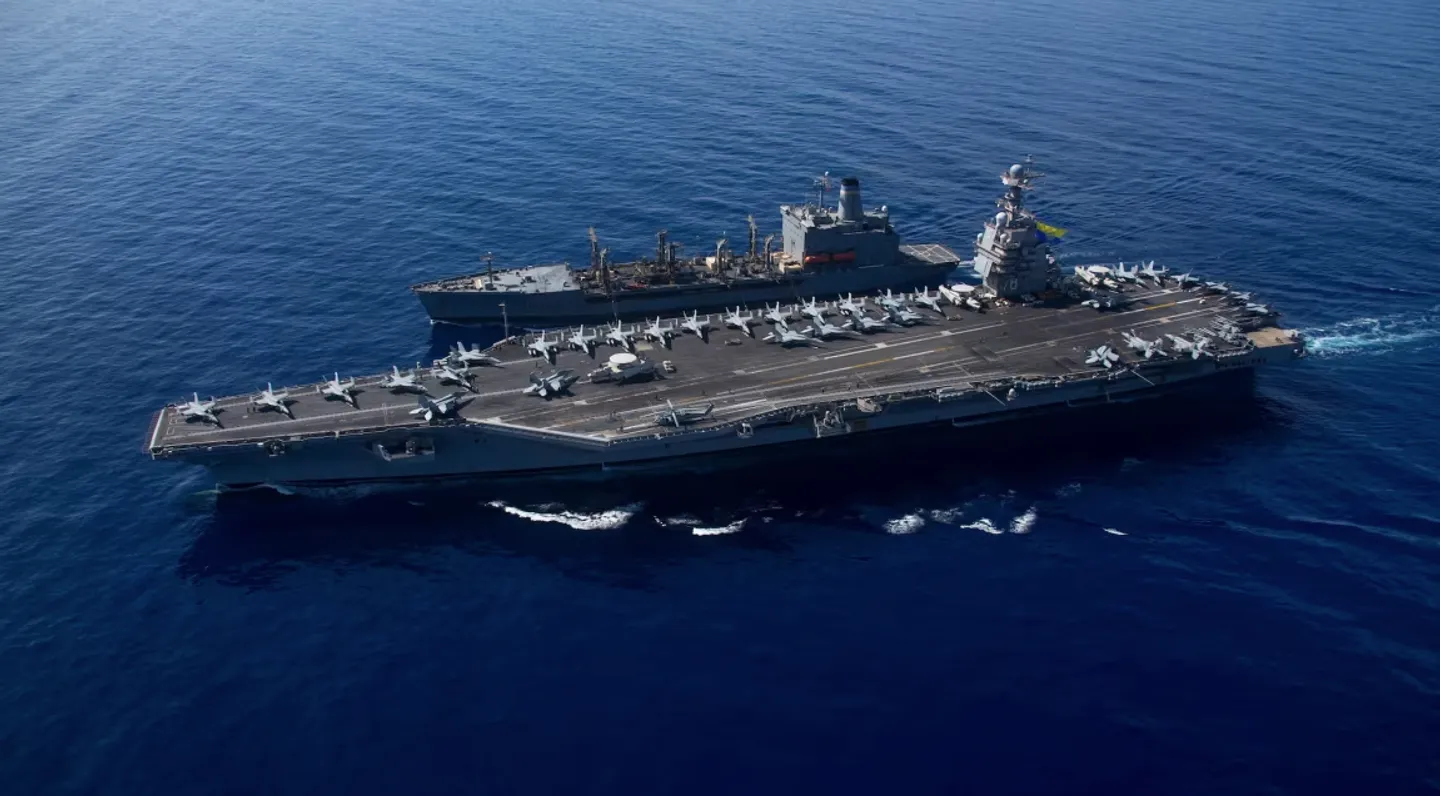
Washington, DC — Following months of reported air strikes against alleged drug boats in the Caribbean and eastern Pacific, the United States has now deployed the world's largest aircraft carrier, USS Gerald R. Ford, to the region, a decision, experts say is intended to intimidate Venezuela or to create conditions conducive to a coup in the South American country.
The deployment of the aircraft carrier is a "coercive escalation," signalling that strikes, drone deployments, and covert operations are now within the range of US foreign policy options, Jenaro Abraham, a political scientist and professor of Latin American politics at Gonzaga University, tells TRT World.
"An aircraft carrier strike group dramatically expands the Pentagon's ability to surveil and strike Venezuelan territory, and for that reason, the threat should not be dismissed as symbolic."
Abraham notes that the Trump administration often issues tangible threats to achieve foreign policy goals, displaying force, observing how states and markets respond, and then deciding whether and how to escalate.
Stationing Gerald R. Ford is both a "military danger and political theatre" that aims to put pressure on Caracas while "testing the international system," he adds.
"Just as Trump has used sanctions, tariffs, and financial isolation against [President Javier] Milei in Argentina and [President Gustavo] Petro in Colombia, the aircraft carrier functions as another form of disciplinary leverage."
Heavy US military buildup
The US Navy's top aircraft carrier is now part of a growing military build-up near Venezuela, which President Donald Trump has framed as a fight against "narco-terrorism." But many view it as a strategic message to Venezuela.
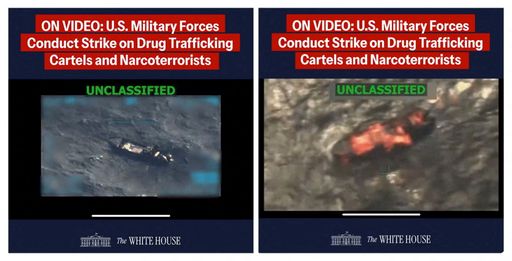
Since September, the US has reportedly conducted at least 21 strikes on alleged drug boats, causing over 80 deaths and many injuries. The US has not provided evidence of drug smuggling or threats.
Legal experts claim the attacks constitute unlawful killings.
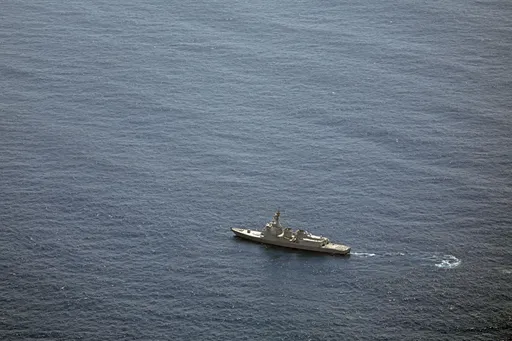
The USS Gerald R. Ford and USS Newport News are nuclear-powered US vessels deployed in the region for "Operation Southern Spear" that was recently announced by Pete Hegseth, the US Secretary of War.
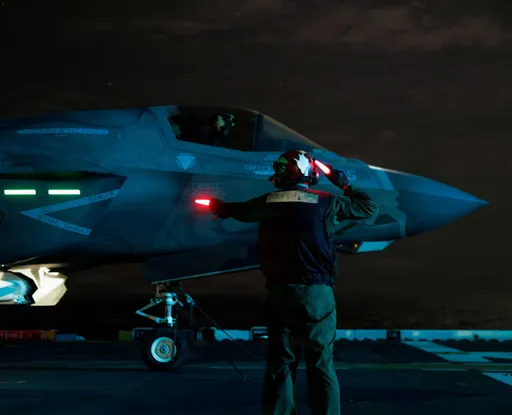
The US deployment includes F-35 fighter jets, a large carrier strike group, a nuclear-powered submarine, and multiple other warships, representing the largest US military build-up in the region in decades.
While the latest escalation provides the Pentagon with more surveillance and attack entry points, it also gives Trump — whose goal is yet unclear — more options regarding Venezuela.
On Friday, Trump told reporters that he'd "sort of have made up my mind" on how to proceed with Venezuela, but "can't tell you what it would be."
On Sunday, he told the media there was "no update on Venezuela," but added "we may be having some discussions" with Venezuelan President Nicolas Maduro "and we'll see how that turns out — but they would like to talk."
The deployment of Gerald R. Ford in the region, according to Philip Gunson, a Venezuela analyst with the International Crisis Group, "is the latest attempt to convince Maduro to step down, or the army to overthrow him. It also gives Trump a bigger range of options if he does decide to go ahead with ground strikes."
"But in the longer term, it may also be part of the overall US military build-up in the western hemisphere that is a consequence of the Trump administration's decision to focus more on its 'back yard'," Gunson tells TRT World.
Gunson, the Caracas-based analyst, was referring to a concept used in the political and international relations context that refers to Washington's sphere of influence and areas of dominance, especially in Latin America, similar to the broader Monroe Doctrine.
Despite the several options on the table along with the latest development, not a single one is in Venezuela's best interest.
Ever since the US military build-up, Maduro has pledged resistance if the US invades his country, as well as called for peace. He has pleaded against a "crazy war" with the US while also invoking John Lennon's anthem "Imagine " to seek peace.
Gunson of the International Crisis Group anticipates potential US strikes on Venezuela.
"Maybe the decision has been taken, maybe it hasn't. It would not surprise me if there were strikes on Venezuelan territory, but more important is the question of where and what? It's one thing to hit a military base or government infrastructure, quite another to hit a remote airstrip or some kind of drug facility," Gunson notes.
Daniel Hellinger, a professor emeritus of international relations at Webster University, tells TRT World that the US decision to bring in the world's largest aircraft carrier to the region is to "incentivise a coup attempt."
Hellinger states, "Clearly, it is meant to intimidate Maduro and, by threatening direct military intervention, incentivise a coup attempt by military officers who are motivated either by national pride or concern for their own survival."
Hellinger says that from all the options available, Trump would be hoping for Maduro to "flee the country" or the Venezuelan military to act, but "at some point he will authorise some kind of limited strike, either by an aerial attack or special forces raid, to capture or murder Maduro."
"If such an attack succeeds, he'll be reluctant, I think, to put 'boots on the ground' to deal with the more violence and economic catastrophe than the country is now experiencing. If he fails, then he is faced with deciding to deepen and widen US intervention, which will certainly create a domestic crisis for his own presidency," Hellinger explains.
'Counterterrorism' campaign
In March 2020, Maduro was charged by the US authorities with "narco-terrorism" conspiracy, conspiracy to import cocaine, and weapons-related offences.
The US alleges Maduro is a leader of the "Cartel of the Suns [or Cartel de los Soles]," a drug trafficking organisation.
That year, the US offered a $15 million reward for Maduro's arrest, later increased to $25 million in January 2025, and then doubled to $50 million in August 2025.


The US does not recognise Maduro as the President of Venezuela and has increased pressure on his government through sanctions, diplomatic efforts, and military presence in the Caribbean region.
Venezuela's government has dismissed the claims, branding the reward a "pathetic" and "crude political propaganda operation".
Maduro, while calling for peace, remains defiant and has shown no signs of stepping down.
"Given that Maduro is unlikely to voluntarily resign, and because a full-scale ground invasion would be politically risky, a more likely scenario is a limited US bombing or 'counterterrorism' campaign combined with covert action across Venezuelan border regions: sabotage, targeted killings, and the activation of armed groups already operating along the irregular mining and trafficking corridors," argues Abraham of Gonzaga University.
With the massive military build-up, the US may also be trying to reshape Venezuelan public opinion, experts say.
Abraham notes, "Strategically, the deployment also aims to reshape Venezuelan public opinion: if sectors of the anti-Maduro opposition become convinced that US intervention is imminent, they may escalate domestic destabilisation in hopes of triggering regime change from within."
"What appears as a single action—placing a carrier offshore—is in practice an attempt to produce pressure from above and from below at the same time."
Militarised message of 'Zero tolerance'
If combating alleged drug traffickers with air strikes isn’t akin to bringing a howitzer to a knife fight, fighting the crime with an entire army of aircraft carriers, drones, and submarines could be about sending a powerful message of "zero tolerance" to the governments of Latin America, analysts say.
Gunson, the Venezuela-based analyst says, "It makes no sense at all to wage the so-called 'war on drugs' with aircraft carriers and submarines. But maybe the idea is to send a message of 'zero tolerance' not just to the drug gangs but to the governments of the region."
Hellinger, meanwhile, warns that continuing the path of fighting alleged drug gangs with all this militaristic prowess is not sustainable.
Hellinger adds, "It is not indefinitely sustainable, in terms of cost and also in terms of diverting military resources from other places in the world where the US is attempting to defend its hegemony."
Since President Trump has framed gold as the best asset during global economic instability, and his allies have started to invest more in it, the actual stakes here are gold and oil, claims Abraham.
But the militarisation of the Venezuela-Colombia border, should it continue to escalate, would ironically backfire and stabilise the cocaine market, he adds.
Abraham says, "Coca and cocaine prices have fallen sharply due to oversupply, and military pressure tends to push small peasant coca growers out of coca cultivation and into more profitable yet more dangerous extractive sectors like illegal mining."
Venezuela’s divided opposition
While Maduro remains defiant as he prepares his country for a potential military intervention, two major opposition leaders in Venezuela disagree on steps forward.
The 2025 Nobel Prize winner Maria Corina Machado and her team have engaged the Trump administration to promote the idea that Venezuelan President Maduro is the head of the Tren de Aragua, a criminal gang that was designated a Foreign Terrorist Organization by the US in January, according to reports.
Her team promoted this message to US National Security Advisor designate Mike Walz in early January, before the inauguration, an investigative report by Reuters news agency has revealed.
Machado herself made the case in May in an interview with Donald Trump Jr. saying, "We all know that the head of the Tren de Aragua is Maduro. The regime created, promoted, and funds the Tren de Aragua."
Other opposition factions have, however, called for negotiations.
Henrique Capriles, a two-time presidential candidate, has cautioned against US intervention.
"Name one successful case in the last few years of a successful US military intervention," the New York Times quoted Capriles as saying. A bloodless US "extraction" of Maduro was the stuff of Netflix, he argued, not reality.
"And the cost for us Venezuelans, what will it be? What guarantee do we have that this will translate into a recovery of our democracy?"
Although the opposition in Venezuela are deeply divided, the majority still oppose a US military intervention, Hellinger says.
"Were (Hugo) Chavez still the president, I believe the overwhelming majority would support active resistance. I think most Venezuelans reject US intervention, but I'm not sure that Maduro can elicit the same level of active resistance to US intervention," Hellinger adds.
Gunson states that the Venezuelan government is anxious to avoid escalation because of an enormous disadvantage in military terms, adding it will try to avoid responding "unless it is unavoidable."
In this case, Venezuela's response will be both military and political.
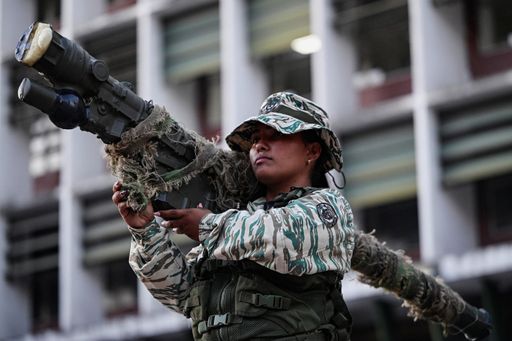
Abraham says, "Militarily, the government will mobilise communal militias and defence networks to reinforce the message that Venezuelans must be prepared to defend the homeland from foreign aggression."
"Politically, the US escalation inadvertently strengthens Maduro because it validates a narrative the government has articulated for years—that the United States aims to invade Venezuela and impose regime change. Importantly, much of the Venezuelan right does not support foreign military intervention; only a hard-line minority connected to figures like Machado has openly encouraged it," he adds.