 Ahmed Almallahi
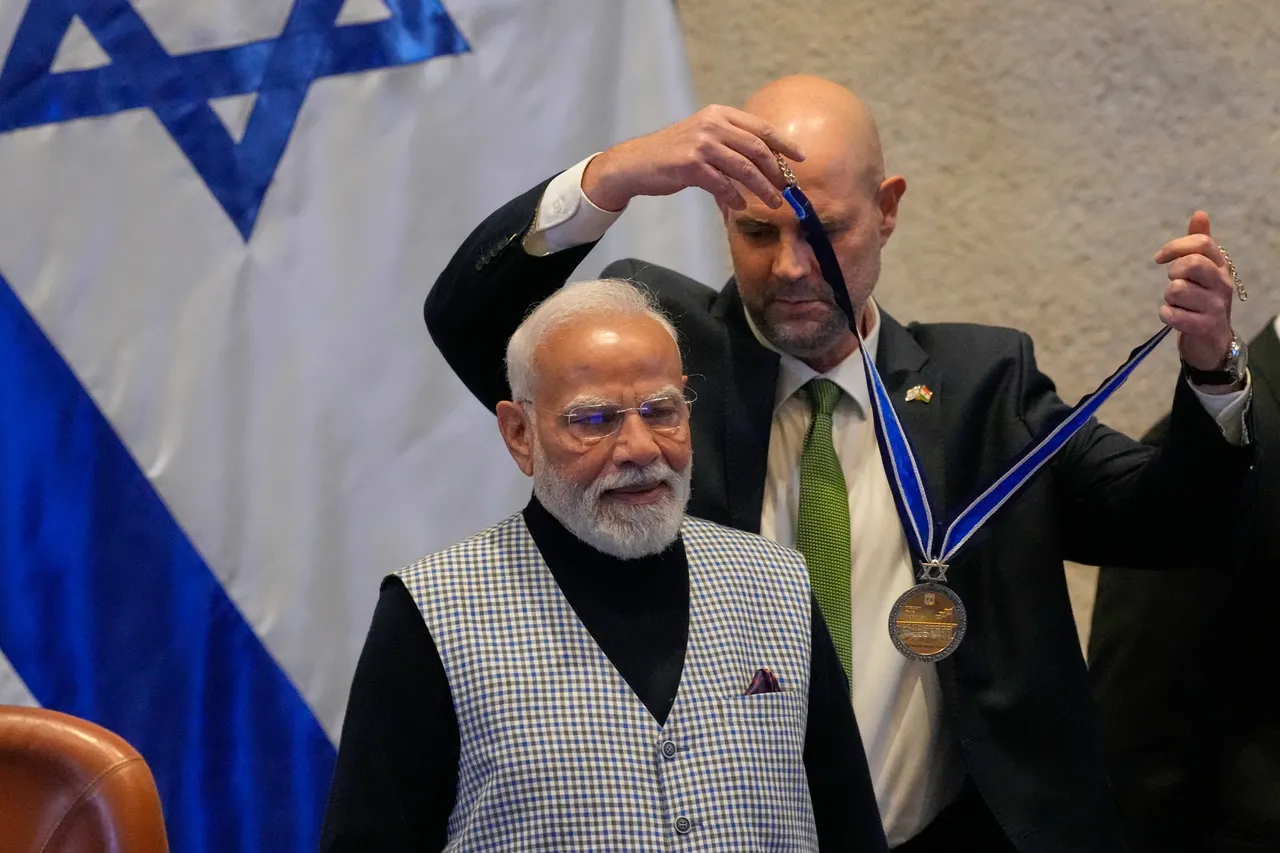
In the Knesset, Indian Prime Minister Narendra Modi delivered a speech that aligned with expectations.
Modi, the Hindu nationalist leader of India, spoke at the parliament of the country that is being globally treated as a pariah — even by some of its longtime allies — over the genocide in Gaza and its illegal expansions in the occupied West Bank.
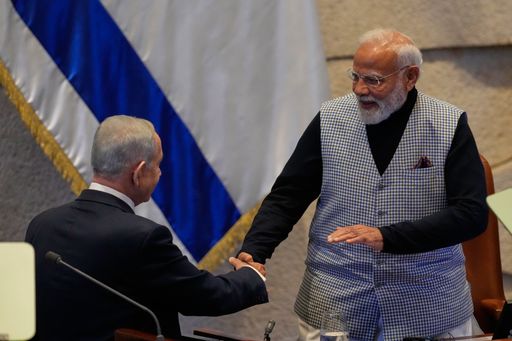
But, for Modi, the visit to Israel and parliament speech on Wednesday both presented an opportune moment to rehabilitate Israeli leaders, especially Prime Minister Benjamin Netanyahu, and repair the country's damaged image.
"I bring with me the greetings of 1.4 billion Indians and a message of friendship, respect, and partnership. I'm the first Prime Minister of India to address this august gathering. Nine years ago, I had the good fortune to be the first Prime Minister of India to visit Israel, and I'm very happy to be here again," he told the Israeli lawmakers.
The Indian PM stated he was born on the same day India formally recognised Israel, September 17, 1950, claiming India's connection to Israel is "written in blood and sacrifice."
On this, Modi cited "more than 4,000 Indian soldiers" who were killed in Haifa, then governed by the Ottoman Empire, and elsewhere in the region during World War One.
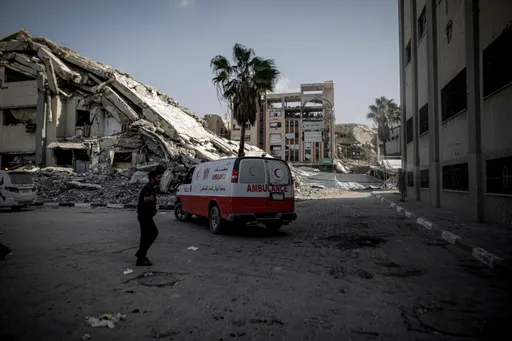
Choosing to remain silent on the Gaza genocide during which Israeli forces killed tens of thousands of Palestinians, flattened much of the enclave, and displaced almost all of its 2.3 million residents, Modi opted instead to condemn Hamas for the October 2023 attacks on Israeli settlements and military installations that were once Arab farms and hamlets.
"I... carry with me the deepest condolences of the people of India for every life lost and for every family whose world was shattered in the barbaric terrorist attack by Hamas on October 7," Modi said in the Knesset.
"We feel your pain, we share your grief. India stands with Israel firmly with full conviction in this moment and beyond," he added.
Modi stated, "No cause can justify the murder of civilians. Nothing can justify terrorism", without mentioning the actions of Israeli forces in blockaded Gaza and the occupied West Bank, particularly since October 2023.
Hours before Modi lauded Israel and elaborated on "historic" links, illegal settlers vandalised the Palestinian village of Susiya, setting fire to vehicles and tents.
Modi, whose country recently held India-Arab foreign ministers' meeting where a joint declaration called for a "sovereign, independent, and viable state of Palestine", opted not to call for independence of Palestine from Israeli occupation, a reversal for a country which was the first non-Arab nation to recognise the Palestine Liberation Organisation in 1974.
Instead, Modi commended the so-called Abraham Accords (the US-brokered normalisation deals between Israel and several Arab nations) and hailed Israel’s "courage and vision."
"We believe that it holds the promise of a just and durable peace for all the people of the region, including by addressing the Palestine issue. Let all our efforts be guided by wisdom, courage, and humanity. The road to peace is not always easy, but India joins you and the world for dialogue, peace, and stability in this region."
Senior Indian opposition Congress figure Priyanka Gandhi — sister of the Leader of Opposition Rahul Gandhi — posted on social media on Wednesday that she hoped Modi would mention the killing of "thousands of innocent men, women and children in Gaza" when he addresses Israel's parliament.
Modi opted against it.
"The language Modi has chosen — together with his silence on Israel’s actions in Gaza — makes clear, once again, that Palestine is not a priority for Delhi. India is now deeply invested in its alliance with Israel. Palestine, at this point, functions as nothing more than rhetoric," Azad Essa, an expert on India-Israel relations, tells TRT World.
Otherwise, it is difficult to explain a high-profile visit to Israel amid the mass devastation of Gaza, says Essa, author of Hostile Homelands: The New Alliance Between India and Israel.
India-Israel ties under Modi
Under Modi, India-Israel ties have strengthened, signalling a major shift in India's foreign policy towards closer relations with Israel.
India, traditionally a supporter of the Palestinians, established full diplomatic ties with Israel in 1992.
It has long been Israel's largest arms buyer, but during the Gaza genocide, it continued specific flows of defence items that benefited Israel's military onslaught against the besieged population.
Manufactured in the Indian city of Hyderabad through a joint venture between India's Adani Defence and Aerospace and Israel's Elbit Systems, India reportedly supplied dozens of Hermes 900 drones to Israel during the genocide.
These medium-altitude, long-endurance drones have been used by the Israeli military for surveillance and strikes in Gaza.
Indian companies reportedly exported explosives, rocket components, and other munitions-related items to Israel during the genocide, according to shipping documents and investigative reporting.
In May 2024, Spain refused entry to a ship carrying arms from India’s Chennai city to Israel to dock at one of its ports.
Reports suggest Israeli forces used an AI weapons system in Gaza, co-produced with an Indian firm, to automate machine guns and assault rifles.
After October 2023, Israel barred most Palestinian workers from entering Israel. India stepped in by sending waves of low-cost Indian workers to Israel.
By mid-2025, over 20,000 Indian workers had gone to Israel, including thousands in construction, explicitly replacing Palestinian labour and supporting Israel's economy and construction sector during the genocide.
India did not back and abstained from several UN resolutions critical of Israel during the genocide, avoiding language that would isolate Israel internationally, including a 2024 General Assembly vote calling for an "immediate, unconditional and permanent" ceasefire in Gaza.
In December 2024, as Israel's genocide in Gaza continued for 428 days, India cited "national interests" and commitments to "various regimes" in defending arms supplies to Israel.




Modi’s ties with RSS
Back in the Knesset, Modi highlighted the Jewish community's contributions to India.
He cited the Bene Israel of Maharashtra, the Kochini Jews of Keralam, the Baghdadi Jews of Kolkata and Mumbai, and the Bene Menashe of the Northeast.
Modi told the lawmakers Jewish figures such as Edwin Myers shaped the film division of India, Walter Kaufmann composed the signature tune for All India Radio, and actor David Abraham Chaulkar became a household name across the country.
"The heroic contribution of Lieutenant General J. F. R. Jacob during the 1970 war with Pakistan is widely known," Modi noted, adding he worked closely with Jacob and "discussed India-Israel relations, among many other things, over many cups of tea."
Calling Holocaust "as one of humanity’s darkest chapters", Modi's speech explored historical links, aiming to connect India and Israel, despite the fact that he was once a foot soldier of the RSS, or the Rashtriya Swayamsevak Sangh, a paramilitary outfit inspired by fascist parties and anti-Jewish pogroms in Europe.
India’s far-right group is the flagbearer of Hindutva, an ethno-nationalist political ideology that defines the cultural identity of the country in terms of Hinduism and seeks to turn it into an overtly Hindu nation-state.
The RSS has been tied to many pogroms against Muslims. One of the RSS members assassinated India’s founding father, Mahatma Gandhi, in 1948 for being "too conciliatory" towards Muslims.
In the web of right-wing groups that draw ideological support from the RSS is Modi's BJP party, which has ruled India since 2014.
Under Modi’s rule, India has seen rising attacks on Muslims, destruction of their properties, and erosion of their democratic rights.
Modi, meanwhile, told Israeli lawmakers that his country's economic growth and Israel's leadership in technological innovation formed a "natural foundation" for future partnership.
"For the last few years, India has been the fastest-growing major economy in the world... At the same time, Israel is a powerhouse of innovation and technological leadership," Modi said.
"This creates a natural foundation for our forward-looking partnership. We are committed to expanding trade, strengthening investment flows and promoting joint infrastructure development," he said.
"I see a lot of synergies in areas such as Quantum technologies, semiconductors and artificial intelligence. We are also working with Israel on creating cross-border financial linkages using our digital public infrastructure," Modi added.
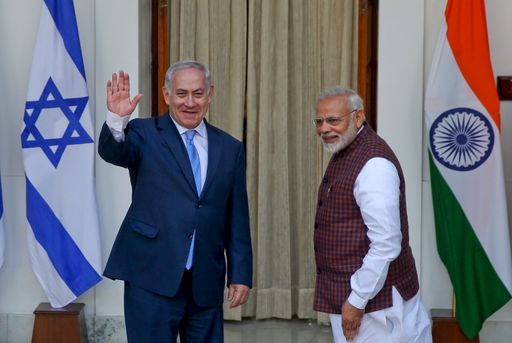
Modi repairing Israel’s image?
Modi was addressing the Israeli parliament as part of a two-day visit to Israel aimed at deepening ties with a key trade and defence partner.
Israeli Prime Minister Netanyahu has indicated the potential formation of a "hexagonal" alliance in the region, which would include India, Greece and others to challenge what he called Sunni and Shia "radical axis".
New Delhi has not yet confirmed whether it will participate in the alliance.
"There is a very robust diplomatic, political and economic relationship between the two countries. It is likely that the visit will further strengthen this bilateral engagement," Md. Muddassir Quamar, an associate professor at Jawaharlal Nehru University’s School of International Studies, told Anadolu Agency.
Defence cooperation is expected to dominate discussions, reflecting Israel’s role as a key supplier of advanced military technology to India.
India accounted for 34 percent of Israeli defence exports between 2020 and 2024, according to data from the Stockholm International Peace Research Institute.
Indian media reports suggest New Delhi is interested in joint development of ballistic missile defense systems, laser weapons, long-range standoff missiles and drones.
India’s strong interest in anti-ballistic missile technology also works for Israel, which wants to develop as much as it can for new markets on that front, said Ryan Bohl, a senior Middle East and North Africa analyst at the RANE Network.
"A deal with India would allow Israel to scale up the production of things like the Arrow 2 and the Arrow 3," he told Anadolu Agency.
According to former Israeli diplomat Alon Liel, Israel has "lost a lot of its international standing in the last two-and-a-half years," including setbacks in relations with Western allies and recognition of Palestine by several countries.
"Since Israel is quite isolated now … this can be presented by Netanyahu as a big diplomatic achievement," he said.
Modi's visit, dubbed by Iran as "unfortunate", also comes at a time when the US is threatening Tehran with war if their nuclear deal fails.
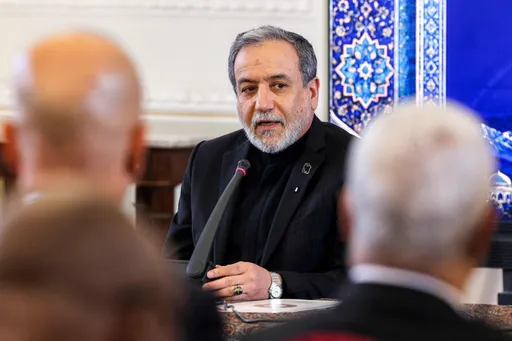
"To be honest with you, it is very unfortunate," Iranian Minister of Foreign Affairs Abbas Araghchi told Indian news outlet India Today, ahead of Modi’s visit.
"I hope while PM Modi is there, he can also address the question of Palestinians and their right for self-determination."
Iran, a major oil supplier ensuring energy security for India, has historically offered diplomatic support, notably blocking anti-India resolutions on the Kashmir dispute at the UN in 1994. However, it may now perceive India's strategic interests with Israel as taking precedence over traditional ties with Tehran.
Modi's backing of Israel's campaign in Gaza also reflects Delhi's broader desire to operate with impunity in "the national interest," says Essa.
"India has deep commercial ties to Israeli arms manufacturers, including joint production and technology transfers, meaning it is now not merely a diplomatic partner but is a stakeholder in Israel's permanent war economy."
A US strike on Iran risks Iranian retaliation against Israel and US Gulf facilities. This could impact millions of Indian workers and billions in remittances they sent home from wealthy Arab nations.
During his address, Modi acknowledged growing regional instability and recent challenges, yet he conspicuously avoided referring to the US military buildup in the region or the rising tensions with Iran, even as both have shaped the backdrop to his visit.
If his omissions were striking, so too was the note on which he chose to end.
Modi closed his speech with “Am Yisrael Chai” (‘The People of Israel Live’), to a Knesset rising in applause.