 Zulal Sema
On an unexpectedly mild autumn day, I step into the garden of Yildiz Sale Pavilion for the first time. Raised during the reign of Sultan Selim III, the pavilion is named after the French chalet, the archetypal mountain lodge.
The leaves swayed around the palace courtyard like stage decor, creating a scene that felt almost fairy-tale-like.
This year marks the centenary of the National Palaces’ establishment as a modern institution — a transformation formalised in January 8, 1925, when the palaces of the former Ottoman Empire were transferred to the Republic and reorganised under a unified state structure.
That year, the young Republic of Türkiye placed Dolmabahce, Topkapi, Yildiz and other imperial residences under state administration for the first time, shifting them from private dynastic spaces into public cultural institutions.
From that moment on, these palaces became national heritage sites — places dedicated to preservation, research, and opening history to the public. I was there for that very reason.
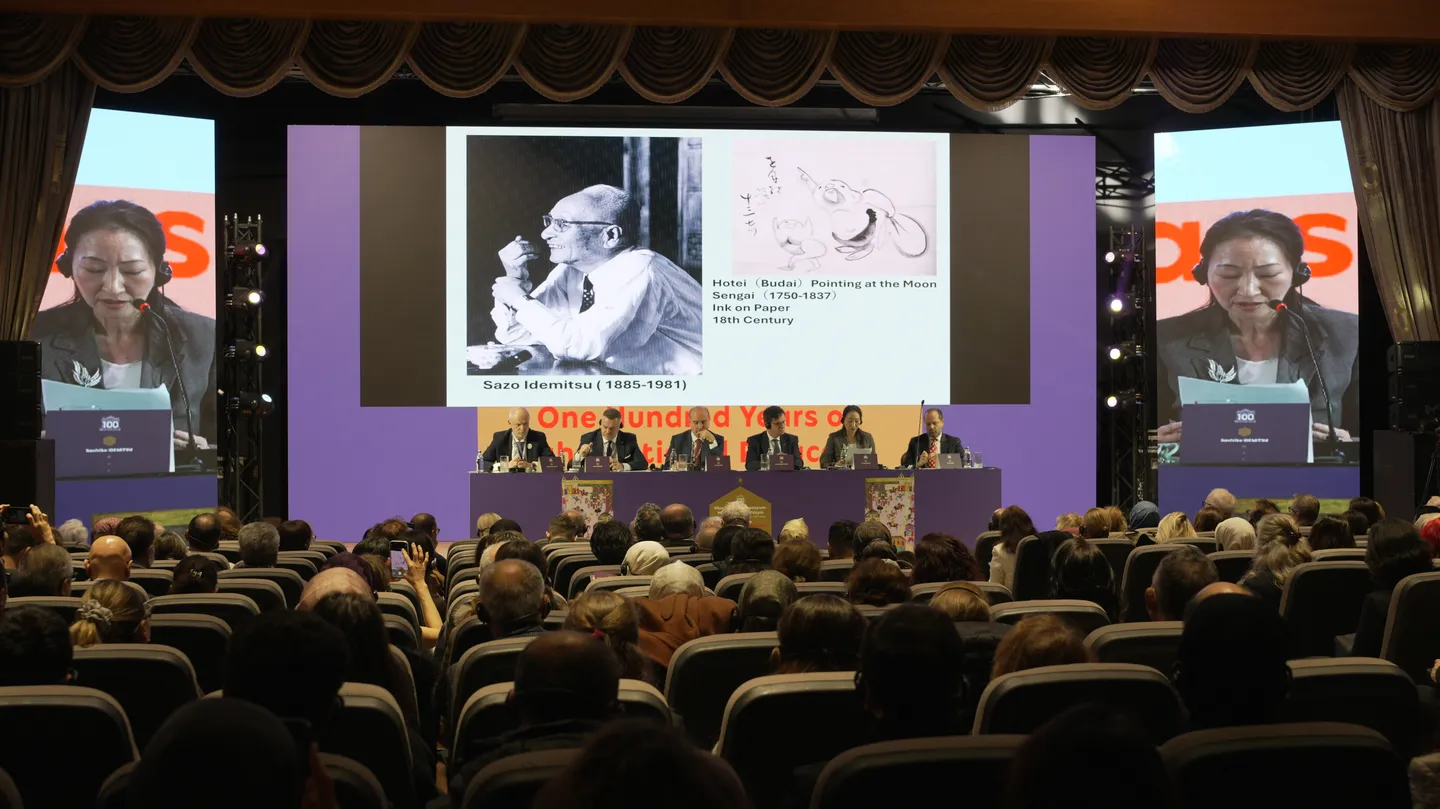
The International Symposium: One Hundred Years of the National Palaces, held from November 24 - 26, 2025 across Dolmabahce, Topkapi and Yildiz, brought together directors, scholars and heritage leaders from around the world.
While the past was acknowledged, the conversations ultimately turned decisively towards the future.
Growing up in Türkiye, I now realise how deeply museum and palace visits shaped my childhood, mostly through school trips. At the time, many historical sites were still under restoration.
Yet one of my clearest memories is the bedside clock at Dolmabahce Palace, frozen at the moment Ataturk passed away. For a child, that single object made palaces feel less like architectural splendour and more like places where history breathed.
There were other moments like this too — stories that felt almost mythical, animated by real objects. One of them was the celadon-glazed Chinese porcelain which was believed to be able to detect poison. I remember being astonished by the idea that a simple plate could change colour if something harmful touched it, a silent guardian on the sultan’s table.
Topkapi Palace still keeps the world’s second-largest collection of Chinese porcelains in its Palace Kitchens, more than ten thousand pieces spanning from the 13th to the 20th century — but to a child, it was the magic of a plate that could ‘sense danger’ that lingered most.
Across from our home in Istanbul’s Kasimpasa neighbourhood, stood the Aynalikavak Pavilion. I could see it from our balcony, but for years it remained closed due to restoration works.
In winter, my sister and I would play in its grounds, throwing snowballs between bare trees. Years later, when I finally stepped inside the pavilion and its garden, I was mesmerised. I imagined Sultan Selim III composing his music in the very rooms we memorised in our history books.
Today, walking through Yildiz Sale, the same feeling returns. Built by his mother, Mihrisah Sultan, the structure still carries the boldness of a woman who led such an ambitious architectural vision in her time. And the newly restored Yildiz Palace, opened to the public in 2024 with the presence of President Recep Tayyip Erdogan, adds yet another layer to my understanding of history.
After years of restoration, conservation and landscaping, several sections of the palace welcomed visitors for the first time in its history to view sites like the Big Mabeyn Pavilion, Chit Pavilion, the Small Mabeyn Pavilion and the Harem Apartments. Rare exhibits that shed light on the life, character and leadership of Sultan Abdulhamid II.
The library and the carpenters workshop, closely associated with Abdulhamid II and among the largest of its kind in Europe and the Middle East, are now accessible, along with a curated selection of photographs from the Yildiz Albums, now presented to history and art enthusiasts.
This delicate structure and the campus-like gardens of Yildiz remind me of something essential: palaces and museums were never meant to be places you simply visit and leave. They were living spaces — where people walked at dawn, shared tea and conversation with loved ones, and felt history unfolding around them.
Institutional transformation
After the founding of the Republic, the palaces once belonging to the Ottoman dynasty became national property. In 1925, their first formal administrative body was established, laying the groundwork for the institutional structure of National Palaces as we know it today.
Now, we too can enjoy them much like the nobles once did, dining in the restaurant section of Topkapi Palace, or strolling leisurely through the Has Garden of Yildiz Palace.
At this year’s symposium, several sessions were dedicated to the future of the palaces — and to the idea of transforming them, together with their gardens, into “living places” once again.
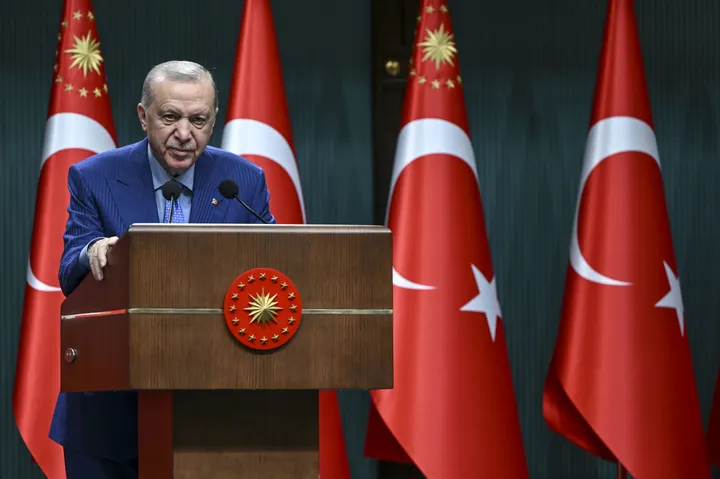
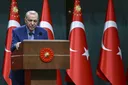
President Erdogan sent a video message to the symposium, noting: “The Republic of Türkiye carefully preserves our national palaces just as it safeguards the scientific, artistic and cultural heritage inherited from the Ottoman Empire.”
From Japan to England, distinguished museum directors and academics shared their approaches to museum and palace management.
Speakers included Makoto Fujiwara, director of the Tokyo National Museum, who presented a talk titled Sustainable Presented Museum Management: From the Imperial Household Museum to the Tokyo National Museum, and Tim Knox, director of the Royal Collection Trust in the United Kingdom, who spoke on In His Majesty’s Service: Looking After the British Royal Collection.
“Our responsibility is to protect the original,” the director of National Palaces Dr Yasin Yildiz tells TRT World. For him, the next century requires both discipline and clarity: preserving centuries-old structures while navigating the pressures of modern museum life.
Before the institutional restructuring in 2018, National Palaces welcomed around 1.5 million visitors annually. Today, the number approaches nine million—placing Türkiye’s palace museums alongside the busiest royal heritage sites in the world.
“The challenge is to ensure access without compromising what makes these places unique,” he explains.



Timed entry systems, redesigned circulation routes and stricter capacity limits are part of a long-term strategy to safeguard historic structures while keeping them open to the public.
Multi-risk future
One of the most urgent topics at the symposium was risk mitigation, in conversation shaped largely by Dr Zeynep Gul Unal, a board member of the National Palaces Scientific Board, and an authority on disaster and built heritage.
Unal explained that palaces today face overlapping threats: earthquakes, fire risk, extreme weather, heavy visitor loads and ageing infrastructure. Risks no longer occur in isolation.
Unal tells TRT World that safety must be understood holistically, “the safety of visitors, the safety of staff, and, above all, the safety of the structure and its collections.” Palace buildings, she notes, are “exhibition objects in their own right,” which means protection and long-term resilience cannot be separated from daily operations.
Topkapi Palace alone welcomes “over twenty thousand visitors a day in the summer months,” she notes. Even with its expansive grounds, emergency planning must account for inward and outward evacuation routes and varied threat scenarios.
Many of the recent changes – upgraded firefighting systems, discreet security installations and permeable garden surfaces designed to absorb heavy rainfall – reflect this shifting landscape.
“Adaptation is no longer optional,” Unal says. “Türkiye has revised its evacuation protocols and introduced environmental measures, upgraded emergency systems, and integrated rain-harvesting mechanisms.”
Dr Yildiz echoes the importance of this integrated approach: architecture, landscape design, emergency planning, conservation and visitor movement must be handled as a single system.
Reimagining heritage through technology
The past decade has also brought one of the institution’s most significant transformations: a complete digital reorganisation of its collections and museum systems.
Since 2018, National Palaces has digitised its collections at an unprecedented scale. During the transfer of Topkapi Palace, hundreds of thousands of objects were re-counted, photographed and assigned detailed digital records.
At the Clock Museum, the collection includes works signed by the renowned Ottoman clockmakers Ahmed Eflaki Dede and Suleyman Leziz, as well as exceptional pieces such as the Russian made griffin table clock gifted to Sultan Abdulhamid II.
For the first time, the entire inventory is accessible through a unified digital system that supports conservation, exhibition planning and security.
This background work now shapes visitor experiences.
In 2022, the Museum of Islamic Civilisations opened with Türkiye’s most extensive digital museum environment—immersive projections, interactive screens and installations such as Kubbe and Ab-i Hayat, both designed to engage younger audiences.
In 2025, the Topkapi Palace Clock Museum followed suit with video-led storytelling, digital labels and contemporary display techniques that bring historical artefacts into a modern narrative space.
During the symposium, Alberto Garlandini, president of the International Council of Museums (ICOM), highlighted how AI-driven accessibility will reshape museum engagement, emphasising museums’ role as lifelong educational spaces.
Carrying the legacy forward
One recurring theme of the symposium was who would be the next custodians of Türkiye’s palace-museums: today’s children.
Educational programmes, creative workshops and guided thematic tours – once peripheral – are now central to long-term cultural strategy.
Over the past three years, the Museum Education Department has expanded rapidly, reflecting rising demand among school groups and families.
Yildiz believes: “When children walk into a palace, they should be able to understand what these institutions represent — their spirit, their meaning, and their place within both national and international cultural heritage.”
At the closing ceremony, he emphasised the growing importance of international collaboration, noting its role in strengthening public engagement, institutional capacity and the protection of originality and integrity.
Dr Sadettin Okten, chair of the Scientific Board of National Palaces, encouraged young people to return to palaces and museums repeatedly. “Go in different seasons,” he suggested. “Because as you change, your way of seeing these places also changes—you can feel the emotional differences a place gives you.”
As I return as an adult, I feel the weight of Okten’s words: these ancient places stay unchanged, yet somehow reveal new secrets with each visit, and with age.