Kazim Alam
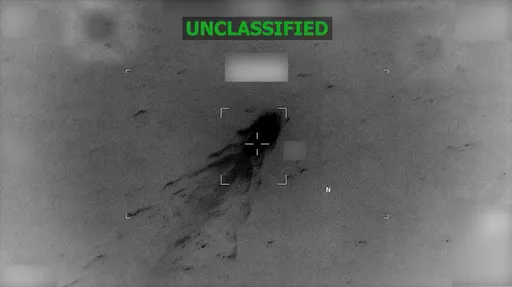
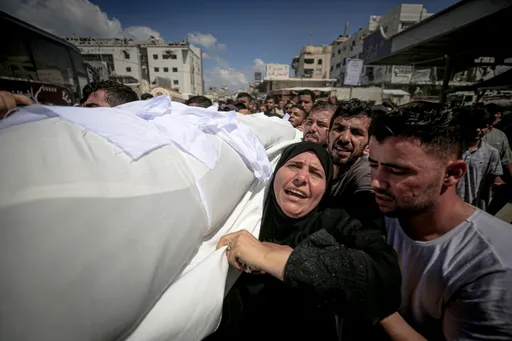
In the town of Mrauk-U in western Myanmar's Rakhine State, a night-time air strike last week destroyed a hospital, killing at least 34 people, including patients and medical staff, and injuring 80 others.
The Myanmar military’s strike on December 10 targeted an area controlled by the Arakan Army, a powerful ethnic rebel group fighting for greater autonomy in the Southeast Asian nation of more than 100 ethnic groups.
Aid workers described the facility as “overflowing with patients” as most hospitals in Rakhine have already closed following a 2021 coup that ended a decade-long democratic experiment in the country of 55 million people.
The junta later claimed the hospital site was being used as a base by opposition forces. However, the UN condemned it as part of a broader pattern of strikes causing harm to civilians in a bid by the junta to regain control of rebel-held territories.
Last week’s air strike followed the May 16 bombing of a school in the Sagaing state that killed 24 people, including 22 children, and an October attack that also killed 24 people at a religious gathering.
Civilians, especially children, have borne the brunt of Myanmar’s civil war. One UN report said “grave violations against children” increased five times during the first two and a half years of the civil unrest.
It noted a “pattern of excessive use of force and indiscriminate attacks” by the Myanmar armed and police forces, involving air strikes, heavy weapons, and civilian property-burning incidents, affecting children and causing a surge in forced displacement.
The UN expects 16 million people, including five million children, to require life-saving humanitarian assistance and protection next year.
According to the UN World Food Programme, more than 400,000 young children and mothers in Myanmar with acute malnutrition are already surviving on nutrient-deprived diets of plain rice or watery porridge.
The latest strike on the hospital showed the brutal reality of Myanmar's civil war, now in its fifth year since the military seized power by ousting the elected government of Aung San Suu Kyi.
What began as widespread protests has now evolved into a nationwide armed resistance involving ethnic militias and armed groups challenging the junta, also known as the Tatmadaw or feudal army.
The military controls major cities like Yangon, but rebels hold parts of border regions, leading to a patchwork of control that experts describe as “internal balkanisation”.
Maung Zarni, a UK-based genocide scholar from Myanmar, tells TRT World that the internal fragmentation has been the most under-appreciated development in the Myanmar conflict in recent years.
“This process of internal balkanisation was triggered (as) the armed resistance against the junta spread throughout the mainstream Myanmar or Burmese society in the form of hundreds of operationally autonomous armed groups called people’s defence forces,” Zarni says.
A tapestry of ethno-nationalist identities
This fragmentation is evident in places like Rakhine, home to the Buddhist Rakhine ethnic minority and a site of past atrocities against the Muslim Rohingya.
The Arakan Army, which seeks autonomy from Myanmar’s central government, took control of Mrauk-U last year.
Accused of wreaking atrocities against the Muslim Rohingya ethnic minority, the group now rules over all but three of Rakhine’s 17 townships.
Analysts say air strikes like the one on the hospital last week demonstrate the junta has made “significant gains” through a campaign of air strikes in rebel-held areas in recent years.
Zarni says that the junta is unlikely to collapse in the next two to three years, citing three key reasons.
One, no powerful external actor, like the US in past regime changes elsewhere, is decisively backing the resistance in Myanmar, he says.
Two, the neighbouring countries, including China, India, Thailand, and Bangladesh, do not want instability caused by the junta’s fall, potentially in the form of refugee flows and cross-border crime, he adds.
And three, the Tatmadaw remains the most cohesive force, holding urban centres and population hubs, he says.


Zarni says Myanmar is a “tapestry of ethno-nationalist regions”, with overlapping political claims over resource-rich areas along cross-border trade routes, where armed groups, including those operated by the junta, participate in a war economy.
“They are compelled to participate in the war economy to extract their shares, while their troops are engaged in fighting on the ground,” he says.
Malaysia-based international relations analyst Zokhri Idris tells TRT World that the junta's collapse has a low probability because it retains airpower, while the rebels continue to face economic challenges in managing their territories.
At the same time, he says, there is no clear indication whether the resistance will witness a fracture in the coming years.
Idris sees a high likelihood of the civil war “freezing” into de facto partition, with the junta controlling central administration and resistance groups holding resource-rich areas with rare earth minerals.
China seeks ‘functional stability’
Meanwhile, China's role looms large in Myanmar’s civil war.
Operation 1027 – named after the day of its launch on October 27, 2023, by a rebel alliance, including the Arakan Army – marked a turning point in the country’s civil strife, allowing ethnic forces to seize territory.
Zarni says China's priorities shifted decisively afterwards, initially tolerating the offensive to pressure the junta over cyber-scam centres harming Chinese citizens.
But Beijing never intended widespread destabilisation in Myanmar, its southern neighbour sharing a long border that is rich in resources like rare earths, critical for technology and green energy.
China now seeks “functional stability” in Myanmar, he says.
Idris says China has diversified engagements beyond the junta since Operation 1027. It has even monitored ceasefires between the junta and the resistance, something “very rare” for Beijing that usually stays away from internal conflicts of other countries.
“China’s priorities have changed in starting to see that while the junta is the main organisation to run and control the country, it is not the only actor that Beijing can engage,” he says.
China wants access to minerals in Myanmar without any border conflict. Rare earths, concentrated in northern Myanmar, are a flashpoint as rebels threaten to disrupt supplies to China, which dominates global processing of metals crucial to modern life, such as mobile phones and electric cars.
Both experts expect Myanmar to remain fragmented rather than a unified democracy or restored dictatorship for the next five years at least.
Zarni bets on a repeat of the past 60 years of military dominance, but with a weakened Tatmadaw amid ongoing conflicts and de facto statelets driven by resource disputes.
He calls the absence of “visionary and capable leadership” across ethnic groups and the civilian-military divide the “cardinal problem” in today’s Myanmar.
Idris leans towards the likelihood of multiple de facto statelets by 2030, with varying levels of autonomy.
China, focused on securing its own economic interests, is unlikely to push for political unification in Myanmar, he says.
Myanmar’s junta is holding a general election later this month. Critics say the exercise will likely be a farce meant to give the junta a “guise of legitimacy”.
Neither side in the civil war seems ready for democratic compromises involving resource sharing, Idris adds.
“Without federalising national matters, it would be difficult for democracy to prosper,” he adds.