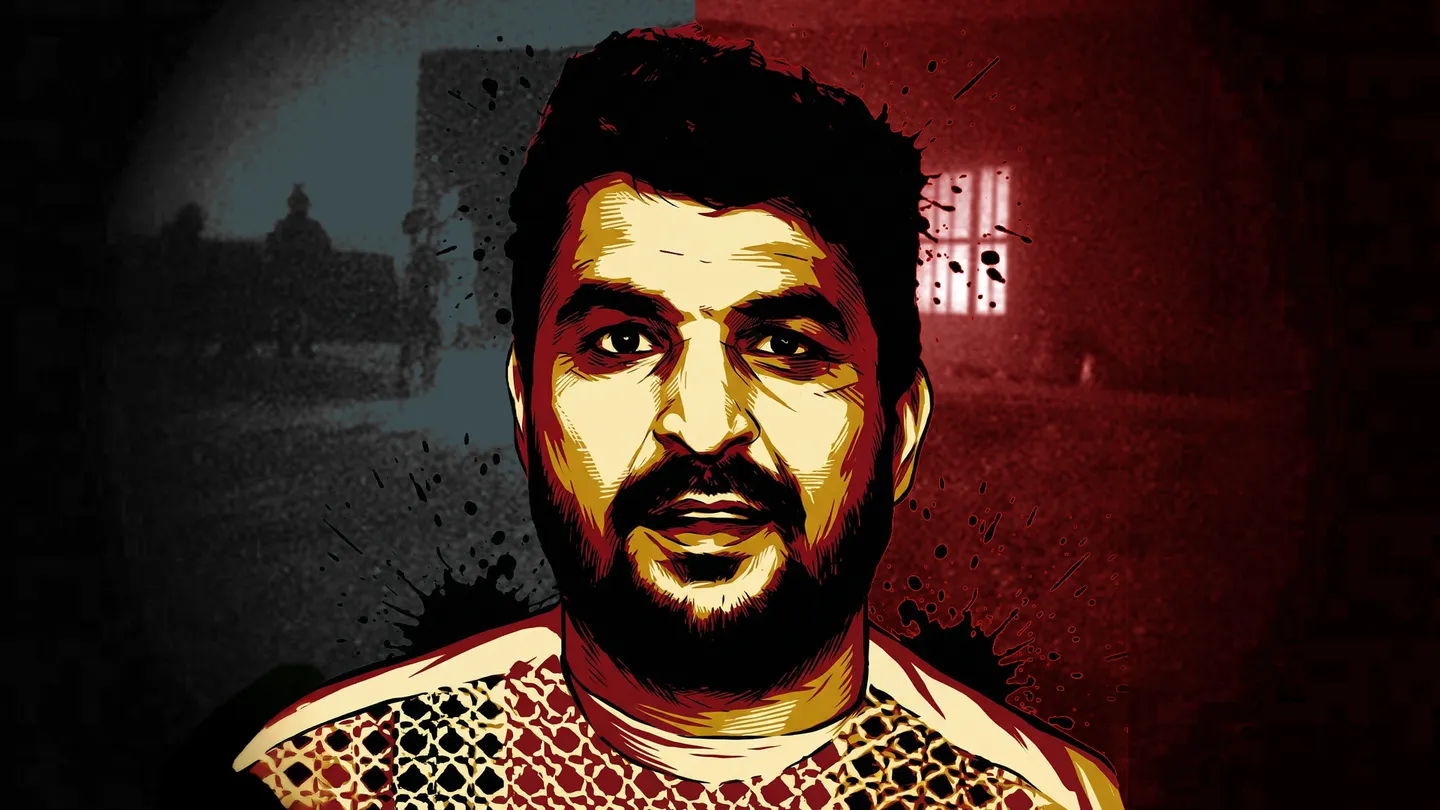
As a teenager moving through the shadows with the CIA-backed Zero Units, Rahmanullah Lakanwal learned to enter homes in darkness, rifle raised, GPS tracker in hand, adrenaline steadying him as Taliban suspects were pulled from their beds.
Years later, long after those raids in Kandahar and after the US airlift that brought him to safety, the boy soldier turned Amazon delivery driver found himself on another American night, alone behind the wheel on a cross-country drive toward Washington, DC—a journey that would end in a deadly shooting and raise painful questions about the fate of Afghan allies the US left adrift.
But the path that led him to that American highway began years earlier, in a war where boys were pulled into men’s roles long before they were ready.
Lakanwal was one of them, shaped by the rhythms of night raids, by the authority of foreign handlers, and by a conflict that blurred the line between survival and allegiance. To understand how he reached that point, you have to return to the years when the war was at its most relentless.
It was 2011, and former US President Barack Obama’s largest troop surge in Afghanistan was in full force, with more than 100,000 American soldiers deployed at its peak that year. This was the moment when the US sought to decisively weaken the Taliban before beginning its planned drawdown.
Special operations raids multiplied, especially in the south and east, targeting Taliban fighters and suspected insurgents night after night, where the world was reduced to green shadows through night-vision goggles, and the earth vibrated from whirring helicopter blades.
US Special Forces and CIA paramilitary teams sharply increased their “kill/capture” missions, and they began recruiting aggressively, driven by the promise of steady pay, benefits and the narrative that they were fighting on the right side.
The CIA’s Afghan strike forces, later known as the “Zero Units,” were also rapidly recruiting.
These units operated outside Afghanistan’s regular military chain of command, answering directly to CIA advisers.
Among those recruited was the then-15-year-old Lakanwal, who was assigned to the Kandahar Strike Force, also known as NDS-03, which operated directly under CIA oversight to intensify counterterrorism efforts and conduct an increasing number of night raids.
Although Article 38(2) of the 1989 Convention on the Rights of the Child requires states to “take all feasible measures” to ensure that no one under 15 takes direct part in hostilities, in practice this protection remains fragile, still relatively young, unevenly enforced, and frequently violated in conflict zones, according to child-rights advocates and international monitoring bodies.
Lakanwal left his village, Tangtang, in Afghanistan’s Khost province for Kandahar in the south, the epicentre of Taliban resistance.
By 20, Lakanwal was conducting nighttime raids targeting suspected Taliban in Kandahar, as well as tracking targets as a GPS specialist, a skilled role necessary in surveillance and strike missions.
Multiple sources and years of reporting during the US invasion have established that the Zero Units were known as notorious criminals conducting unlawful nighttime operations, undertaken by CIA intelligence, often when there were few, if any, witnesses. Human rights groups later accused them of extrajudicial killings and forced disappearances.
In a single operation in 2019, a house in Jalalabad was raided by one of the four Zero Unit squads, known in Afghanistan as the 02 unit, during which four brothers aged 30, 28, 26, and 24 were beaten and later shot dead by the strike force.
Eyewitnesses and neighbours described the scene as a massacre. The chilling funeral of four sons from the same house shook the entire village.
The 02 Unit said in a statement that a financier of the Daesh (ISIS) group, along with his three allies, were killed in the operation, but officials later backtracked following public outrage.
A provincial governor’s office admitted that the 02 conducted the operation, but those killed were innocent, calling it a mistake.
A gun pointed at a five-year-old
“I believe that I was the good guy, fighting the bad guys, until one day back in 2012 in Kandahar, I found myself pointing a gun at a five-year-old girl,” a former NDS-03 member tells TRT World.
“She was looking like a ghost. While I was pointing at her, my member hand cuffed her grandfather, who was about 70 years old, and dragged him out of the house. That incident never got erased from my memory.”
He currently works as a bus driver in the US.
“They used us against our own country and people, and when they were done, they just dumped us like we were trash,” he says.
The former NDS-03 member, who was in touch with Lakanwal, says Lakanwal barely called his family back in Afghanistan or spent time with his wife and five children in the United States, especially in the last two years.
“Lakanwal was committed to his job; he joined the unit to earn money for his family and follow the footsteps of his brother, who was also recruited by the Zero Unit,” Lakanwal’s cousin in Afghanistan’s Khost province tells TRT World.“He was fine when he was in action, working. He kept himself fit and had friends who supported him, until he left for the US.
“That is when his life changed. From being part of an elite team to doing temporary jobs, you can imagine what it can do to a person.”
According to reports, Lakanwal worked as an Amazon Flex delivery driver among other odd jobs.
Late last month, Lakanwal set out on a final cross-country drive, heading to Washington, DC, where he is now accused of shooting two members of the West Virginia National Guard, killing one of them. The 29-year-old has entered a not guilty plea.
Investigators are still trying to piece together what led to his apparent unravelling.
Betrayed by the US
Prosecutors have described the attack as a profound betrayal by someone who, they argue, had benefited from the United States’ protection and support.
However, in an exclusive interview with TRT World, his childhood friend says the real betrayal was the one Lakanwal faced.
“He told me he felt betrayed by the outcome: all those years of service, believing he was protecting his country, seemed to end in chaos and uncertainty. He felt as if everything he fought for had collapsed overnight,” his childhood friend, who wishes to remain anonymous, says.
In 2021, Lakanwal’s unit had raced to counter Taliban fighters tightening their grip around Kandahar city, but after failing to halt the advance, they withdrew to Kabul, the final stronghold of the US-backed Afghan government.
With American troops stretched thin at Kabul airport, US commanders asked the unit to help secure the perimeter, according to reports.

In return, the fighters were promised evacuation to the United States.
The chaotic withdrawal of US forces from Afghanistan in August 2021 has been widely described as a strategic and humanitarian failure.
According to the Special Inspector General for Afghanistan Reconstruction (SIGAR), the rapid collapse of Afghan security forces, combined with poor planning and a lack of coordination across US agencies, contributed directly to the disorder that unfolded at Kabul airport.
Congressional investigations similarly found that intelligence warnings about the Taliban’s swift advance were repeatedly underestimated.
Lakanwal and his family were brought to the United States in September 2021 under Operation Allies Welcome, which granted Afghan evacuees two-year humanitarian parole.
They were expected to pursue longer-term status, such as Special Immigrant Visas or asylum. Since the fall of Kabul, roughly 190,000 Afghans have resettled in America.
The Lakanwal family resettled in Bellingham, Washington, in early 2022 with the support of World Relief, a humanitarian organisation.
Under his parole, Lakanwal was allowed to work, with the expectation that he and his family would later secure a more permanent immigration status.
His relatives worried they could be forced back to Afghanistan while his Special Immigrant Visa application stalled.
Thousands of Afghan SIV applicants remain in the pipeline, and processing has routinely exceeded the nine-month target.
An attorney recommended that he file for asylum as a safeguard, which he ultimately did. At one stage, the family also extended their two-year parole status.
“After he arrived in the US, we spoke almost every day. The shock of leaving and the stress of resettling hit him hard. He told me he slept very little, always alert, always uneasy. As time passed, he stopped his workouts. He began smoking heavily, all day and night,” adds his childhood friend.
“I remember we once brought up a former NDS officer we knew in Afghanistan who was killed during the collapse of Kabul, he quietly said, “I wish it were me who died instead”,”
He further said that Lakanwal had confessed to having nightmares, recurring dreams where he would kill people. It remains unclear whether mental health support was offered to him.
“He didn’t cry out or call for help, but I heard the pain in his voice. Gradually, he stopped answering my messages. Conversations that used to happen every few days fell silent. He withdrew.
“I don’t know what he sees now when he thinks back on those years. But I know that from being disciplined and driven, he became someone lost in pain and isolation,” he says.
Abandoned and unravelled
Afghans who allied with the US in Afghanistan endured some of the most punishing operations of the invasion, fighting the Taliban in relentless night raids and close-quarters street battles.
But after their evacuation many of the CIA-directed Zero Unit fighters began to unravel, feeling overlooked and abandoned by the US government. Many struggled with PTSD, unemployment and legal uncertainty.
“I think these raids inevitably had a devastating impact not just on Afghan communities but also on many of the people like Lakanwal who carried them out. When he arrived in America, the government appears to have washed its hands of him and made zero effort to re-integrate him into civilian life,” Lindsay Moran, a former clandestine officer for the CIA, tells TRT World.
“Clearly, Lakanwal suffered heavy psychological trauma, and his spiral into violence - left in a vacuum of support - is not entirely surprising. It's also not unique or unprecedented.
“None of these excuses justify his acts of violence and murder, but he would not be the first US asset on the CIA payroll who turned against America and Americans in the end.”
Earlier this year, the Trump administration suspended refugee resettlement programs and imposed a sweeping travel ban that included Afghanistan, abruptly halting the process for thousands already approved or near approval.
Throughout his presidential runs, Trump has leaned heavily on vows to tighten controls on undocumented immigration. Yet this policy also strikes at a legal avenue meant to protect those fleeing conflict, repression, or humanitarian crises.
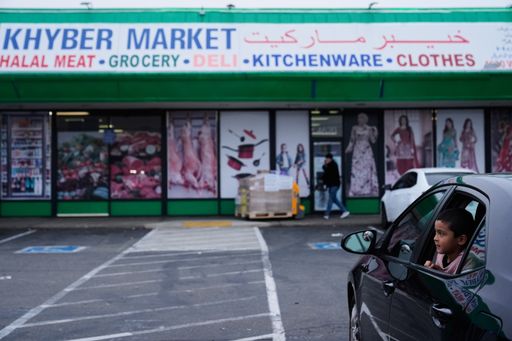
Several Afghans left their children and spouses behind in Afghanistan after the hurried evacuation in 2021, hoping that the US would support the resettlement of their family members later. This left many families in limbo and separated from each other.
“I think it's worth noting that many, many Afghans who helped the US military were forsaken in the end by the United States - both by the Biden administration, which failed to get them out, and even more so by the Trump administration,” Moran tells TRT World.
With the Lakanwal’s attack in DC, Trump has now ordered a widespread review of asylum cases approved under the Biden administration and permanent-residency green cards issued to citizens of the 19 countries, which include Afghanistan. Trump also declared he would stop migrants from "Third World Countries."
Lakanwal had been granted asylum this year.
“This is a single, tragic case, but in no way should it suggest that all Afghans are dangerous. That is a preposterous and frankly racist notion, typical of the Trump administration, that shows no appreciation for the importance of human intelligence,” Moran says.
“The Trump administration's attitude - and now policy - toward immigrants and refugees is fundamentally at odds both with American ideals and a shared sense of understanding of how intelligence works.
“Frankly, the most patriotic Americans are those who fled oppressive regimes to seek refuge and a better life for themselves and their families in America.”