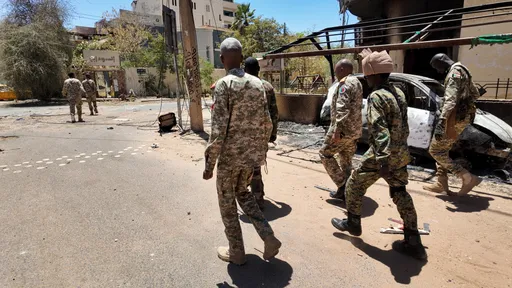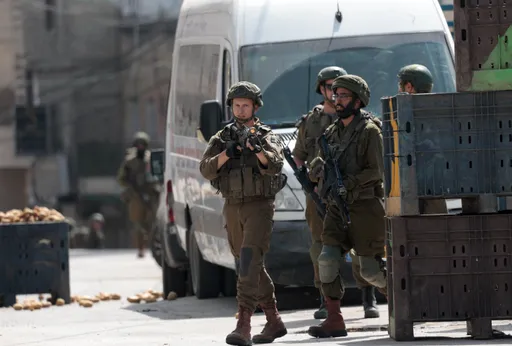
A growing number of Ukrainian attacks — some reaching far beyond active frontlines — have triggered regional alarm and raised questions over whether Kiev’s tactics risk undermining international legal norms, escalating the conflict, and threatening civilian and third-country security.
These attacks, ranging from missile misfires to sabotage and drone attacks, reflect an increasingly complex and far-reaching battlefield, where even neutral countries face indirect risks.
Recently, Turkish President Recep Tayyip Erdogan raised concerns over a Ukrainian attack that targeted Russian ships in the Black Sea close to Türkiye’s border.
TRT World lists five incidents over the past few years that have drawn international attention and criticism.
1. Nord Stream pipeline sabotage
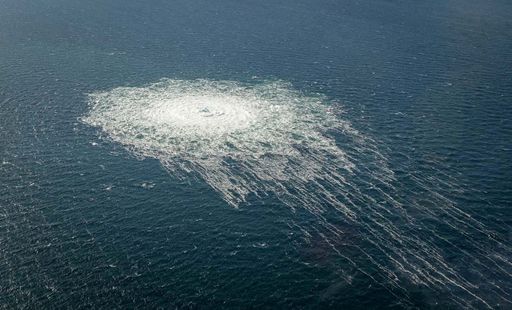
In September 2022, powerful underwater explosions ripped through the Nord Stream 1 and 2 pipelines in the Baltic Sea, abruptly severing major gas links between Russia and Europe.
The blasts caused large-scale gas leaks, environmental damage, and a geopolitical shockwave across the region, as the pipelines had been central to Europe’s energy network for years.
The attack was widely condemned as one of the most serious acts of sabotage against civilian energy infrastructure in recent memory. Because the explosions occurred in international waters and targeted non-military infrastructure, the incident violated maritime norms and risked escalating the conflict far beyond Ukraine’s battlefields.
Germany’s multi-year investigation has since narrowed toward Ukrainian suspects. This year, authorities issued an arrest warrant for a Ukrainian diver believed to have taken part in the operation. Investigators allege the attack was carried out using a rented yacht and specialised diving equipment, pointing to a small, covert Ukrainian team rather than a state military unit.
The suspected involvement of non-state or semi-covert Ukrainian operatives has deepened debate over the use of irregular tactics in the conflict, raising questions about accountability, escalation risks, and the expanding nature of hybrid warfare.
2. Missile strike in Poland raises NATO fears
One of the most alarming spillover incidents occurred in November 2022, when a missile fired during Ukraine’s air-defence operations landed inside Poland, killing two civilians.
The strike immediately triggered panic in Europe and Washington, fuelled by fears that NATO could be pulled directly into the conflict under Article 5 collective defence obligations. Poland is a NATO member.
Preliminary investigations indicated the missile likely originated from Ukraine’s air-defence system as it tried to intercept Russian fire.
At the time, Polish President Andrzej Duda emphasised that there was “absolutely nothing to suggest that it was an intentional attack on Poland.”
Former NATO Secretary-General Jens Stoltenberg and former US President Joe Biden echoed this assessment but warned that the event illustrated the “extreme escalation risks posed by cross-border debris, misfires, or miscalculations.”
Diplomats at the time warned that even accidental spillovers “test the limits of restraint” within the alliance.
The missile landed on farmland and a grain-drying facility, underscoring the potential for civilian harm even when misfires are unintended. It also sparked intense diplomatic discussions within NATO on the need for caution in military operations near allied borders.
3. Documents reveal Ukrainian link to drone attacks in Belarus
Leaked US government documents obtained by NBC News suggest that Ukrainian agents were involved in 2023 drone attacks on Russian targets outside Ukraine, contrary to US and Western directives.
In February 2023, officials with Ukraine’s Security Service reportedly assessed that their operatives in Belarus disobeyed orders and attacked a Russian A-50 early-warning aircraft at the Machulishchi airbase near Minsk.
The aircraft — a mobile radar and command platform used to monitor Ukrainian airspace — reportedly suffered minor damage from a quadcopter drone.
Belarusian dissidents from the partisan movement BYPOL publicly claimed responsibility, saying participants were “safe, outside the country.”
The group said it used drones to strike the aircraft on the ground. Satellite imagery later suggested visible scorch marks, though Russia denied any significant damage.

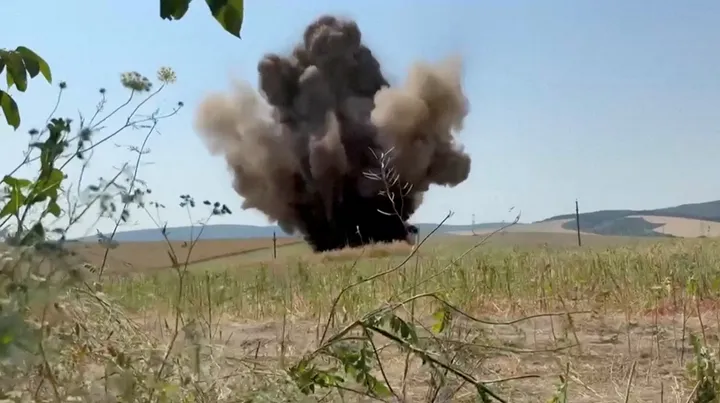


The incident marked one of the boldest acts of sabotage carried out inside Belarus since the start of the war.
Belarusian President Alexander Lukashenko condemned the attack, calling it a terrorist act coordinated by Kiev, and warned against attempts to draw Belarus into the conflict.
The attack raised questions over Belarus’s role in the conflict. Although not officially a combatant, the country has allowed Russia to use its territory for military operations, making it a key logistical hub.
Sabotage against Russian assets inside Belarus by alleged Ukrainian agents, therefore, carries potential implications under international law.
The operation also underscored how the war has increasingly expanded into hybrid and irregular tactics, with alleged non-state actors conducting strikes that can influence battlefield dynamics far beyond formal frontlines.

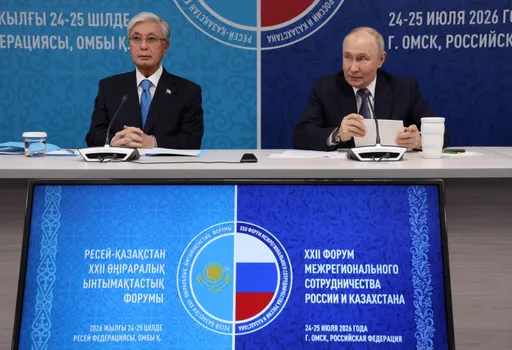
4. Kazakhstan warns Ukraine after CPC pipeline strike
In early 2025, operations on the Caspian Pipeline Consortium (CPC) terminal near Novorossiysk were temporarily halted after a Ukrainian sea-drone strike hit infrastructure connected to the Black Sea port.
The CPC pipeline is one of the world’s most important energy corridors, carrying more than one-third of Kazakhstan’s crude exports to global markets through Russian territory.
The attack disrupted tanker loading schedules and forced Kazakh authorities to brief international buyers about potential delays. For Kazakhstan — a country that has carefully balanced relations with both Russia and the West — the strike represented a direct threat to its economic lifeline.
Astana reacted sharply, warning Ukraine to “refrain from actions” that could harm Kazakh energy interests or destabilise regional trade routes.
Officials stressed that the CPC network is an international commercial pipeline, not a military installation, and that attacks on its facilities risk violating international norms governing civilian infrastructure and third-party economic assets.
The incident highlighted the broader implications of Ukraine’s expanding naval-drone campaign: even non-belligerent countries can be drawn into the fallout when strategic energy projects overlap with maritime zones.
5. Black Sea attacks near Türkiye’s maritime zone
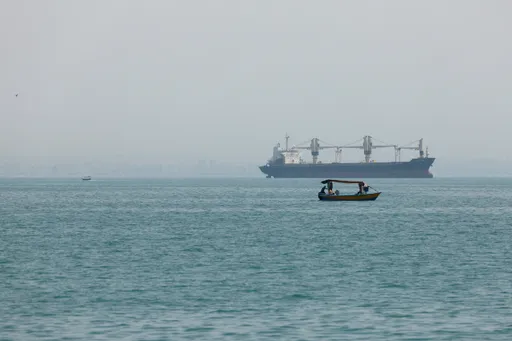
Tensions in the Black Sea escalated further this week after multiple Ukrainian drone strikes targeted Russian-linked vessels and infrastructure close to Türkiye’s maritime zone, prompting sharp warnings from Ankara and renewed concerns over civilian shipping safety.
The latest incident occurred on Tuesday, when a Russian-flagged tanker reported an attack near Türkiye’s coast. Turkish maritime authorities said the strike occurred just over 80 nautical miles from its coastline, adding the tanker was "sailing from Russia to Georgia loaded with sunflower oil" with 13 crew on board.
This follows Friday’s attacks, during which two commercial oil tankers — the Kairos and the Virat — were hit in separate Ukrainian attacks, inside the Turkish exclusive economic zone.
Both vessels caught fire after explosions, with Russia accusing Ukraine of deliberately targeting civilian shipping.
Turkish President Recep Tayyip Erdogan had on Monday criticised drone attacks as a "worrying escalation".
"We cannot under any circumstances accept these attacks, which threaten the safety of navigation, the environment and lives in our exclusive economic zone," he said of the initial drone attacks which took place on Friday.
"The conflict between Russia and Ukraine has clearly reached a stage where it threatens the safety of navigation in the Black Sea."