 Djoomart Otorbaev
For decades, America’s golden goose wasn’t Wall Street or Silicon Valley venture capital. It was a visa, the H-1B.
That programme brought in the scientists, engineers, and entrepreneurs who built trillion-dollar companies and millions of jobs. On September 19, the Trump administration strangled it with a single act: a $100,000 application fee. In doing so, America shot itself in the brain, not the body.
America’s true strength has never been its arsenal or bank accounts. It was magnetism — the ability to attract the smartest, most knowledge-hungry, and most ambitious minds from around the world.
Its own education system, trapped in profit-driven mediocrity, was never able to produce enough highly educated workers to meet the demands of a modern economy. Foreign talent filled the gap. It was the oxygen that kept America’s innovation engine alive. Now that oxygen comes with a $100,000 price tag.
The new rule took effect on September 21, with every H-1B application from abroad now “accompanied or supplemented by a payment of $100,000.”
Up until then, the administrative fee was $1,500. The White House justified this astronomical hike by claiming the programme was “abused” to depress wages and outsource jobs. In reality, America has just imposed a brain tax on itself.
The immediate shock
The scale of the fallout is staggering. Nearly 400,000 H-1B visas were approved in 2024, according to Pew Research, with around 260,000 of those being renewals.
According to US Citizenship and Immigration Services (USCIS), Amazon alone secured more than 10,000 approvals in the first half of 2025, followed by Tata Consultancy Services (TCS) with over 5,500. More than 75 percent of these visas go to Indian nationals.
That pipeline has been critical. Each year, the Indian Institutes of Technology (IITs) graduate roughly 15,000 computer science elites. Historically, 70 percent chose to head to the United States. That stream of talent has quietly built the foundations of American corporate power.
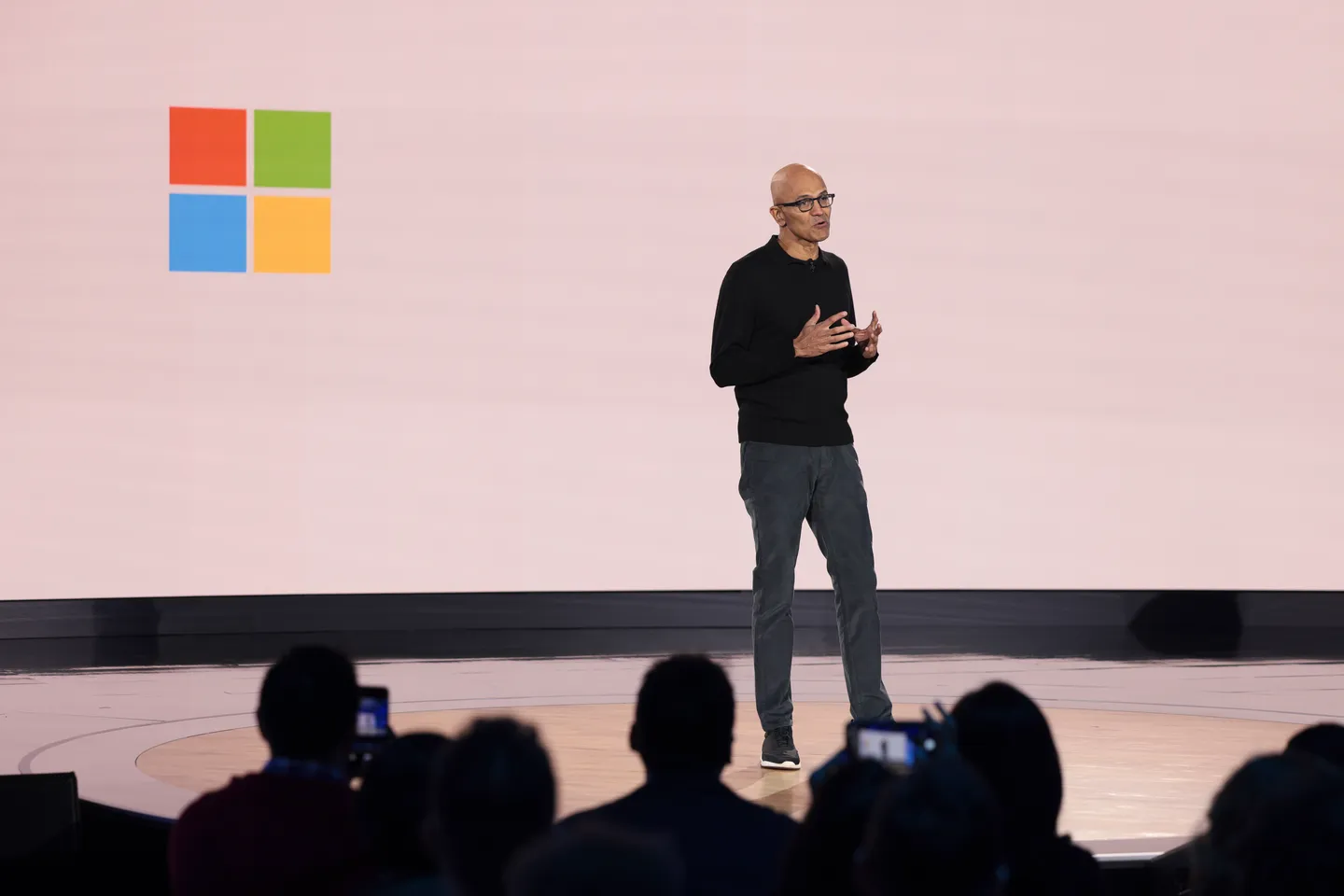
Today, top leadership roles at major companies are held by Indian-born executives, such as Satya Nadella at Microsoft, Sundar Pichai at Alphabet, and Neal Mohan at YouTube.
Collectively, these executives lead companies worth trillions of dollars in market capitalisation. They did not steal American jobs — they created new industries and millions of livelihoods.
America’s advantage in innovation has always been its openness to talent. After World War II, Project Paperclip brought German scientists to the United States, fuelling the space race and the development of rockets that landed men on the moon.
Then, during the Cold War, American universities attracted defectors and top minds from the Soviet bloc and China, further powering breakthroughs in physics, computing, and medicine.
History shows a simple truth: America’s strength has always depended on attracting the best minds, wherever they come from.
Beyond India: A global repercussion
According to the National Science Foundation, foreign-born workers account for 19 percent of all science and engineering professionals in the United States, and an extraordinary 43 percent of those with PhDs. Remove that talent, and the US loses its edge across the entire innovation chain.
The damage goes beyond immigration statistics. Universities will bleed first. Nearly half of all graduate students in US computer science and engineering programmes are foreign-born.
Priced out by Washington, they will turn to alternatives: Toronto, Berlin, Singapore, Sydney. Other countries aren’t waiting. Canada’s Global Talent Stream processes tech visas in as little as two weeks, making it one of the fastest entry points for skilled workers.
In 2022, the UK launched its High Potential Individual visa, targeting elite graduates from the world’s top universities. Germany’s 2012 Blue Card residency scheme continues to attract skilled professionals with far lower salary thresholds than the US requires. America’s $100,000 brain tax is its best recruitment brochure.
The damage won’t stop at academia; America’s startup ecosystem will also face a body blow.


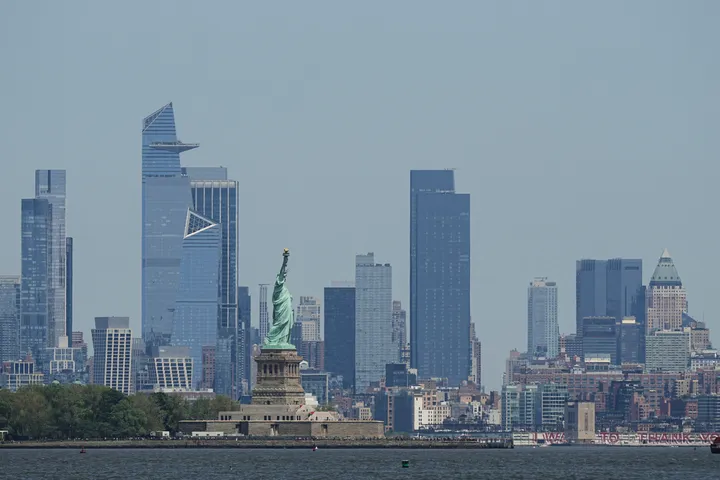


Over half of US unicorns — billion-dollar startups — were founded by immigrants or their children, collectively valued at $1.2 trillion. Immigrant-founded firms employ over 1.8 million Americans, a testament to the jobs and industries these founders create.
Silicon Valley’s strength was never just capital. It was the fusion of risk-taking American investors with global talent willing to bet their future on the dream.
H-1B restrictions will now have real consequences for innovation. Research from the National Bureau of Economic Research shows that limiting access to foreign workers reduces patent filings and overall innovation output.
Raise the barrier to entry to six figures, and the world’s best minds will simply build the next Silicon Valley elsewhere. Bangalore, Singapore, Dubai, and even Riyadh are already preparing to seize the crown, with Gulf states building tech hubs whilst offering lavish research and development subsidies and visa waivers.
The fallacy of ‘protecting jobs’
The White House narrative that H-1Bs “depress wages” collapses under scrutiny.
Most H-1B holders are employed in roles where demand significantly exceeds supply, such as software engineering, data science, and medical research.
Their contribution is not substitution, but amplification. Cutting them off does not protect American workers; it handicaps them. Without a pipeline of skilled colleagues, US teams lose competitiveness, productivity declines, and entire sectors stagnate.
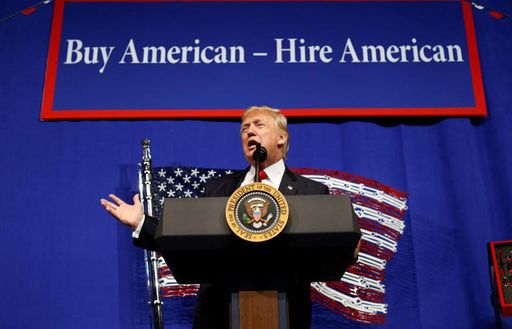
The irony is brutal: in trying to “defend” American jobs, Washington is destroying the very ecosystem that generates them.
The geopolitical consequences are even more profound.
By making itself hostile to global talent, the US is accelerating the rise of rival innovation hubs. Countries with open immigration systems, modern universities, and government-backed R&D ecosystems will inherit the talent America pushes away.
Innovation doesn’t die. It migrates. And it is already migrating.
Somewhere in India, China, or Canada, a young engineer is now planning the startup that could have changed America, if only the door had remained open. That door is closed. The question is whether the US can ever reopen it in time.