 Sadiq S Bhat
Washington DC — Nicolas Maduro did not walk into an American court as a head of state seeking distance. He arrived under guard.
Flanked by US Marshals, the Venezuelan leader entered a federal courtroom in lower Manhattan on Monday, unrestrained but closely escorted, his fate shifted from Caracas to the Southern District of New York.
Maduro, 63, stood before Judge Alvin Hellerstein, a 92-year-old judicial veteran known for his intolerance of theatre and his command of the room.
The Venezuelan President pleaded not guilty to all charges.
The indictment is blunt. Narco-terrorism. Drug trafficking. Corruption. Prosecutors allege that Maduro oversaw a state-linked criminal enterprise that turned Venezuela into a cocaine corridor feeding the US.
The charges were first unsealed in 2020, during the first Trump administration. They named Maduro alongside senior officials accused of facilitating cocaine shipments and protecting operations linked to cartels.
What changed last week was custody.
US officials describe Maduro’s capture in Caracas as a tightly planned military operation. His lawyers call it abduction.
Maduro’s legal team is already sending signals. He was represented at the hearing by Barry Pollack, a top defence lawyer known for representing WikiLeaks founder Julian Assange.
The choice of counsel matters. Pollack’s presence suggests a strategy that goes beyond criminal defence, towards framing the case as political prosecution.
That framing has history.
Noriega trial
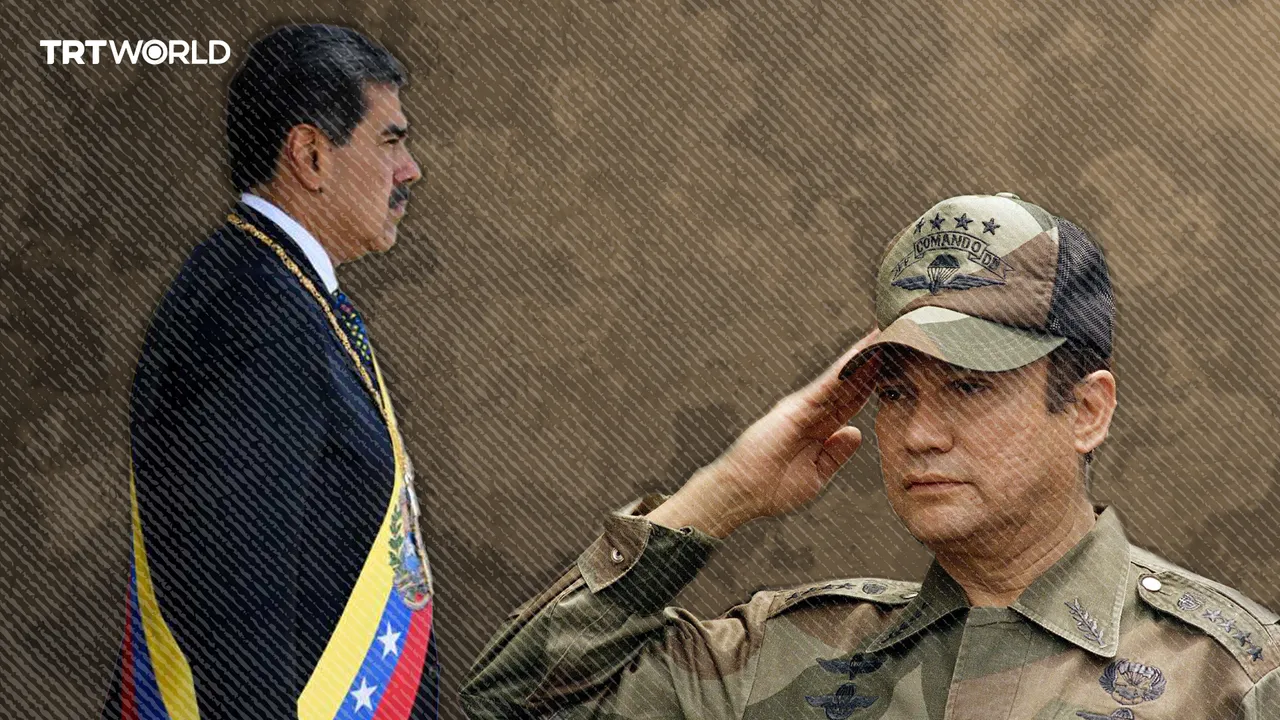
For many watching, the scene in Manhattan carried an unmistakable throwback to 1989, when US forces captured Panamanian leader General Manuel Noriega and flew him to Florida to face drug charges.
Noriega, too, arrived in shackles. Noriega, too, argued that sovereignty shielded him from an American courtroom.
In fact, Noriega wrote a memoir America's Prisoner, in which he described his trial as politically motivated, with Judge William M. Hoeveler denying key defense motions on immunity.
Accusing prosecutors, led by Michael "Pat" Sullivan, of relying on "professional liars" like cartel members Carlos Lehder and Ricardo Bilonick, Noriega depicted defense attorney Frank Rubino as a valiant underdog fighting evidentiary restrictions and limited resources.
The courts rejected those claims. Washington did not recognise Noriega as Panama’s legitimate leader, and judges ruled that head-of-state immunity did not apply.
Noriega was convicted on eight counts and served 17 years in US prisons.
Diplomatic immunity?
The comparison is not accidental. It is the legal architecture that the US government is expected to lean on.
“There are clearly similarities,” Naomi Roht-Arriaza, a leading expert in international law and transitional justice, tells TRT World. “Both were accused of cocaine-smuggling related crimes, and both were brought to the US for trial under coercive circumstances.”
But she cautions that the analogy is imperfect and legally dangerous.

“Noriega was not formally the president of Panama at the time of the invasion,” she says. “Maduro is formally the president, despite the US not recognising him. By allowing his vice president to take power and leaving his power structure in place, the US seems to accept that he was the constitutional president. That raises head-of-state immunity issues that were not there in Noriega’s case.”
Pertinently, international law draws a sharp distinction. A sitting head of state enjoys absolute personal immunity from prosecution in foreign courts. Former leaders retain functional immunity for official acts. Drug crimes do not fall under recognised exceptions.
“Arguably, Maduro was a current head of state and so has absolute immunity,” Roht-Arriaza says. “There are exceptions for international criminal courts and arguably for grave human rights violations, but none for drug-related crimes.”
On Tuesday, Venezuela’s Attorney General Tarek William Saab appealed to Judge Hellerstein to “proceed to recognise the lack of jurisdiction of the court under his command to try the leader of a sovereign nation, who is protected by diplomatic immunity, I repeat, as head of state.”
In the Noriega era, judges ruled that the manner in which a defendant is brought before the court does not invalidate the prosecution. The precedent was set in Alvarez-Machain, where the Supreme Court allowed the trial to proceed after a Mexican doctor was kidnapped and flown to the US.
“That doctrine has never been tested against a sitting head of state,” Roht-Arriaza notes.
The sovereignty issue is even starker.
Arriaza, who has extensive experience focusing on post-conflict processes in Latin America, added, “The US has tried to frame this as a law enforcement action, but the reasoning keeps getting muddled by statements about how this is a war (which it isn’t), about how the US is going to “run” Venezuela, and how the US is going to “take” Venezuelan oil.”
“This points to a further breakdown of the postwar international order.”
US regime change dressed in legal robes
Those concerns sit at the heart of the case.
Dr Jenaro Abraham, a leading scholar of Latin American insurgencies who has studied the Noriega prosecution, says the key question is whether law can catch up with politics.
“In Noriega’s case, the legal prosecution and the political objective ultimately converged,” he tells TRT World.
“The US captured him, tried him, and secured a conviction. That retrospectively stabilised the claim that his removal was about law enforcement rather than regime change.”
Maduro’s case, he argues, has not reached that point.
“The legal scaffolding of narcoterrorism exists to criminalise armed political actors by reframing political economies as pure criminality,” Abraham says. “Right now, political objectives are outpacing legal grounding.”
He points to the risks ahead. Courts will need strict proof of the terrorism nexus required under narcoterrorism statutes. Prosecutors will need evidence, not designation or symbolism. Wiretaps. Financial trails. Insider testimony that places Maduro at the centre of decision-making.
“If this becomes a trial built on narrative rather than proof, it will struggle,” Abraham says.
The defence strategy will matter just as much. “An aggressive reliance on sovereign immunity would signal weakness,” he argues. “The more effective defence would emphasise executive overreach, selective enforcement, and geopolitical objectives, without reducing the defense to simplistic martyrdom.”
Noriega tried the immunity route. It failed. His trial became a prolonged global argument about sovereignty, selective justice, and US power. Those debates did not end with his conviction.
They are resurfacing now.
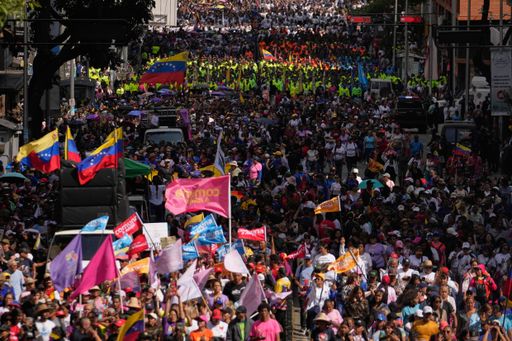
Supporters of the prosecution argue the case is long overdue for accountability for state-level criminality. Critics call it regime change dressed in legal robes. Analysts warn it tests the outer edge of American authority.
For now, Judge Hellerstein has narrowed the focus. No speeches. No politics.
Maduro is expected to return to court from a Brooklyn detention centre on March 17.
“Noriega’s trial became a prolonged struggle over sovereignty, selective justice, but (in this case), the strategy and public posture of Maduro’s legal team will be an important indicator of whether the prosecution is evolving into a serious evidentiary case or remaining largely performative,” Abraham concludes.