 Zulal Sema
Along the Istanbul Strait, faith rarely announces itself loudly. It moves through the city in quieter ways: in dawn visits to tombs, whispered prayers carried on the wind, and the low horns of ships saluting as they pass.
For generations, Istanbulites have believed that certain sacred figures — Yahya Efendi, Aziz Mahmud Hudayi, Prophet Joshua, and Telli Baba — stand as the city’s spiritual guardians.
These are not saints confined to history books; instead, their resting places are woven into daily life where faith, memory, and everyday life quietly intersect.
In Turkish folklore and popular spiritual culture, the idea of guardianship is closely tied to the place tombs occupy in the collective imagination. They function as thresholds, spaces where people pause, reflect and seek relief.
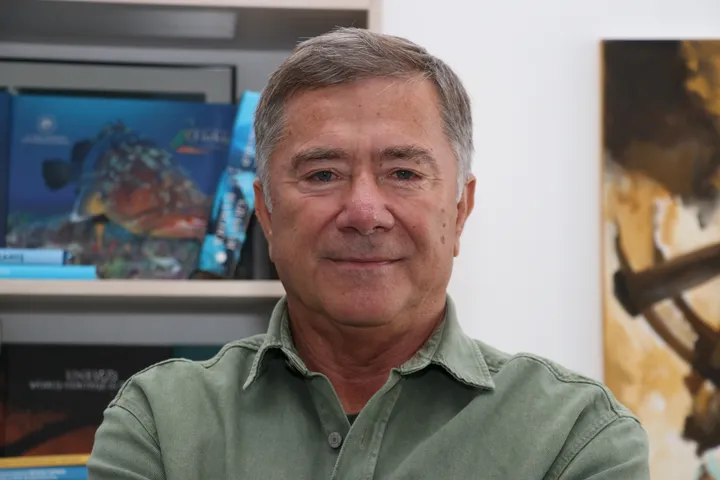
“I believe it is always possible to trace a connection between spiritual life and what appears, on the surface, as political, social, or cultural change,” Iskender Cure, a Sufi practitioner at Türkiye’s Ministry of Culture and Tourism, tells TRT World.
“It is no coincidence that the empire’s most brilliant periods coincided with the lives of the most luminous figures of Ottoman Sufism. Yahya Efendi and Aziz Mahmud Hudayi are among the finest examples.”
“These are places where compassion flows,” adds Fatih Kilicoglu, the imam of the Aziz Mahmud Hudayi Mosque.
“They invite people to turn inward and offer healing through prayer. Prayer, in itself, also provides a form of psychological relief.”
In recent years, participation has visibly increased. Social media posts shared by mosques have drawn larger crowds to Thursday evening dhikr gatherings at Yahya Efendi and Sunday dhikr ceremonies at Aziz Mahmud Hudayi.
“This is not merely a place made of stone and soil,” Kilicoglu says. “It is one of the spaces where Istanbul’s spiritual heart beats. Serving at a threshold where thousands come seeking relief softens the ego and keeps compassion alive.”
Volunteer filmmaker Yunus Emre Bekmez, 29, has witnessed that devotion firsthand.
“For a prayer held at 7.30 am, some arrive as early as two or three in the morning to queue,” he says.
“People come from Trabzon, Ankara, Sakarya and Kocaeli. Once, when the mosque was completely full, I spoke to someone who rushed inside. He told me he had come from Austria and had slept for only two hours, just to be there.”
Cure believes this continuity reflects a deeper cultural relationship with memory. “While the modern world often encourages people to avoid death or erase it from daily life, we are a society that continues to live with its dead,” he says. “These figures represent a symbolism rooted in collective belief.”
That symbolism extends into the water. For generations, sailors passing through the Strait have believed that Yahya Efendi, Yusa Tepesi, Aziz Mahmud Hudayi, and Telli Baba protect them.
Even today, crews on ships lower their voices as they pass. Captains sound their horns. Tugboats offer brief salutes – small gestures of respect toward unseen guardians.
Scholars trace this reverence back to Istanbul’s post-conquest transformation. “The historic peninsula, Eyup, Uskudar, Galata, and both shores of the Istanbul Strait were Islamised through institutions,” says Doc Dr Fatih Kose of Tekirdag Namik Kemal University.
Alongside these institutions, tombs became inseparable elements of the urban fabric. They were places of refuge for the public and spaces where people drew spiritual strength.”
That relationship was interrupted in 1925, when tekkes, zawiyas, and tombs were closed under modernisation reforms. Many fell into neglect. Only decades later were they gradually reopened and restored. Some remain under restoration even today.
Yet belief endured.
Yahya Efendi
Winter is still new in Istanbul when devotees climb the steep hill to Yahya Efendi’s tomb before dawn.
Streets remain dim, the air still carries the chill of night, but visitors ascend in their scores with the intention of finding peace.
Born in 1494, Yahya Efendi was a scholar, poet and polymath engaged in Islamic sciences, medicine and geometry. Historical sources describe him as being in spiritual communion with Hizir (al-Khidr).
He was also the foster brother (through sharing a wet-nurse) of Sultan Suleyman the Magnificent, a proximity to power he never used for authority. His influence was spiritual, and it remains palpable.
While Suleyman lies buried beneath the grandeur of the Suleymaniye Mosque, Yahya Efendi’s resting place stands with a gravity of its own, overlooking the Bosphorus as if guarding it.
Can one look upon a grave with admiration?
The path leading to the tomb has preserved its character: worn stone steps, rows of graves, and an imposing gate opening onto a space of quiet simplicity.
Inside, the sage-green, muted pastel rose colours, and the interior evokes calm, as if stepping inside a Claude Monet painting.
Nigar Nigar Alemdar, now 80, first came here in 1973 with her grandmother, carrying a Philips cassette recorder to document family stories connected to the lodge.
“The custodianship of the Yahya Efendi dergah traces back to my paternal grandmother’s family,” she says. “Our ancestor, Huseyin Sevki Efendi, belonged to the family entrusted with the care of the lodge.”
She returned fifty years later, in 2023, while researching her family history. She notes that the tomb, originally built by Mimar Sinan after 1571, had suffered significant wear over the centuries, and that she was deeply moved by its renewed appearance following the restoration carried out between 2011 and 2013.
“When I entered the courtyard, I closed my eyes and tried to recall what my grandmother used to tell me fifty years ago,” she says. “I wanted to feel what had never been recorded.”
Her story reflects a broader truth about Istanbul, that some places exist not only through what is recorded, but through what is sensed and passed on.
Joshua’s Hill
Some of those transmissions take the form of dreams.
One of the most enduring narratives surrounding Yahya Efendi involves a dream believed to have guided him to Joshua’s Hill in Beykoz, nearly 25 kilometres away.
In this story, repeated visions lead him to a site long associated with Prophet Joshua.
In the Qur’an, journeys are rarely just about distance. In Surah Al Kahf, Prophet Moses vows to travel endlessly until he reaches “the junction of the two seas.” Across centuries of interpretation, some have symbolically associated this point with the northern edge of the Bosphorus.




It is here, Joshua’s Hill rises 201 metres above sea level, overlooking Anadolu Kavagi and the Black Sea beyond. At its summit lies a mosque and shrine believed by many to mark the resting place of Prophet Joshua.
Local vendor Guner Ozer, 47, who has worked there for nearly three decades, recounts the story with the ease of someone who has told it many times, not as legend, but as inheritance.
According to this tradition, Yahya Efendi once had a dream revealing the location of Joshua’s grave. He dismissed it at first. When the same dream returned three times, he travelled to Beykoz and spoke with local shepherds.
One of them told him that although sheep grazed freely across the land, they never touched the spot where the shrine now stands. Yahya Efendi ordered the area to be enclosed. In later years, the shrine was rebuilt and expanded, bearing the patronage of Sultan Mahmud II.
For Ozer, however, the meaning of Joshua Hill is not confined to stories of the past.
“I’ve been here almost 30 years,” he says. “What I’ve witnessed again and again is how people calm down when they truly turn towards God here. Some come with expectations. Others, [just] to worship in peace.”
The site’s caretaker Yeter Guzel adds, “Joshua has a different beauty. A different spirituality. There are moments I’ve lived here that I don’t even want to describe. They feel like gifts from God.”
At Istanbul’s far edge, where land narrows into sky and water opens into water, Joshua’s Hill resists simple explanation.
It is not only a site of belief, nor merely a viewpoint over the Bosphorus. It is a place where scripture, memory, and everyday life overlap, where the act of seeking continues quietly, without end.
Aziz Mahmud Hudayi
The path to Aziz Mahmud Hudayi’s tomb runs through everyday Uskudar, past cafes and the Uncular slope, before slipping into stillness.
The transition is subtle but unmistakable.
Inside the complex, the dergah’s soup kitchen continues a centuries-old tradition.
Nourishment here has always been practical as much as spiritual.
That sense is echoed by visitors who come regularly. Zuhal Isik, 47, travels from Kucukcekmece whenever she can.
“The spiritual atmosphere here brings real comfort,” she says.
“It relaxes you, it heals you. Knowing that Hudayi is considered one of Istanbul’s spiritual guardians gives people a deep sense of trust.”
Isik recalls one of the most enduring oral narratives associated with Hudayi, the story of the ‘Hudayi Road’.
According to the account, on stormy days when no boatman dared to cross the Bosphorus, Hudayi would still set out for prayer. As his boat moved forward, the sea along his route would calm, while the waters around it raged.
“They say the sea becomes gentle where he passes,” she explains. “That path remains known as Hudayi’s way.”
Born in Sereflikochisar Hudayi was trained as an Ottoman judge before a decisive spiritual rupture led him toward asceticism, humility and guidance. By the late 16th century, he had settled in Uskudar, establishing what would become not only a mosque and lodge, but a centre of spiritual instruction and social care.
For many Istanbulites, his presence feels intimate. “[He] is the spiritual backbone of this neighbourhood,” says local resident Muhammed Tahiri.
Hudayi died in 1628 and was buried beside the dergah he founded. His supplication — ‘May they not drown at sea, may they not fall into poverty, and may they depart this world with faith’ — is regarded as a spiritual shield. Sailors still salute him as they pass.
‘Our burial ground is almost like a garden of hearts,’ says Kilicoglu.
Telli Baba
Among Istanbul’s spiritual guardians, Telli Baba is often regarded as the most enigmatic figure.
Tucked away in Rumeli Kavagi, his tomb faces Joshua’s Hill across the Bosphorus. In popular belief, the two stand opposite one another like sentinels guarding the Black Sea entrance of the strait.
According to oral tradition, an invisible spiritual line stretches between them, an imagined boundary known as the line of safe passage, a quiet reassurance woven into maritime memory.
Some believe Telli Baba was Abdullah Efendi, a battalion imam during the reign of Mehmed the Conqueror who attained the rank of martyrdom. In this reading, Istanbul’s guardians represent different spiritual stations: prophethood, sainthood, and martyrdom.
For decades, Telli Baba remained within a military zone, closed to civilians. Yet visitation never ceased. When access reopened, the shrine once again drew crowds, particularly brides.
Telli Baba offers a mood that can easily be romanticised, especially on a rainy day. In popular imagination, it resembles a scene from old Turkish films: young women stepping quietly into a shrine, carrying prayers for marriage and a hoped-for future.
Local vendor Guniz Genisli, who has lived in the neighbourhood all her life, remembers Sundays in the 1950s and 60s when dozens of brides would arrive to make their intentions, offering wire threads tied to Ottoman bridal traditions.
“Back then, it was extremely crowded,” he says. “On a single Sunday, eighty or ninety brides would come. Today, there are fewer visitors, but the custom itself has never disappeared.”
For Genisli, the quieter atmosphere reflects not a loss of belief but a broader social shift.
“As societies grow more prosperous, people slowly drift away from shared ways of life,” she says. “Rituals once brought people together. Now everything is more individual. In the age of social media, everyone retreats into their own screen. There are still crowds, but the sense of community has weakened. When that happens, traditions begin to erode quietly.”
What continues to distinguish Telli Baba from other shrines is its wire ritual. The tel (wire) that gives the tomb its name is not a random object but a symbol rooted in Anatolian and Ottoman bridal customs.
In earlier times, brides wore fine metal wires and silver threads along the edges of their veils and headdresses, among the most visible elements of bridal dress, symbolising abundance, protection and the transition into a new life. Over time, women began donating these wires to the tomb, and the object itself became inseparable from Telli Baba’s identity.
“We don’t sell these wires telling people to seek help from them,” Genisli stresses. “They are there so the custom can be fulfilled. If someone starts placing hope in the object itself, that becomes problematic in terms of belief. The wire is a symbol. Those who wish to become brides come with intention. Those who marry return with gratitude.”
Though crowds are smaller today, the ritual endures. Sunnis, Alevis and non-Muslims alike approach the tomb through their own symbolic languages, some to make an intention, others to give thanks, and some simply to stand quietly at the threshold.
Together, these saintly figures form a sacred geometry across the Bosphorus, a spiritual map sustained through belief, memory, and the quiet rituals of daily life.
And even now, as ships pass along the water, some still salute, just in case.