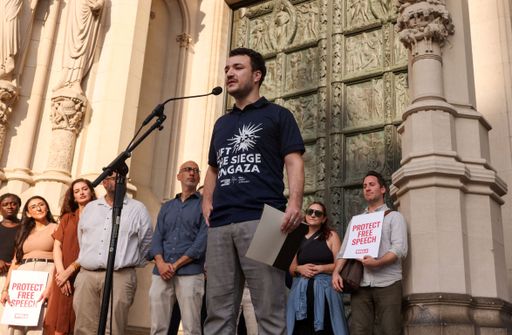
Mahmoud Khalil has appeared in a federal appeals court in Philadelphia, where his attorneys asked a three-judge panel to affirm the district court ruling, as he continues to challenge a deportation case brought by President Donald Trump's administration over his pro-Palestine activism at Columbia University.
The hearing before the 3rd Circuit Court of Appeals came on Tuesday as the government seeks to overturn a lower court order granting Khalil's June release from a Louisiana immigration jail.
Khalil's attorneys have asked the three-judge panel to affirm the district court's ruling, which prevents federal authorities from detaining him again and beginning the deportation process.
Drew Ensign, an attorney for the government, countered that the lower court judge overstepped his authority and that the case should be left to the immigration judge in Louisiana.
"All of this is being conducted in an improper forum," Ensign said. "So that should be a full stop."
An immigration judge last month ruled that Khalil could be deported, though the case is now under review by a separate appeal board.
Khalil, who is a legal US resident married to an American citizen, has vowed to continue advocating for Palestinians as his case plays out. He was recently permitted by a magistrate judge to travel across the country for rallies and other events.
"They want to make an example of me to intimidate those speaking out for Palestine across the country," Khalil said in a statement following the hearing. "I'm stating unequivocally: I will continue my legal fight in federal courts for my rights, and for everyone's right, to free speech."
First of many





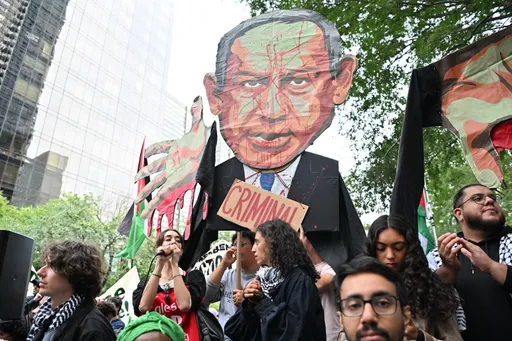
Khalil was the first person arrested under President Donald Trump's crackdown on student protests against Israel's genocide in Gaza.
He was detained on March 8 at his apartment building in Manhattan.
While he was not among those arrested on campus, his role as a negotiator and spokesperson for student protesters made him a prominent target.
A few days after Khalil's arrest, Trump's claim came due after another pro-Palestine scholar, Badar Khan Suri, an Indian researcher at Georgetown University, was arrested.
His attorney said he was arrested because of the Palestinian identity of his wife. He was released in May.
After the arrest of Suri, authorities went after another pro-Palestine student, Momodou Taal, asking him to turn himself in.
On March 25, Yunseo Chung, a Columbia University student, said she sued the Trump administration to stop her deportation from the US over her participation in a pro-Palestine protest last Spring.
Also on March 25, Rumeysa Ozturk, who is a Tufts University PhD student, was kidnapped in broad daylight by US authorities over criticising Israel's carnage in Gaza.
On April 14, authorities arrested Mohsen Mahdawi during his citizenship interview before he was released on April 30.