 Zulal Sema
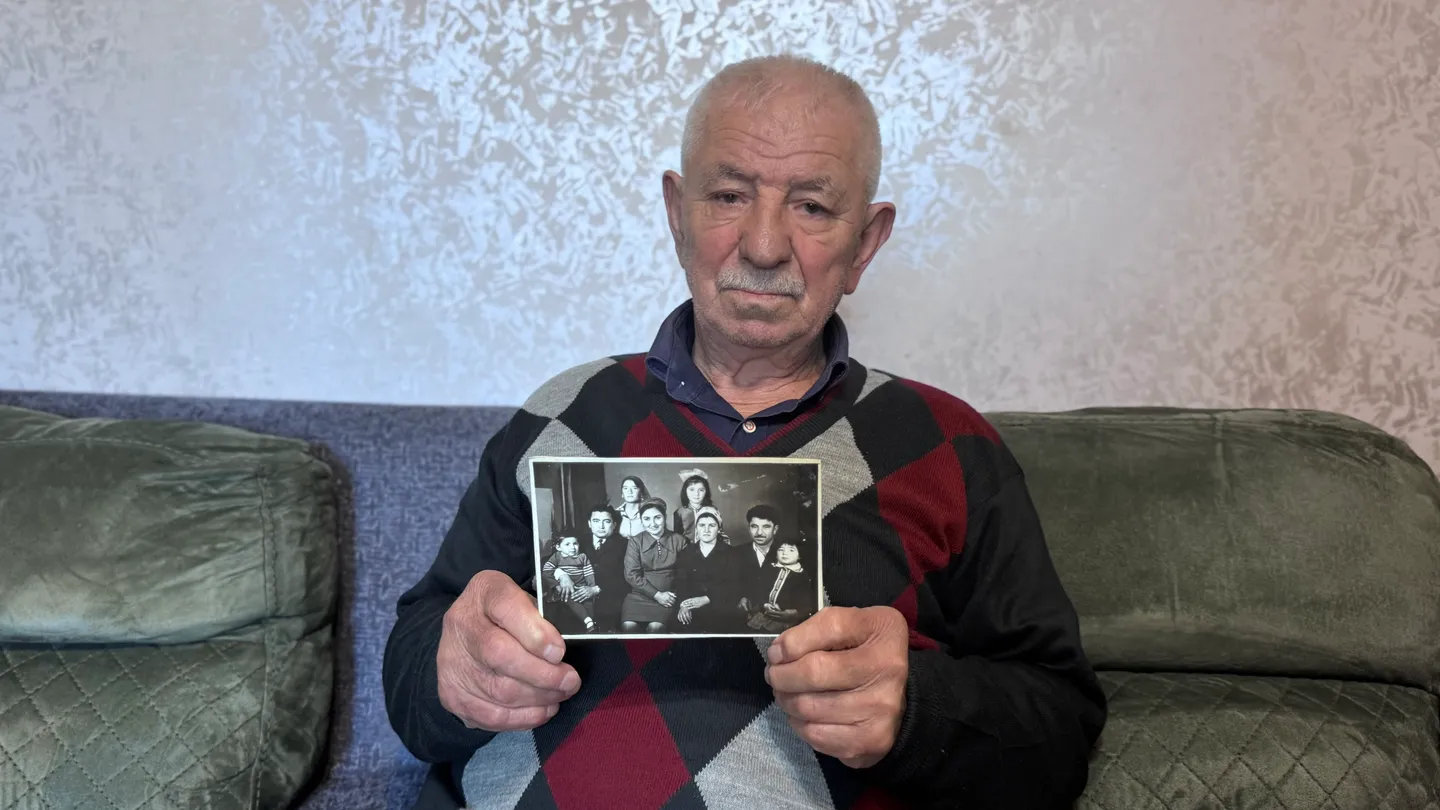
The morning rests in a gentle calm in the Anatolian side of Istanbul. Sunlight collects on the edges of a carpet worn smooth by years of footsteps.
A Qur’an recitation drifts through the living room, soft, steady, almost tangible in its presence.
On the small table, a glass of tea cools beside a plate of Georgian sweets.
A thin, high-pitched ringtone cuts through the recitation, a familiar tune often heard in old Anatolian nomadic folk music.
Ecem Omeroglu, 86, slowly rises to answer it.
When he returns to the sofa after ending the call, he settles into the cushion with calm.
“Do you know what's the hardest? To know that Ahiska is no longer our home, but it is still the place where our beginnings are,” he says.
To him, the 81st anniversary of the mass exile of nearly 100,000 Ahiska Turks from Akhaltsikhe, capital of the Meskheti region in southwestern Georgia is not just a date.
It is a chilly reminder of his uprooting during the 1944 exile of the Ahiska Turks living in the borderlands of Soviet Georgia ordered by Joseph Stalin towards the end of World War II.
The decree authorised the removal of Turkish and other Muslim minorities from the Ahiska region to distant Soviet territories, part of Stalin’s effort to alter the area’s ethnic makeup amid rising tensions with Türkiye.
With about 40,000 Ahiska men serving on the Eastern Front, Soviet forces targeted the undefended families left behind.
Under orders from Stalin's security chief, Lavrenti Beria, roughly 20,000 troops surrounded five districts —Adigon, Ahiska, Aspinza, Ahilkelek, and Bagdonovka—covering more than 220 villages.
Residents were given only two hours to pack before being herded onto trucks and into freight wagons, allowed just a single bundle of belongings.
Most had to abandon their homes, livestock and winter supplies, while some brought almost nothing, believing they would soon return.
“I was five years old when they deported us,” he says.
“They entered the houses shouting —‘Get out! Get out!’”
His mother, Dildar, was alone with her children: Bedir, Zeynul, Nuri, Zülbiye and Ecem, trying to gather what she could without knowing what she was preparing for.
“They took all 122 families of our village,” Omeroglu says.
“They gathered us at a place we called the Harman, the stadium. People were crying, asking each other, ‘Where will they take us?’ I asked my brother, ‘Will they kill us?’ Someone else said, ‘No, they will deport us, but where? Nobody knows.’”
From the stadium, they were pushed into the freight wagons.
“Five families in one wagon,” he says. “No bed. No place to lie down. They cut a hole in the wagon's floor for the toilet.”
The month-long journey grew harsher each day.
“I kept vomiting and became so sick that my uncle told my mother, ‘Let’s throw him out of the window, he is too weak.’”
“My mother cried, ‘I would never do that. I am his mother.’”
The deportees were transported for over a month to remote parts of Central Asia, with around 17,000 dying on the way from hunger, cold, and disease, according to historians’ estimates.
Strange lands
When the wagon doors finally opened, the exiled realised they were in Uzbekistan.
“They unloaded us and put us onto big carts,” he says.
“They placed three families in one village — some from Fergana, Andijan, Kokand, Kitob, Samarkand and Bukhara — and three in another. They separated us so we would not gather.”
The welcome was shaped by fear. “I went outside to play with the children. There were no children. No adults. Everyone was hiding.”
He soon learned why. “They told the villagers, ‘cannibals are coming,’” he says.
“So they hid from us.” Slowly, the fear faded over the next two weeks.
“One of my uncles visited the elders,” he says. “He told them we were Muslims like them. Slowly, they understood. They brought soup, bread, whatever they had.”
Life settled into a routine.
Omeroglu attended school, picking up Uzbek and Tajik words, while continuing to speak Ahiska Turkish at home — a dialect closer to Old Turkish and reminiscent of everyday speech in eastern Türkiye.
But the boundaries remained.
“You could not go from one village to the next without permission. We were always separated as Ahiska Turks; they didn’t want us to do anything collectively that might help us return to Ahiska. Even when my family members tried to go back, they were never allowed.”
Another uprooting
Decades passed. He married a woman from Ahiska—also deported to Kazakhstan’s Jambyl (Taraz) region through family ties—became a father, worked in vehicle logistics, and tried to build a life.





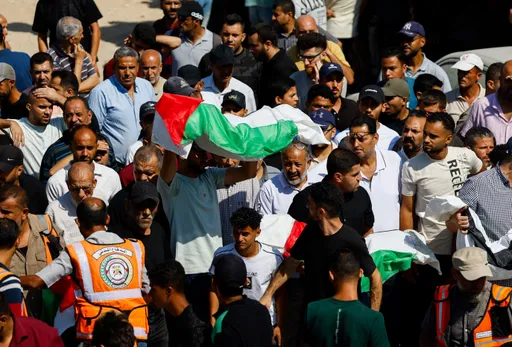
Then the Fergana events broke out in 1989, when the native Uzbeks massacred hundreds of Ahiska Turks.
“Local Uzbeks wanted the Turks gone. They burned our homes, beat us up,” Omeroglu says.
“They put marks—big crosses—on our homes. At night, they came and set them on fire. Many people were killed.”
Once again, families were scattered. Some went to Russia, some to Kazakhstan. His family moved to Qusar, which is the capital of the Qusar district in Azerbaijan.
There, they settled once more, adjusting to new surroundings, new people, and new routines as they attempted to rebuild their lives.
In the 1990s, new educational opportunities opened in Türkiye for Ahiska Turks.
“Under President Turgut Ozal, with his special support for the Ahiska community, the first group of Ahiska youth arrived in Türkiye for education,” Omeroglu says.
His oldest son, Ethem, was among the first group to come to Türkiye, arriving in Konya in the 1990s to study accountancy.
At the time, the move was made possible through a special government initiative: under a dedicated law passed by the Turkish Parliament on the acceptance and resettlement of Ahiska Turks, some families were granted facilitated entry and placement in the Türkiye’s eastern province of Igdir, meaning the process did not follow a standard visa scheme but a state-backed resettlement programme.
His son’s decision to come to Tükriye encouraged other family members to follow suit.
“In 2001, we migrated to Türkiye,” Omeroglu says.
“We came to Umraniye. That is where our life here began.”
Yet the past travelled with them.
“We don’t have a family archive,” he says. “They burned everything when they exiled us, photos, documents. We lost all the ties.”
Returning home
After he made a home in Türkiye, the thought of returning to Georgia never left him — but stories of Ahiska Turks being arrested upon arrival kept him away, according to Omeroglu.
In 2015, Turkish President Recep Tayyip Erdogan granted citizenship to Ahiska Turks, opening a safer path for reconnecting with their past.
By 2019, Ecem Omeroglu and several other community members applied to the municipality for help organising a visit. A bus was provided, and that year they finally made the journey back to Ahiska.
Their return came exactly 81 years after the mass exile. His elder son and nephew travelled with him.
“As the car climbed the hill, I told the driver, 'Stop here,’” he says.
“I stepped out and said, ‘I was born here.’”
What he remembered was still there.
“My mother’s laundry place. The walnut tree — half of it standing, half broken. A stream beside it. I washed my face with that water, just to feel something I had lost.”
His son performed ablution from the same stream and prayed.
They knocked on the door of the house now occupied by a Georgian family.
“The man spoke Russian at first,” he says.
“Then he answered me in clean Turkish. He had lived among Turks before. He welcomed us in.”
Everything was familiar.
And everything had irrevocably changed.
“You can find the house, the tree, the water,” he says. “But you cannot bring back what they took.”
After that first visit, Omeroglu returned three more times — once with his son, and later with his grandchildren, wanting them to understand “what we lost, and where our story began”.
His voice does not tremble. It does not rise.
“What is lost is lost,” he says.
“Only memories remain.”