 Zeynep Conkar
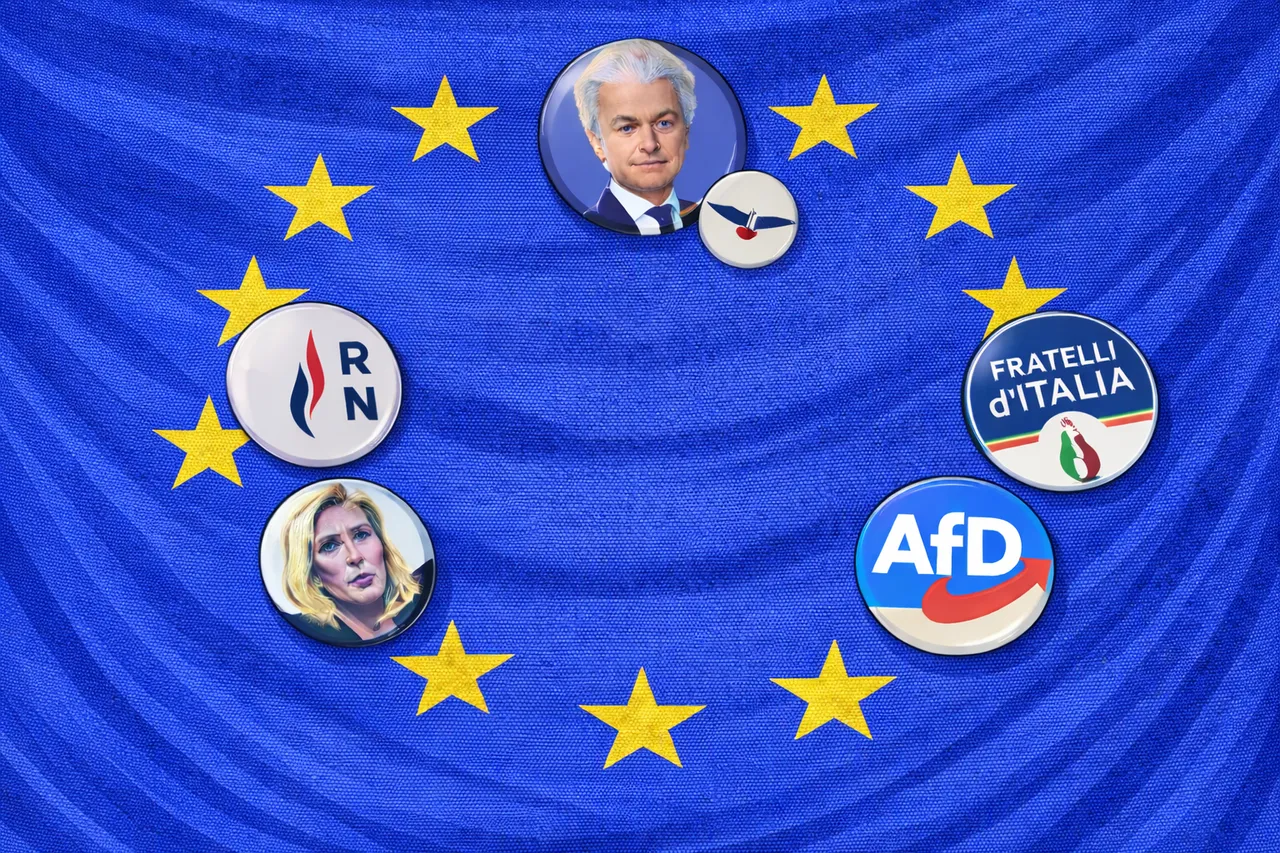
In 2025, it became clear that a shift had taken place across Europe and the United States, with the centre-left and centre-right elites increasingly adopting far-right policies to stay electorally viable amid economic worries, social fragmentation, and declining trust in institutions.
This shift in governance redefined the boundaries of normality, bringing once-fringe measures; securitisation, racialised border control, hostility towards migrants, suppression of dissent, and expanded policing powers, into mainstream policymaking.
According to political activist Dr Mahmud Abu-Odeh, in Germany and across much of Europe, where right-wing parties have been gaining influence, the mainstream political centre has responded by trying to win back voters.
They do this by claiming that right-wing policies are unnecessary because they themselves are already taking a tough stance on immigration, he says.
“In doing so, they repeatedly used and normalised the media incitement and agitation of the right-wing media until it became the standard of discussion culture,” Abu-Odeh tells TRT World.
“At the same time, the international balance of power has shifted, making uprisings by the oppressed, such as in Gaza, possible and turning them into a political and moral fiasco for these ‘value-based societies’,” he says.
This year also saw stricter migration policies expanded almost everywhere. Surveillance powers grew under the guise of “security” and “efficiency,” and activists and journalists faced increasing criminalisation.
One of the main factors, such as economic conditions, provided fertile ground for the rise of far-right administration.
Europe’s ongoing cost-of-living crisis and shrinking welfare protections have fuelled widespread voter frustration, especially among younger voters who no longer expect the stability their parents once had.
According to political analyst Klaus Jurgens, far-right politics has become normalised not only because extremists win majorities, but also because mainstream parties increasingly adopt their language in response to voter frustration over living costs and economic insecurity.
“As far-right movements exploit dissatisfaction over high taxation, the cost of living, making ends meet, and migration, mainstream parties increasingly copy elements of far-right rhetoric and policy to stay electorally viable, even when far-right parties themselves are not winning majorities,” Jurgens tells TRT World.
“When voters are unhappy with their leaders, they ask one key question: Why is my financial situation worse than it used to be? Instead of blaming governments or structural policy failures, it is easier to blame “the other.”
“Take homelessness in the UK as an example. Thousands sleep rough, yet many voters blame new arrivals or people crossing by boat, rather than demanding changes in social policy, housing, or employment.”
“Far-right parties then amplify this by falsely claiming mass migration causes mass homelessness. This is complete nonsense, but clarity is needed here,” he says.
Experts also said the far right’s current wave is uniquely dangerous because it no longer solely garners support from rural or working-class voters, but increasingly from youth and parts of the upper classes.
Rather than confronting failures, mainstream parties adopted the language of deterrence, discipline, and exclusion, particularly on migration and protests, thereby reinforcing the very forces they once claimed to oppose.
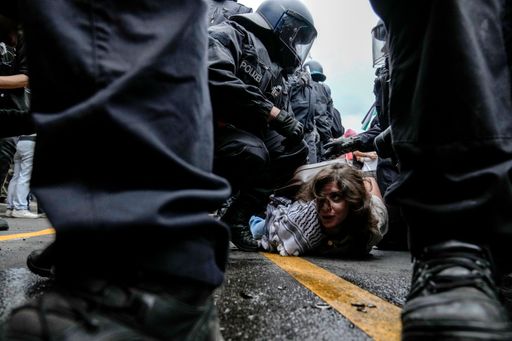
Gaza as a political accelerator
When Israel’s genocidal war in Gaza began, it sped up political developments that were already pushing governance in a far-right direction, according to experts.
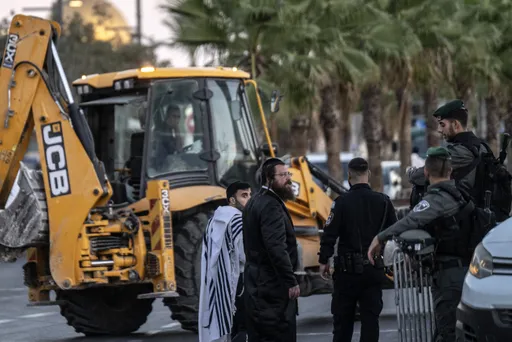
Across Europe, Gaza served as a test of democratic commitment, and arguably, most governments failed it. Protest bans multiplied. Police violence against demonstrators intensified.
Journalists, artists, academics, and members of civil society expressing solidarity with Palestinians faced unprecedented censorship.
In Germany, UN human rights experts warned that authorities were criminalising and suppressing legitimate Palestine solidarity activism, undermining fundamental democratic freedoms.
The repression was justified through different pretexts in each case, including “historical guilt”, “reason of state,” and security rhetoric, even as courts issued contradictory rulings on whether basic slogans such as “Free Palestine” constituted protected speech.
“Never before in history has the West been forced to so publicly abandon its own laws and rules. This undermines any real civil security,” Abu-Odeh says.
“The integrity of your home, freedom of expression, freedom of assembly and speech – everything is now in question because the universal human rights of Palestinians are being publicly undermined before the eyes of the world.
“But either we Palestinians are human beings, and the state is violating international law, or the state must portray us Palestinians as non-human beings without rights and follow in the footsteps of fascism and open colonialism,” he adds.
In the US, the trajectory was different in form but remained similar.


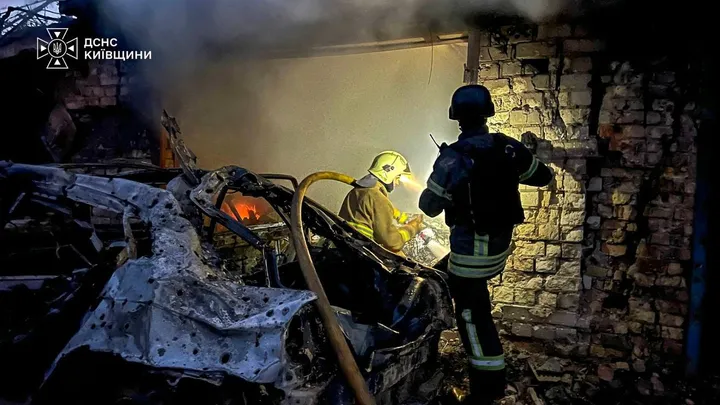





Gaza campus protests faced harsh police crackdowns, surveillance resembling counterterrorism measures, doxxing, and disciplinary actions against students and staff.
State-level legislation increasingly conflates criticism of Israel with prohibited speech, while bipartisan political pressure targets institutions that diverge from a pro-Zionist stance.
And this repression extended beyond Palestine.
Muslim and Arab communities once more faced surveillance practices reminiscent of the post-9/11 era.
At the same time, the far-right across Europe showed remarkable unity in its support for Israel.
As experts noted, racism and xenophobia remain central to far-right politics, and the Israeli government, as openly violent and racist as it can be, has found natural allies among Europe’s far-right movements.
“The repression of dissidents at home was already known before, but the extent of it was relatively minor until October 7, and it was virtually invisible to the press and the population,” Abu-Odeh says.
“Now, with the new federal government under Merz, we are seeing the police, public prosecutors and courts committing one open perversion of justice after another in order to silence the Palestine movement.
“But this is only the beginning. Today, it is those who show solidarity with Palestine, tomorrow it will be climate activists, students who refuse to do military service, striking workers or other civil rights movements. The boomerang will then strike back, and the West will be caught in an authoritarian downward spiral,” he says.

Shrinking future of democracy
By 2025, borders had become the clearest site where far-right administration was fully normalised.
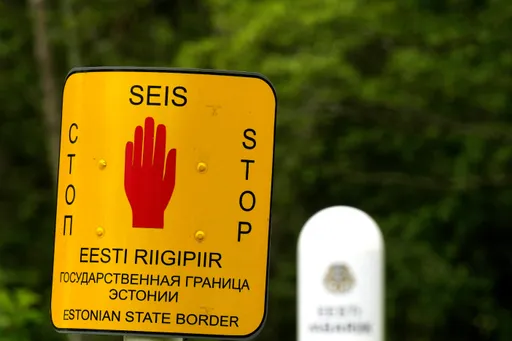
Europe strengthened its external border through agreements with Tunisia, Egypt, and Mauritania, along with violent pushbacks, AI-powered surveillance, and the criminalisation of humanitarian aid groups.
Deterring migration became a policy consensus.
In the US, border militarisation expanded, deportations increased, and asylum restrictions tightened, with bipartisan acceptance of deterrence-first frameworks shaped by far-right “invasion” rhetoric.
According to Jurgens, this meddling in private life, authoritarian tendencies, and surveillance did not begin in 2025; it was the year its consequences became impossible to ignore.
“The push toward stronger government, including electronic governance, has been on Europe’s political agenda for a long time, even in the UK” Jurgens says.
“Ordinary citizens already share vast amounts of private information on social media, fully aware that ‘Big Brother’ is listening. Since they are not engaging in criminal activity, surveillance is not perceived as a threat to personal freedom.”
“What concerns me is whether we truly need a surveillance state, or whether a more democratic alternative is possible,” he adds.
This normalisation of surveillance has softened public opposition and facilitated governments in justifying increased control in the name of security, with direct effects on civic space.
Consequently, both in Europe and the US, civic space shrank in parallel.
“Anti-disinformation” laws targeted dissent.
Universities punished students for peaceful protests. Journalists faced legal pressure for reporting.
“The future looks dark for the so-called liberal democracies. They don't have many options left, they trapped themselves. As liberal democracies, they cannot declare civil rights and then selectively revoke them at will when these rights are demanded,” says Abu-Odeh.
“Either they have always lied and only granted these rights to a few, but not to everyone else – in which case they were never a liberal democracy – or they abandon those who have done the ‘dirty work’ for the West, as Merz said, and distance themselves from them,” he says.
“Now the US and Europe have everything to lose, because the rest of the world does not need either Europe nor the US to survive.”