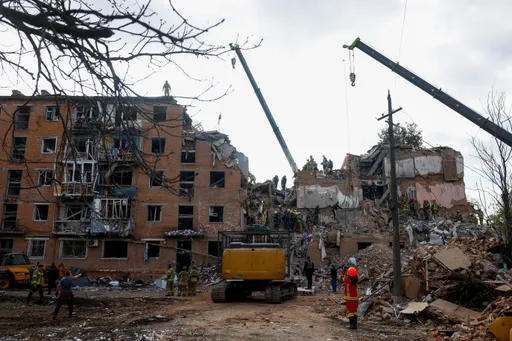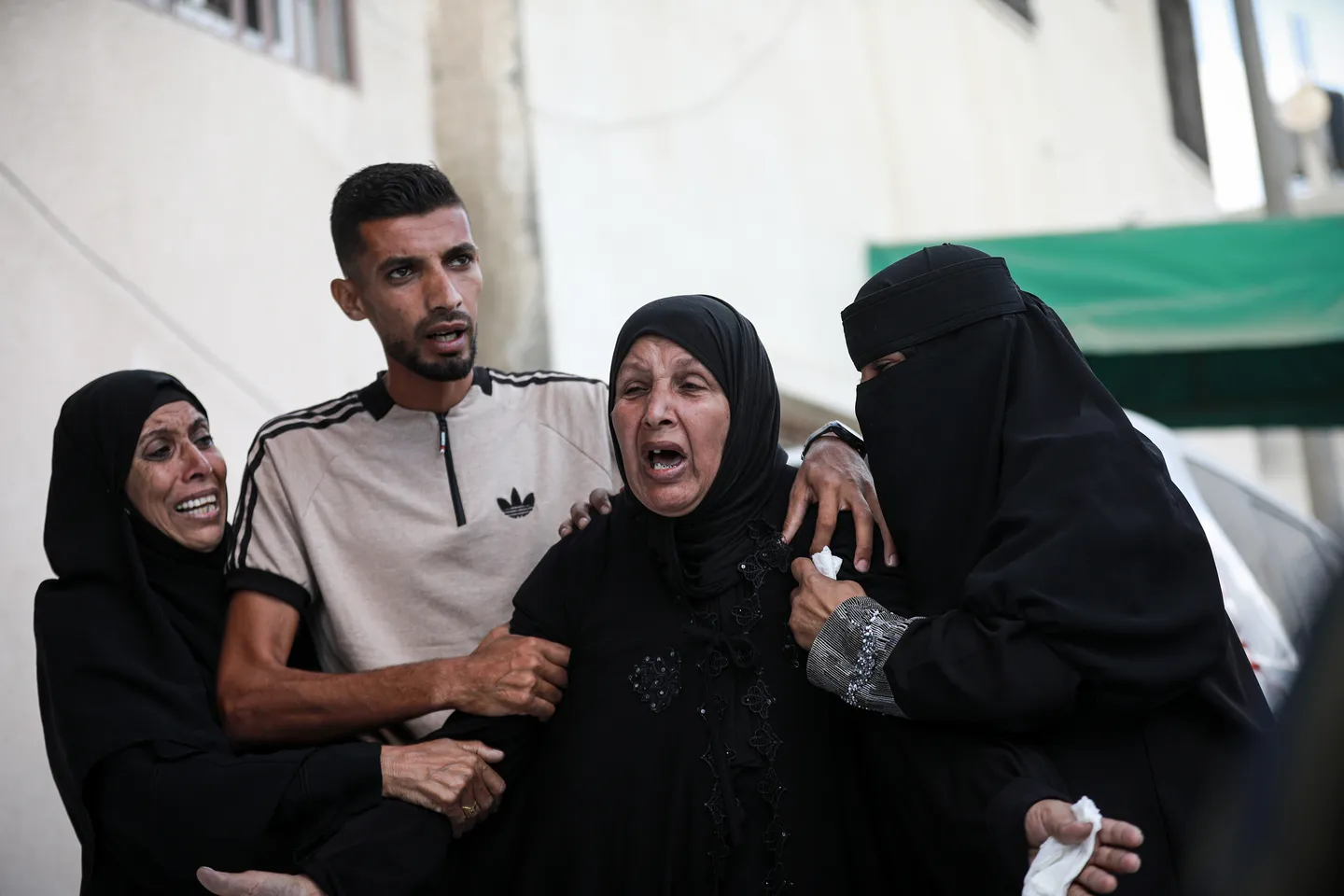
Two years after Israel launched its war on Gaza, the Palestinian enclave lies in ruins, with its people starved, its journalists silenced and the conscience of the world's powerful divided between complicity and selective outrage.
What began in October 2023 as Israel's assault on Gaza has, by 2025, been formally recognised by a UN commission as genocide. Over 67,000 Palestinians — most of them women and children — have been killed, nearly 170,000 others wounded and an entire population forced into hunger and displacement.
The siege has starved Gaza not by accident, but by design.
'Starvation as a weapon of genocide'
Israel's systematic obstruction of food, water and fuel has triggered one of the worst humanitarian crises of the 21st century. In late August, the UN officially declared famine in parts of Gaza, confirming months of warnings from aid agencies and human rights groups.
For Ramy Abdu, chair of the Geneva-based Euro-Med Human Rights Monitor, Israel's blockade represents "a policy of using food and water as weapons of war and tools of genocide".
"Gaza's famine differs from others in that it is not the result of natural disasters or economic collapse," Abdu said. "Rather, it is deliberate — starvation used to kill civilians."
Israel has maintained control over Gaza's borders since 2006, even calculating daily calorie limits for Palestinians during previous blockades. When it declared a "complete siege" on October 9, 2023 — cutting off all food, water, fuel and electricity — the enclave's fragile food system collapsed instantly.
With bakeries shuttered, water pumps silent and farmlands bombed, hunger became a weapon. Fishing bans and the destruction of Gaza's agricultural "food basket" left no local alternatives.
"The occupation turned the vulnerability it had created over years into a weapon of slow annihilation," Abdu said.
By early this year, starvation was spreading fast. Children, pregnant women and the elderly were the first to succumb.
Aid convoys were blocked, and when civilians tried to reach the so-called "Gaza Humanitarian Foundation" distribution zones established by Israel in 2025, they were met with deadly gunfire.
The UN says more than 1,760 Palestinians have been killed while trying to reach food, nearly 1,000 of them near those sites.
"This is not random chaos," Abdu said. "It's a carefully engineered policy of starvation."
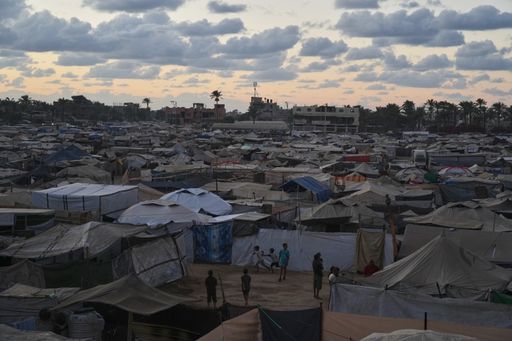
Famine declared, accountability deferred
The UN's Integrated Food Security Phase Classification (IPC) declared "famine" in Gaza on August 22, 2025, after all three critical thresholds — extreme food deprivation, acute malnutrition and starvation-related deaths — were breached.
The Palestinian Health Ministry in Gaza reports at least 460 deaths from hunger, including 150 children, with one in every five children in Gaza City now malnourished.
Yet even after the declaration of Israel-forced starvation, there has been no effective international response.
"The world has failed to compel Israel, which continues to flout UN resolutions with US and European backing," Abdu said.
A month later, the UN's Independent International Commission of Inquiry formally concluded that Israel had committed genocide, fulfilling four of the five acts defined under the 1948 Genocide Convention: mass killings, bodily and mental harm, destruction of living conditions and prevention of births.
"Labelling Israel's actions as genocide should trigger obligations to prevent and punish," Abdu said. "But in practice, little has been done."
'The deadliest war for journalists'
Even as Israeli-forced hunger and its bombs decimated Gaza, the Palestinian journalists kept reporting.
Among them was TRT World's freelance journalist Yahya Barzaq, killed in an Israeli air strike on September 30, 2025, while uploading footage in Deir al Balah.
Before the war, Barzaq was known as a newborn photographer, his social media filled with portraits of infants. After October 2023, his feed turned to rubble, funerals and black lines of mourning.
"My body was displaced to the south, but my heart is still in Gaza City," he wrote in his final post.
Barzaq became one of at least 250 journalists and media workers killed since the war began, making Gaza one of the deadliest places for the press in modern history.
Palestinian outlets say these deaths are not collateral but they are part of a deliberate campaign to silence Gaza's storytellers.
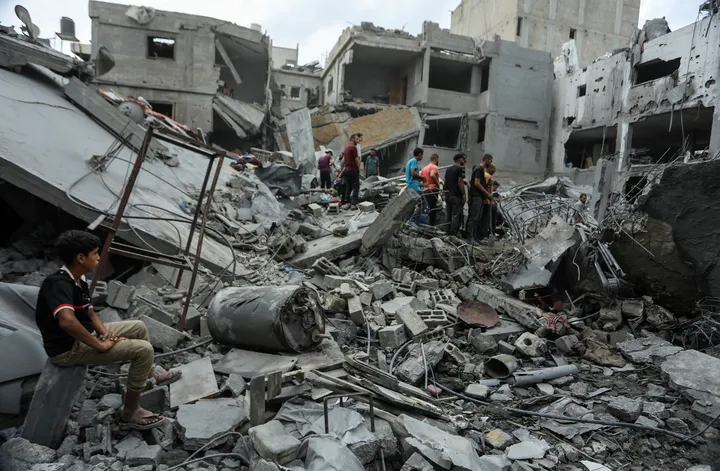

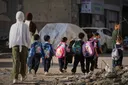
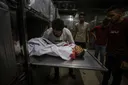
Still, despite the risks, reporters continue to document atrocities, their cameras capturing the starvation and suffering that much of the world prefers not to see.
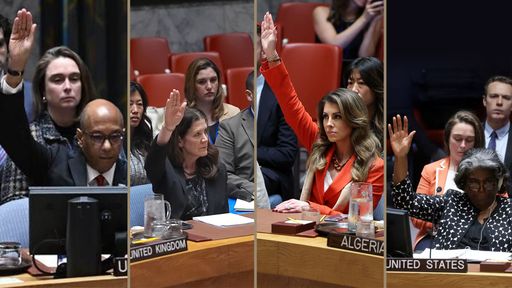
The economic cost of complicity
The horror unfolding in Gaza has also sparked a global economic reckoning.
A massive wave of boycotts has hit multinational brands accused of supporting or profiting from Israel's actions.
Giants such as McDonald's, Starbucks, Coca-Cola, Nestle and Nike have faced falling sales and brand damage across Muslim-majority markets.
McDonald's, for instance, reported its first quarterly sales decline in four years.
Starbucks saw a 36 percent plunge in sales in Malaysia and consecutive quarters of global losses.
Nike's global revenue dropped 12 percent in the second quarter of 2025, while its profits fell 86 percent, as boycotts intensified.
Soft drink sales also tumbled. Coca-Cola's market share in Türkiye fell from 59 percent to 54 percent, and Nestle's profits dropped over 10 percent in early 2025.
Investors are taking note too.
Norway's $2 trillion sovereign wealth fund divested from five Israeli banks and US-based Caterpillar, citing "unacceptable risk" of contributing to war crimes.
The Netherlands' largest pension fund followed, selling all Caterpillar shares worth €387 million, over the company's links to Israeli forces.
Europe's moral crisis
Perhaps no region's credibility has been more damaged than the European Union's.
When Israel's war began, EU leaders Ursula von der Leyen and Roberta Metsola rushed to Tel Aviv in solidarity.
Two years later, that support has curdled into regret and division.
Under mounting public pressure, Brussels reviewed its association agreement with Israel, citing "clear human rights violations".
The European Commission proposed suspending trade benefits, sanctioning Israeli extremists, and freezing fund — but implementation remains stalled by member state divisions.
While Spain and Ireland push for action, others, notably Germany, resist, wary of breaking with the US and Israel.
Critics say this hesitation has turned the EU from a moral leader into a bystander.
Kenneth Roth, former Human Rights Watch chief, said that the EU "failed to recognise early on that Israel's war had turned into a war on Gaza's civilians".
"Most European nations have stopped arms sales and some recognised a Palestinian state, but the bloc still hasn't stood up to the US," he said. "The question is whether the EU will pressure Washington to stop fuelling the genocide."
Human Rights Watch's Claudio Francavilla called the EU's response "far too little and far too late".
"Europe is legally bound to prevent genocide under the 1948 convention, but it hasn't," he said. "Yes, there's progress — sanctions, political shifts — but the truth is Israel is losing allies in Europe because of its own brutality."
For Niamh Ni Bhriain of the Transnational Institute, the EU's failure is moral as much as legal.
"In a world where justice is done, EU leaders would face trial in The Hague for complicity in genocide," she said. "Their credibility is in tatters."