Nuran Gunduz
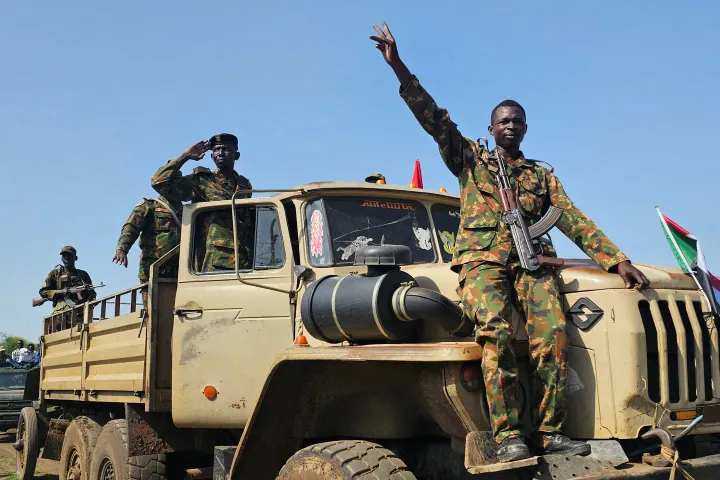
Sudan's power-sharing government has signed a peace agreement with the country's five key rebel groups, a significant step towards resolving deep-rooted conflicts that raged under former leader Omar al Bashir.
The civilian and military leaders sharing power following Bashir's overthrow in April 2019 say ending decades-long internal conflicts is a top priority of a 39-month transition.
The deal, signed on Monday at a ceremony in neighbouring South Sudanese capital Juba, offers rebel groups political representation and devolved powers, integration into the security forces, economic and land rights and the chance of return for displaced people.
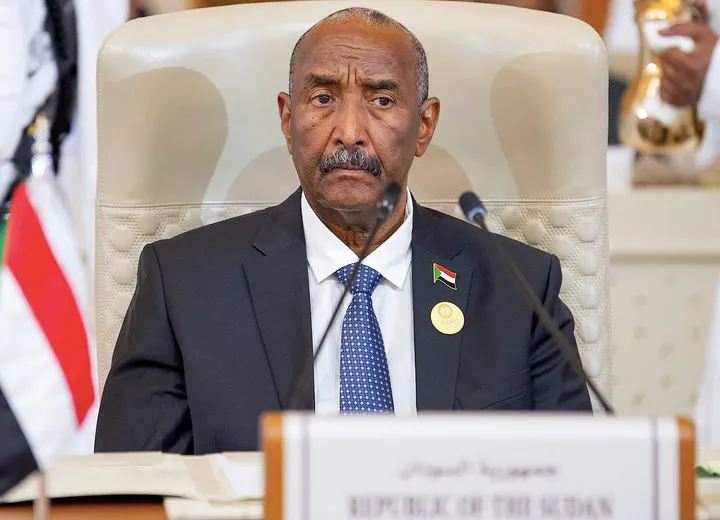
Both General Abdel Fattah al Burhan, head of a sovereign council, and Prime Minister Abdalla Hamdok, were also at the ceremony in Juba.
The groups that signed include the Justice and Equality Movement (JEM) and Minni Minawi's Sudan Liberation Army (SLA), both of the western region of Darfur, and the Sudan People's Liberation Movement-North (SPLM-N) led by Malik Agar, present in South Kordofan and Blue Nile.
"I congratulate all in Sudan on reaching a historic comprehensive peace that addressed the roots of the problem and ended the war, God willing," said Gibril Ibrahim, commander of one of the rebel groups, the rebel Justice and Equality Movement (JEM).
He paid tribute to all those killed or affected by the long years of war.
Leaders of the Sudan Revolutionary Front (SRF), an umbrella organisation of rebel groups from the western region of Darfur and the southern states of South Kordofan and Blue Nile, raised their fists in celebration after inking the agreement.
Sudanese paramilitary commander Mohamed Hamdan Daglo –– best known by his nickname "Hemeti," and who commanded fighters in the war –– signed the deal on behalf of Khartoum.
Daglo and the leaders of the rebel movements grouped together and shook hands – and briefly danced together.
"We have started the real transformation of Sudan from dictatorship to democracy," Faisal Mohammed Salih, Sudan's Information Minister said at the ceremony in Juba.
READ MORE: Gunmen kill several farmers in Sudan's Darfur province
First steps
But while celebrating the deal, Salih said there was also still a long way to go.
"We know that we are going to face some problems when we start to move this (deal) from paper to the ground ... but we have that political will," he added.
Rebels fought troops deployed by now-toppled autocrat Omar al Bashir, who is wanted by the International Criminal Court (ICC) over charges of genocide and crimes against humanity in the Darfur conflict.
Bashir, who is in jail in Khartoum convicted of corruption, is on trial for the 1989 coup in which he grabbed power.
Sudan's transitional authorities in February agreed Bashir should be handed over to the ICC.
Human rights groups say Khartoum targeted suspected pro-rebel ethnic groups with a scorched earth policy, raping, killing, looting and burning villages.
The deal was "initialled" and not signed, as a way to leave the door open for two key holdout rebel groups to join in a "final" agreement, officials said.
Linchpin of transitional government
Forging peace with rebels has been a cornerstone of Sudan's transitional government, which came to power in the months after the overthrow of Bashir in April 2019.
Sudan's rebels are largely drawn from non-Arab minority groups that long railed against Arab domination of the government in Khartoum under Bashir.
More than 300,000 people are estimated to have been killed and 2.5 million displaced after the conflict in Darfur spread after 2003 as government forces and mainly Arab militia moved to repress mostly non-Arab rebels.
South Kordofan and Blue Nile remained within Sudan when South Sudan seceded in 2011 and communities there complain of marginalisation by the government in Khartoum.
READ MORE:Sudan says ready to cooperate with ICC over Darfur war crimes