 Murat Sofuoglu
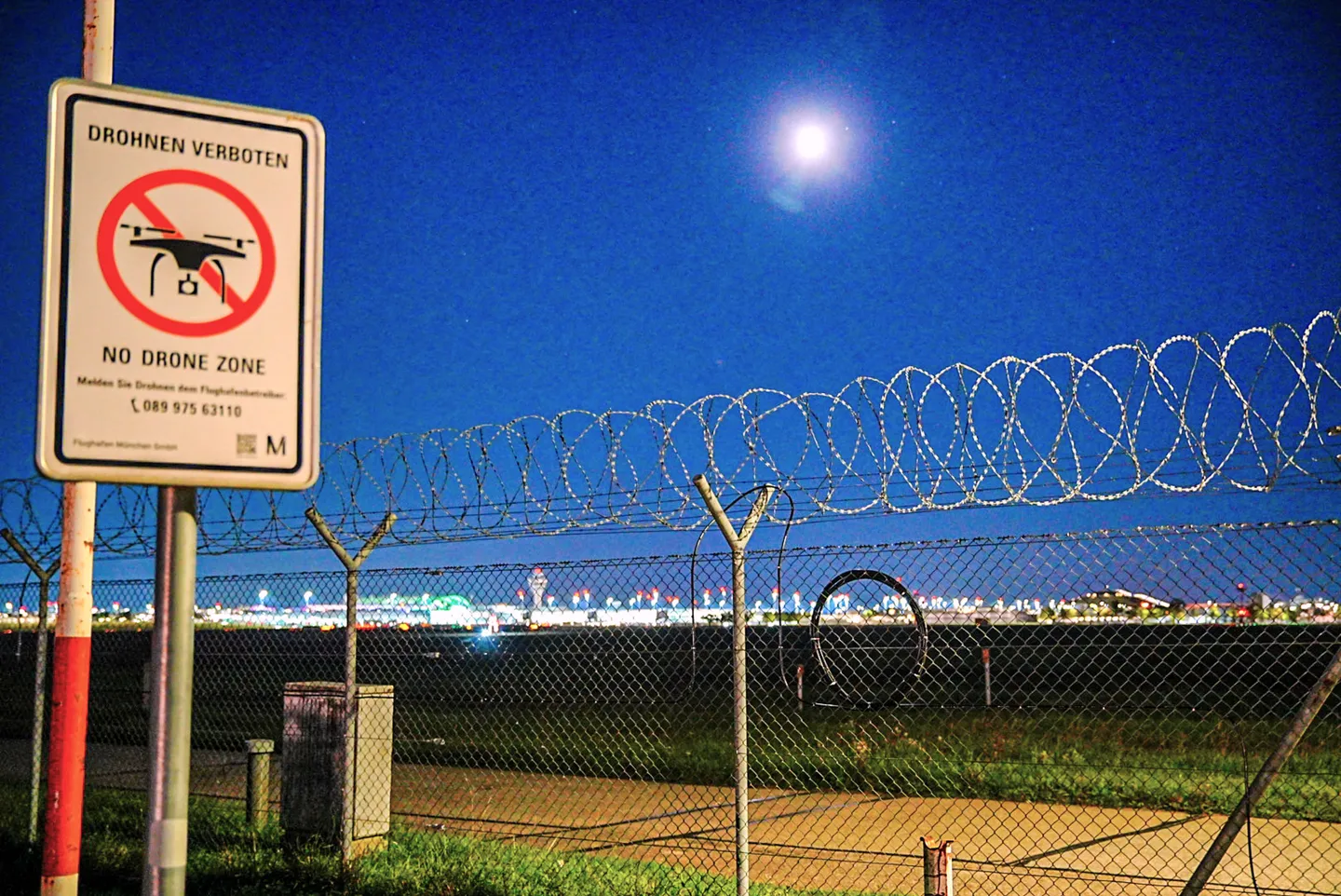
Mysterious drones grounded at least 17 flights last week at Munich Airport, Germany’s second-largest, causing chaos for thousands of passengers.
This followed a temporary closure of several airports in Denmark for the same reason.
German police stated they were unable to intercept the drones or apprehend their pilots, deepening the mystery of their origins.
In Denmark, drones were spotted over an air force base housing F-16 and F-35 fighter jets, sparking concerns across European capitals.
Last week, the drone drama also spread to Belgium, home to NATO and EU headquarters in Brussels, as the Belgian Defence Ministry reported overnight sightings of drones over the Elsenborn military base.
These incursions seemed to follow a pattern when Poland, Estonia, and Romania, all NATO members, reported similar drone activity in their airspace last month.
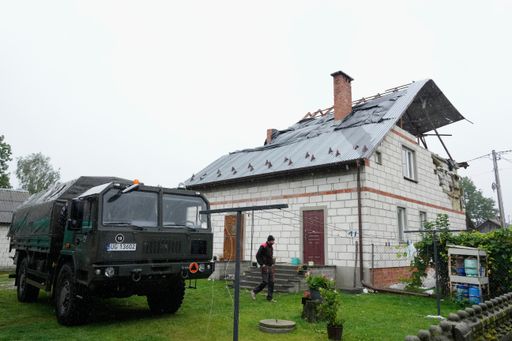
While these countries blamed Russia, the Kremlin has denied any involvement.
Despite Poland and Romania bordering Ukraine, and Estonia sharing a border with Russia, countries like Germany, Denmark, and Belgium are much further from both Russia and Ukraine.
So, how did these drones end up flying over these nations?
‘Kaliningrad is the key!’
“Look at the Russian enclave of Kaliningrad on a map,” Edward Erickson, an American military analyst, tells TRT World, referring to the strategic Baltic coastal area, which is a Russian territory without any land connection to Moscow.
He points out that all the states with recent drone sightings are near this Russian enclave, once the well-known East Prussian Baltic port city of Konigsberg, before the Russian takeover from Nazi Germany at the end of WWII.
Until the early 18th century, the city was the capital of the Prussian monarchy, the predecessor to the modern German state.
Erickson says he believes the drone incursions are tied to this Russian enclave, a legacy of the 1945 Potsdam Conference, where the US, UK, and Soviet Union decided Europe’s post-war fate, making Konigsberg (later Kaliningrad) a Soviet territory.
Kaliningrad survived the collapse of the Soviet Union in 1991 and remains under Russian sovereignty.
“It's an ideal launching pad for drone intrusion into Danish, German, and Swedish airspace,” Erickson tells TRT World.
Kaliningrad, situated on the coast of the Baltic Sea, is crucial for both the Russia-Ukraine war and Moscow’s trade routes with Europe.
Kaliningrad has the Baltic Sea’s only ice-free port all year round, as it also hosts Russia’s Baltic fleet, being positioned as the westernmost territory of Moscow, close to the heart of Europe.
According to reports, Russia has also deployed nuclear-capable strategic missiles in the region, which is close to states like Germany and Denmark.
False flag operations?
Sergei Markov, a Russian academic and a former adviser to Russian leader Vladimir Putin, agrees on the strategic importance of the Baltic region, through which Moscow sails its so-called shadow fleet to evade Western sanctions.
Moscow is using the Baltic Sea to transport its oil and gas because it can not use the Black Sea, where Ukrainian sea drones target Russian shadow fleet vessels, Markov says.
Overall, the Baltic Sea trade plays a crucial role in sustaining the Russian economy, according to Markov.








The Baltic Sea trade’s positive contribution to the Russian economy has made both Europeans and Ukrainians nervous, seeking “pretences” to stop Moscow’s shadow fleet, says Markov.
“They decided that drones would be a very good pretext to stop it. As a result, European intelligence agencies and the Ukrainian army launched drones flying over some European states. Then, they are blaming Russia for doing this,” the Russian academic tells TRT World.
According to Markov, Europe’s recent “drone hysteria” is all about declaring “a special military regime” across the Baltic Sea region to stop Russian oil tankers sailing across the region.
Daria Daniels Skodnik, a former Deputy Commandant at the NATO Defence College in Rome, does not buy Markov’s argument, saying it reflects the classic Soviet “active measures” (aktivnye meropriyatiya) playbook: deny, deflect, accuse.
“By portraying these incursions as Ukrainian provocations, Moscow muddies attribution and seeks to fracture allied unity. The only effective counter is rapid exposure backed by evidence—otherwise disinformation itself becomes part of the attack,” she tells TRT World.
Linas Kojala, CEO of the Geopolitics and Security Studies Centre in Vilnius, the capital of Lithuania, also approaches Russian false flag operation claims with scepticism, saying that no concrete evidence has been ”provided to substantiate them”.
“By contrast, the targets, timing, and overlap with other Russian hybrid tactics—such as jamming or airspace violations—make Russian involvement the more consistent explanation,” Kojala tells TRT World.
On Thursday, Russian President Vladimir Putin joked during an address to foreign policy experts at a forum in Russia’s Black Sea resort of Sochi, saying, “I’ll stop, I won’t send any more drones to France, Denmark, Copenhagen.”
He has dismissed the accusations of Russian drone flights over Denmark, framing them as part of NATO’s efforts to stir tensions and increase defence spending.
Can vessels be used?
Some naval experts suggest that oil tankers, allegedly part of Russia’s shadow fleet designed to evade Western sanctions, could be used to launch drones, particularly over Denmark.
The French navy recently intercepted one such oil tanker, arresting two crew members.
The tanker was about 50 nautical miles (90 km) south of Copenhagen, crossing the Baltic Sea, when drone activity led to the closure of the city’s airport around 18:30 GMT on September 22, according to MarineTraffic’s data, as reported by CNN.
The Kremlin spokesman, Dmitry Peskov, condemned the French move, describing it as “provocative actions” that could prompt the Russian army to take action.
“Civilian maritime vessels could be used as launch platforms, hidden among the heavy traffic in the Baltic and North Seas,” Kojala says.
Small drones may be launched locally by covert operators, including from vehicles or boats, because medium fixed-wing UAVs are capable of flying longer distances and lingering over targets, according to the Lithuanian expert.
He says he believes “in each case, the flights appear deliberate,” pointing to a Russian intervention.
Markov rejects the accusation that Russia is using vessels to launch drones over European airspaces.
Is Russia testing NATO’s limits further?
According to Erickson, with recent drone incursions, the Russians are testing whether NATO as a whole will support its individual member nations, who may ask for Article 5 protection of NATO’s founding treaty.
According to Article 5, if a force attacked a NATO ally, it would be regarded as an attack on the entire alliance, which would then respond collectively.
“Will Hungary, for example, back up Denmark, if Denmark is threatened,” he says.
But European nations do not want to enter a costly war with Moscow over drone incursions by shooting alleged Russian drones over their airspaces.
Europeans also fear that if they shoot those drones, they could damage civilians while pushing Russia to escalate tensions across the continent.
According to Dr Daniels, the former Deputy Commandant at the NATO Defence College, these incidents from Poland to Denmark are part of “a deliberate grey zone campaign—low-cost, deniable, and calibrated to unsettle NATO without triggering Article 5”.