 Esra Karataş Alpay
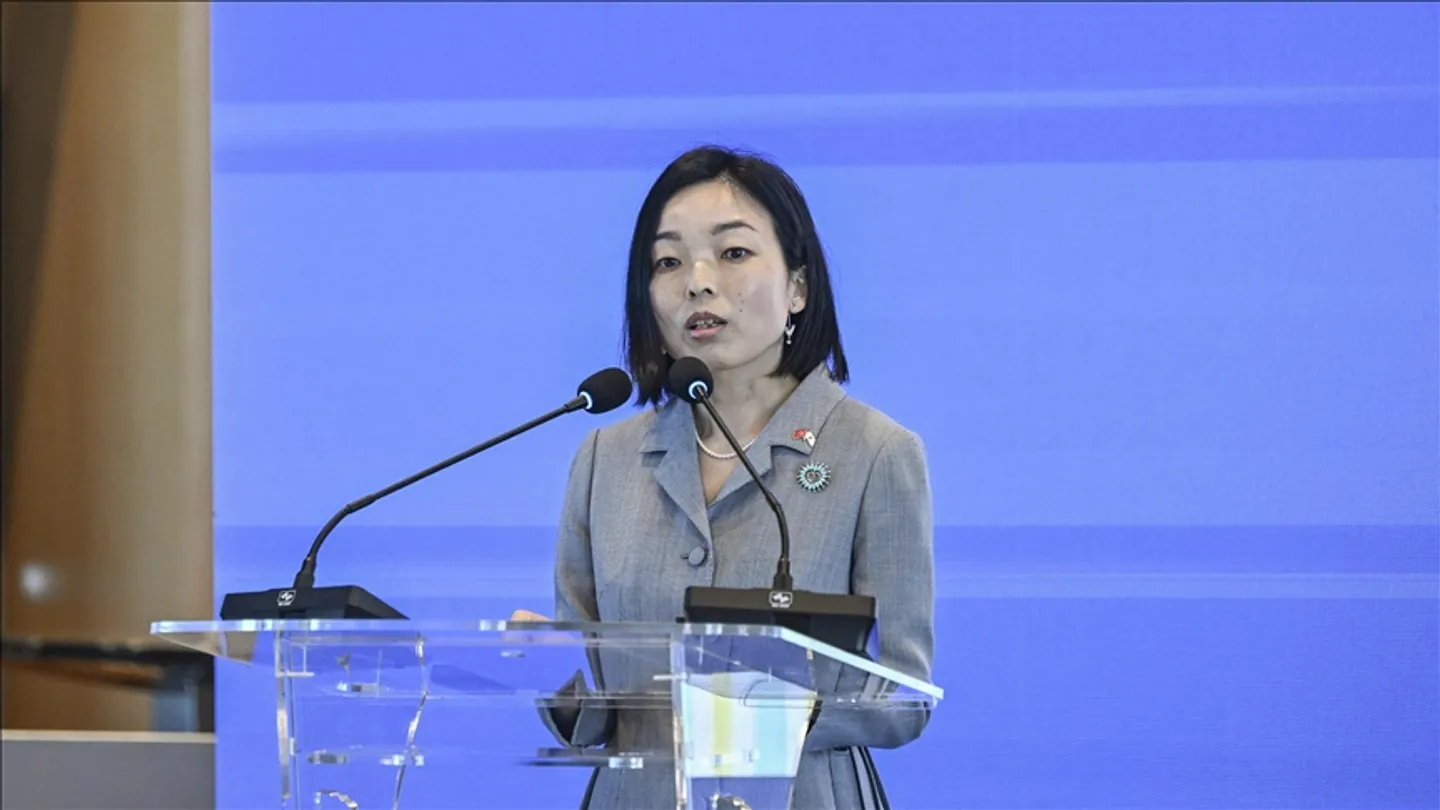
In a powerful display of cultural diplomacy, Japanese Princess Akiko of Mikasa arrived in Türkiye last week, underscoring the century-old friendship between Japan and Türkiye with a message of continuity and shared responsibility.
During her visit, Princess Akiko spoke of the legacy she carries as the third-generation representative of the Mikasa family, which has played a pivotal role in nurturing Japanese–Turkish cultural relations.
“The bond that my grandfather, my father, and I have carried across three generations is not only a family story; It is a human, cultural, and scientific bridge between Japan and Türkiye,” Princess Akiko said.
“I will continue this responsibility entrusted to me by my family, so that the friendship between our countries may be passed on to future generations.”
Her grandfather, Prince Mikasa, initiated Japanese archaeological excavations in Kaman in the 1980s, a legacy that continues to this day. These projects have become a symbol of enduring cooperation, linking Japanese and Turkish scholars in joint cultural and scientific discovery.
A friendship forged in history
Türkiye’s ex-Ambassador to Tokyo Murat Mercan, tells TRT World as he describes the relationship between the two nations as “almost genetic” — rooted in shared cultural values and carried forward through historic milestones.
“Türkiye lies at the westernmost edge of Asia and Japan at the far east, yet there is a surprising affinity,” he says.
“Our languages share the same structural family, and our traditions — respect for family, courtesy, and cleanliness — mirror one another. This gives our friendship a cultural depth that is rare in international relations.”
Ambassador Mercan says the 135th anniversary of the tragedy involving the Ottoman frigate ‘Ertugrul', which sank off Kushimoto in 1890, and the compassion shown by the Japanese people in rescuing sailors, marks the moment that solidified the relationship in memory.
He also cites Türkiye’s 1985 rescue of Japanese citizens,; who were trapped due to the Iran-Iraq war and were flown out by Turkish Airlines (THY) - as a testament to solidarity.
One of the most striking aspects of this friendship has been its demonstration during times of disaster.
“After every major earthquake in either country, rescue teams immediately cross continents to help one another,” Ambassador Mercan says. “This compassion in tragedy strengthens the bond between our peoples.”
Expanding horizons: trade, defence, and culture
While cultural ties are strong, Ambassador Mercan says that trade between the two countries has great potential.
“Penetrating the Japanese market is difficult, but once achieved, it is lasting and valuable,” he says.
Today, more than 200 Japanese companies operate in Türkiye, producing goods for Europe and beyond, with Toyota as the most visible presence.
Bilateral trade between Türkiye and Japan climbed to $5.4 billion in 2024, making Japan Türkiye’s fourth-largest trading partner in Asia. Türkiye’s exports reached $718 million, while imports from Japan totalled $4.7 billion.
At the same time, Japanese corporate presence in Türkiye continues to deepen, with more than 275 companies now active in the country, representing a combined investment exceeding $3.1 billion.




New areas of cooperation are also emerging.
“Until recently, there was virtually no collaboration in defence,” Ambassador Mercan says. “But Japan’s defense minister’s visit to Turkish drone facilities signals a promising new era. I see this with great satisfaction.”
He also highlights the significance of joint ventures in third countries, from Central Asia to Africa, as well as the establishment of the Turkish–Japanese University.
“Education and culture remain vital bridges,” he states, recalling how exhibitions of Topkapi Palace treasures in Tokyo and Kyoto drew over 600,000 visitors and two billion online views.
Looking ahead for partnership
Ambassador Mercan highlights the nature of this bilateral relationship: a friendship free from rivalry or geopolitical tension, instead built on shared values and mutual respect.
“Japanese people are curious about Turkish and Islamic culture, and importantly, they approach it without prejudice,” Mercan says. He refers to Tokyo Camii, (mosque) which is visited by hundreds of Japanese every week, as evidence of this genuine cultural interest.
As Türkiye and Japan prepare for a new century of cooperation, the tone from both sides is unmistakably hopeful. Princess Akiko’s words, coupled with Ambassador Mercan’s reflections, portray two nations that not only remember the kindnesses of the past but actively build upon them for the future.
“I believe that by expanding cultural programs, educational exchanges, and mutual visits, we can deepen this friendship even further,” Mercan says.
“Our peoples complete each other — culturally, economically, and socially. That is why the Turkish–Japanese partnership will continue to flourish for generations.”