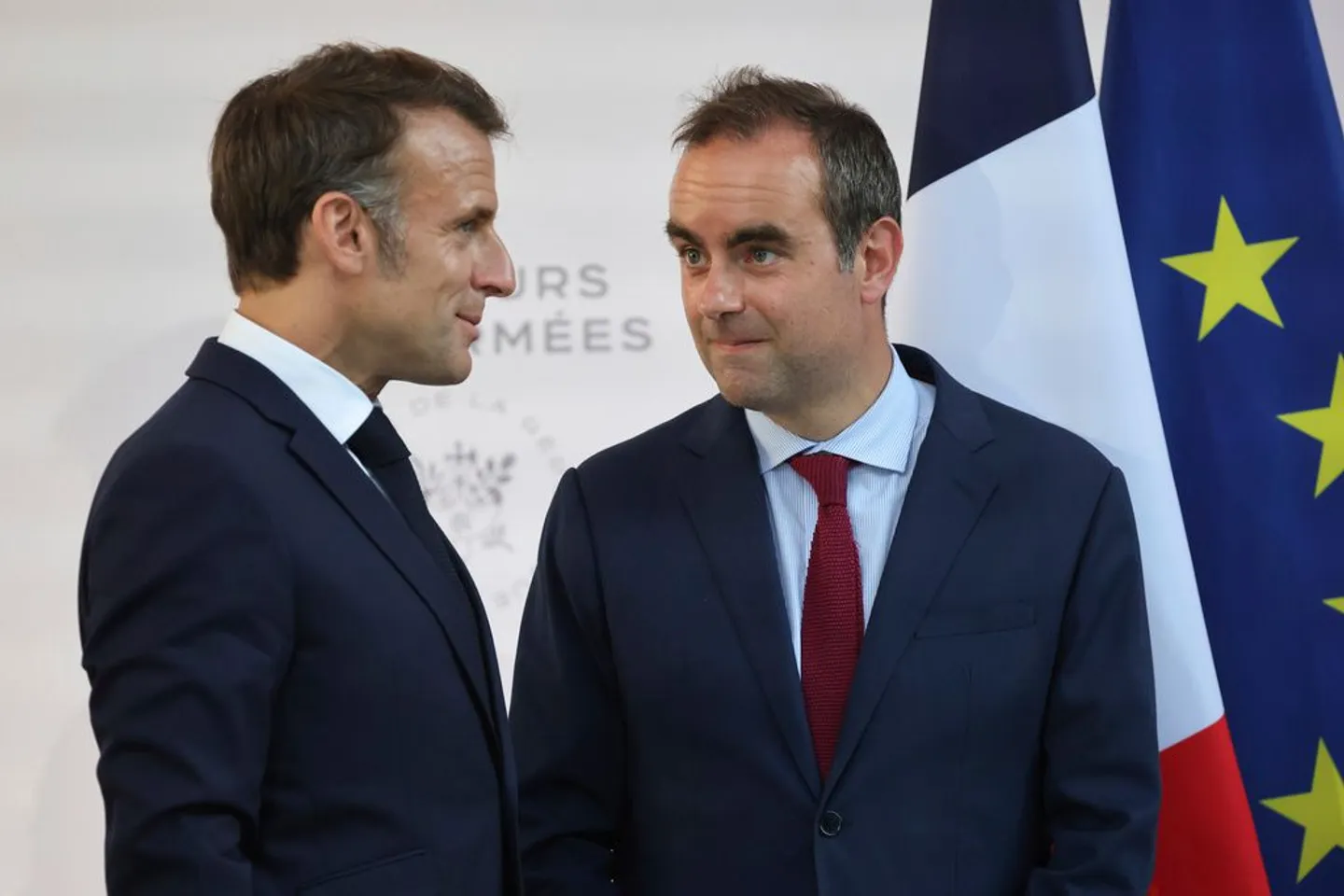
French Prime Minister Sebastien Lecornu has submitted his resignation to President Emmanuel Macron, just days after unveiling a new Cabinet that drew swift and fierce criticism from across the political spectrum.
On Monday, Macron accepted Lecornu’s resignation, broadcaster BFM TV reported, citing the Elysee Palace.
Lecornu, appointed less than a month ago after the collapse of François Bayrou’s government, presented a largely unchanged Cabinet lineup on Sunday. His announcement triggered an immediate backlash, with opposition leaders accusing Macron of ignoring voters’ calls for renewal.
“The choice to keep this government unchanged, seasoned with the man who bankrupted France, is pathetic,” far-right National Rally leader Marine Le Pen wrote on X, referring to the return of former Finance Minister Bruno Le Maire as defence chief.
Green Party leader Marine Tondelier said Macron’s allies had taken their “contempt for democracy to a new level,” while Socialist leader Boris Vallaud accused the government of “plunging the country deeper into chaos every day.”
Interior Minister Bruno Retailleau said he would convene a strategic committee of the Republicans to assess the political fallout, adding that the new Cabinet “does not reflect the promised break.”

A short-lived Cabinet
Under Lecornu’s proposed government, Roland Lescure, a member of Macron’s Renaissance party, was tapped as finance minister, while Bruno Le Maire returned to government as defence minister — a move seen as symbolic of Macron’s unwillingness to shift direction.
Other appointments included Eric Woerth as minister for territorial organisation, Naima Moutchou for transformation and digital affairs, Mathieu Lefevre for parliamentary relations, and Marina Ferrari for sports and youth.
Key figures such as Foreign Minister Jean-Noel Barrot, Justice Minister Gerald Darmanin, and Education Minister Elisabeth Borne retained their posts.
Lecornu’s resignation marks yet another setback for Macron, whose presidency has been plagued by Cabinet instability and widening political polarisation amid rising inflation and public discontent over austerity measures.
Sebastien Lecornu, a record-setting prime minister
Lecornu’s resignation set several political records in France’s modern history. He became the shortest-serving prime minister, lasting only 27 days in office, and oversaw the longest period without a government, at 26 days.








His administration was also the shortest-lived government, collapsing just 12 hours after its formation.
Lecornu is the only French prime minister never to have delivered a general policy statement before parliament.
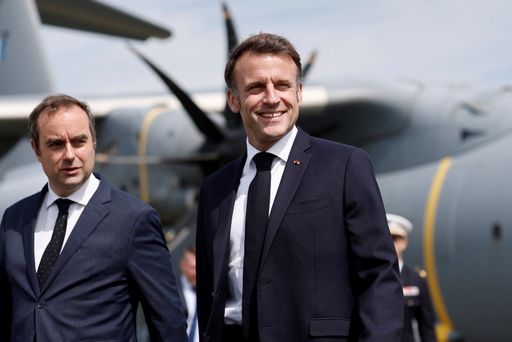
Recent French prime ministerial resignations
François Bayrou (August–September 2025)
Bayrou’s government collapsed on September 8, less than two months after taking office, when he lost a confidence vote in the National Assembly.
His push for a strict €44 billion ($51 billion) austerity plan to rein in France’s public debt — which has reached 115 percent of GDP — alienated both left- and right-wing lawmakers.
His failure underscored the deep divisions over fiscal reform in Macron’s second term.
Michel Barnier (April–December 2024)
Veteran EU negotiator Michel Barnier was forced to resign in December 2024 after his government failed to secure parliamentary approval for the 2025 budget.
A rare alliance between left-wing and far-right parties united to pass a no-confidence motion, condemning Barnier’s austerity agenda and accusing the government of failing to address inequality and rising living costs.
Elisabeth Borne (May 2022–April 2024)
Borne stepped down in April 2024 after two turbulent years marked by widespread protests over pension reforms, which raised the retirement age and sparked months of strikes.
Despite surviving multiple no-confidence motions, she resigned amid growing divisions within Macron’s centrist coalition and plummeting public approval.