 Doaa Shaheen
In South Gaza’s Khan Younis, families gather daily at the Nasser Hospital complex for perhaps the most agonising moments of their lives, already devastated by two years of Israel’s genocidal war.
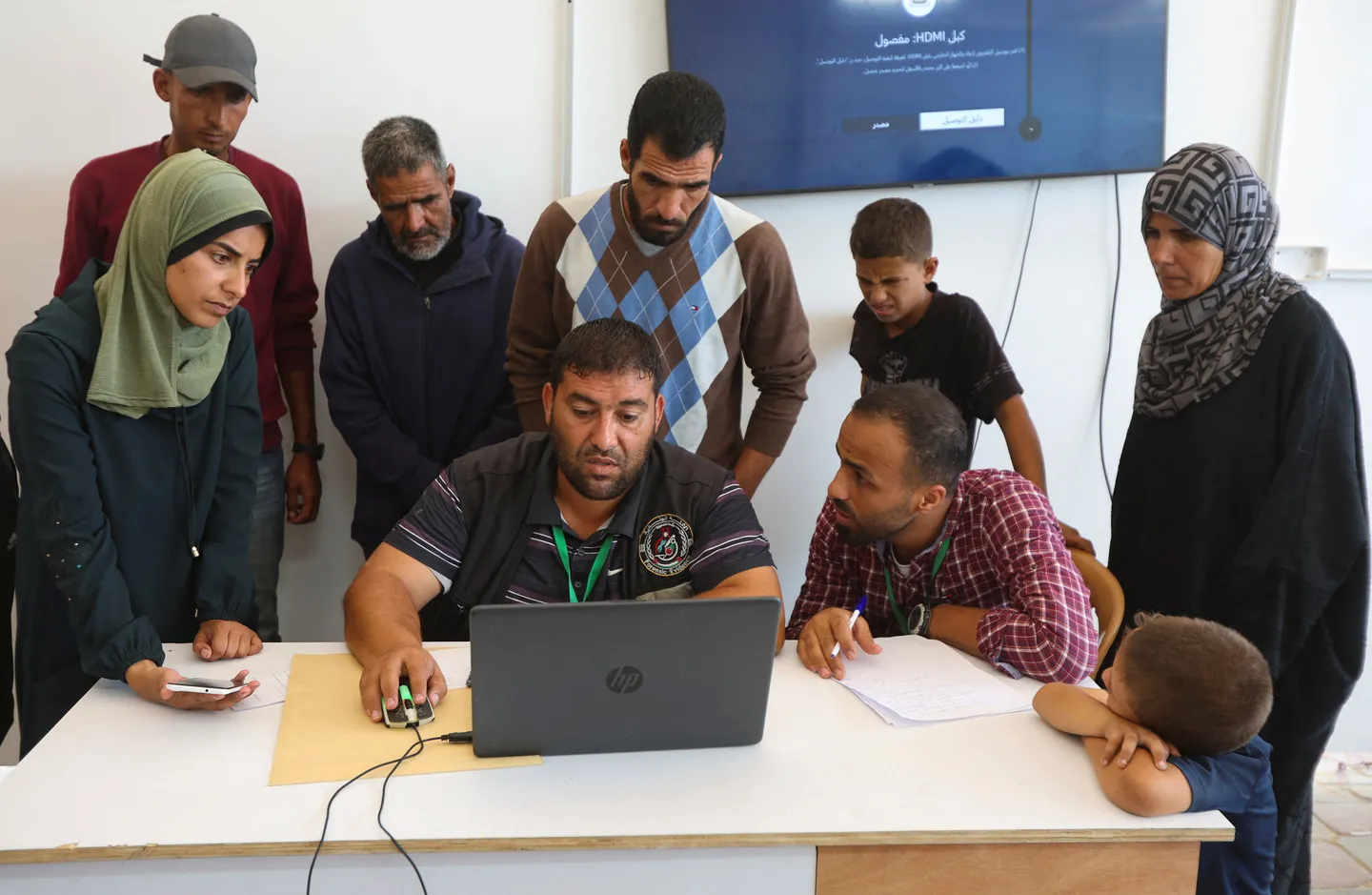
In a small courtyard within the complex, a single television screen connected to a computer shows images of the victims.
Families of the missing gather in front of it, hoping to recognise their loved ones among the faces on display.
The Gaza authorities display images of bodies handed over by Israel under a fragile ceasefire brokered by the US and backed by several other countries, including Türkiye.
Brothers, fathers, sons look up at the screens, their faces gaunt and exhausted from the long wait. Trembling hands hold up mobile phone cameras to zoom in on the photos.
They search for traces of a familiar shirt, a ring, or a scar still etched in memory.
As the photos fleet across the screens, flickers of recognition overwhelm those waiting, bringing a collective sorrow. Some shed a tear. Others are too numb to react.
Amid this painful scene stands Ahmed Abu al-Saud, a Palestinian man in his thirties, who lost contact with his brother Hosni two years ago. Before the war, Ahmad worked as a freelance photographer in Gaza. He also ran his own small business — a cafe.
He lived with his family in a modest home, alongside his wife and their two daughters: Tala, 5, and Selin, 3.
Their life was safe and stable. But when the war broke out, he lost his cafe, which was destroyed by shelling, and their home was also reduced to rubble.
Despite everything, he now continues to work as an independent photojournalist.
Before losing his brother Hosni, he had also lost two other brothers — young men in their twenties — named Mahmoud and Abdel Rahman.
He moves between the photos posted by the Ministry of Health, searching each face for his brother’s features, clinging to a hope that fades day by day.
Around him, dozens of families share the same restless dilemma: “Maybe this is my son… maybe these are his features”.
Many still don’t know the fate of their loved ones.
“My brother disappeared in the first weeks of the war on Gaza after he went out to buy things for his little daughter. He never returned”, Ahmed tells TRT World.
“We knew nothing about his whereabouts…we are just waiting,” adds Ahmed, who was displaced from Rafah to the refugee camps in Khan Younis.
He adds, “We hoped, at least, that he might be a prisoner. We waited for the day he would appear alive. We searched hospitals and went daily to the morgues anxiously, avoiding the moment we might learn he was dead. We searched through the destruction, displacement, and rubble of houses.”
And then their worst fears came true.
“We recognised him by the clothes he was wearing at the time he disappeared, …and his body build and facial features.”
Ahmed says his brother was shot in the head and chest.
For the family – especially Hosni’s wife and his two-year-old son Omar – the identification of the body marks the closure of one chapter, the long wait. But it also means the beginning of another: grieving.
The family is taking solace from the fact that they will be at last able to bury him with dignity, and say the final farewell, attempting to capture some of the tenderness lost in the long search.
In Gaza, Ahmed’s pain echoes through most households, having lost one or more family members since October 7, 2023. Thousands are still missing, many of them captured and held illegally by Israel.
Though the official death toll is just over 69,000, humanitarian organisations estimate that more than 10,000 bodies are still buried under the rubble in the devastated enclave.
The ‘homecoming’
Following the ceasefire in Gaza, the Palestinian Ministry of Health began retrieving bodies from the rubble and handing them over to families. Bodies handed over by Israel are also being handed over.
This entire process is carried out amid complex humanitarian and legal conditions, reflecting the magnitude of challenges faced by the authorities to return the bodies to their families and enable dignified burials.
In a small room inside Al-Shifa Medical Complex, a forensic team in Gaza is working under extremely harsh conditions – trying to identify bodies arriving one after another from the Israeli side via the Red Cross.
Forensic expert Ahmed Zuhair explains the complexities of the task at hand as they receive bodies from the Israeli side without any information or details.
He explains that the Israeli authorities do not provide any data about the source of the bodies, where they were held, or even the causes of death.
Zuhair notes that this lack of information makes the forensic task nearly impossible, forcing the team to rely on very rudimentary methods to try to identify the bodies, in the absence of modern equipment, especially DNA testing devices.
“We try to identify the bodies through measurements…height, width, teeth shape, distinctive marks on the body such as surgeries or scars, or any personal belongings and clothes that accompany the bodies,” he tells TRT World.
However, what the doctors see during examinations goes beyond all description, according to Zuhair.
Most bodies come in advanced stages of decomposition, contaminated with dust; some are severely frozen, apparently stripped of clothes, dragged, and mutilated.
Some bear signs of their hands and feet tied behind their backs, bindings around the neck, and even blindfolds, signifying torture during detention.
Some bodies show extensive blood loss caused by explosive injuries and gunfire. Some that torture was one of the causes of death.
Despite the challenges, the team attempts to organise their work within their own system.
The Criminal Evidence Department at the Ministry of Health take photos of the bodies, which are then published on the ministry’s website to facilitate identification by families.
Zuhair says the Ministry of Health also tries to assist families who lack internet access by displaying photos of the bodies on large screens in hospital courtyards across Gaza, alongside direct meetings with relatives searching for their missing loved ones.
“We keep the bodies with us for five days to give enough time for identification. After that, if no one claims the body, we bury it according to the recognised legal and religious protocols in Gaza.”
For the Criminal Evidence Department, the challenges are twofold: the late arrival of bodies and the shortage of equipment and technical capabilities, according to Mahmoud Ashour, the departmental spokesperson.
Ashour points out that in many cases, the bodies have arrived after two years, making it difficult to deduce the circumstances of death based on superficial or distorted evidence caused by decomposition, burning, or mechanical damage.
Some bodies arrive charred, indicating they were burned, but the degree and surrounding conditions of burning remain unknown due to the absence of a chain of custody and event data.
Ashour explains that some bodies arrive with crushed skull bones and brain extrusion, and chest bone damage—signs indicating exposure to gunfire or intense explosions.
In many cases, there is significant ambiguity in determining whether the visible marks are the result of decomposition or damage inflicted before arrival in Gaza.
Ashour confirms that one reason for the complexity in obtaining accurate information about identity and death details is the lack of equipment.
The need for DNA analysis devices is not a luxury but an urgent necessity, he says, adding that a fully equipped forensic laboratory would empower teams to provide better service to the families in Gaza for identifying the martyrs’ bodies.
A grieving mother
At the Al-Shifa Medical Hospital courtyard in northern Gaza, 50-year-old Rehab Jaber’s moist eyes were fixed on a white body bag containing the remains of her son Ahmed, who was 27 when Israeli forces captured him in the first phase of the Gaza war.
Rehab has three other children — a daughter and two sons who are university students.
She lost her husband at the beginning of the war; he passed away from a stroke after the family was displaced under Israeli bombardment, fleeing from Jabalia refugee camp in northern Gaza to the Al-Nasr area in the west, where they took shelter in a tent.
Since then, Rehab has been taking care of her children alone, without her husband. She relies on humanitarian aid provided by local relief organisations in Gaza to feed and support her family.
“Ahmed came back to me with a severed foot, and clear signs of torture on his body, but he bore a mark that the eye cannot miss—the brown birthmark on the back of the neck,” Rehab tells TRT World.
“That birthmark was conclusive proof that he was my son, even though my heart refuses to believe it.”
At that moment, the mother could no longer hold back her tears, as she cried out loud while holding the body.
“This is my son, by God, my son...I wished I could receive him and hug him alive.”
Ahmed went missing when Israeli soldiers stormed the Al-Nasr neighbourhood in western Gaza.
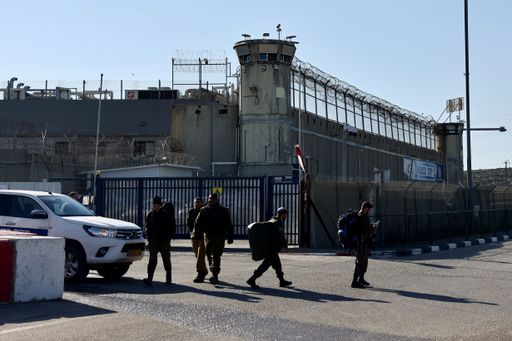
Over the past two years, words reached her that Ahmed was being illegally held at the notorious Sde Teiman detention centre.
Journalist Emad Al-Afrangi, 58, who was released from prison recently, said in an interview after his release that he heard screams of prisoners being tortured and heard about the amputation of their feet and body parts.
He described the Sde Teiman prison as “Israel’s Guantanamo”.
Alaa Al-Sakkaf, the director of the Al-Damir human rights organisation, emphasises that the Israeli army’s handover of Palestinians’ bodies constitutes a full-fledged war crime.
He points out that international law obliges parties to the conflict to respect the dignity of the dead, document their identities, preserve their bodies, and hand them over to their families.
What is happening reflects a systematic policy of humiliation and mutilation, he says, calling for urgent international action to hold Israel accountable and bring it to justice.