 Onur Kovaci
Contrary to popular belief, the Cyprus problem—or the issues on the island—is not limited to two communities and two administrations.
Beyond the UN buffer zone, also known as the ‘Green Line’, are two British Sovereign Base Areas (SBAs), Akrotiri and Dhekelia, in the south of the island.
These special military bases, by virtue of their “sovereign” status, enjoy both visible and invisible rights and privileges over the governance and resources of the island.
What makes their status especially unique is that, unlike Britain’s other overseas territories, they report directly to the UK Ministry of Defence.
Within their borders, where British law applies, Greek Cypriots, Turkish Cypriots, and British citizens live under the rules and laws imposed by the UK.
Moreover, their possession of sovereign territorial waters, in addition to their land territories, could in the future elevate their strategic significance to a level that might overshadow the Greek–Turkish controversies on the island.
Sovereign Base Areas’ existence
To summarise briefly without delving too deeply into history: Cyprus island was leased to the United Kingdom during Ottoman rule; later, Britain annexed the island using the Ottoman Empire’s entry into World War I as a pretext.
After years of negotiations and consultations, the “Republic of Cyprus” was declared on 16 August 1960 under the guarantorship of Türkiye, Greece, and the United Kingdom.
However, when Britain transferred the administration of the island to its native communities—the Greeks and the Turks—it did not leave behind merely left-hand traffic. It also insisted on retaining two SBAs as a condition for approving the establishment of the new state.

Thus, the Akrotiri and Dhekelia SBAs, which are still central to discussions today and will continue to be in the future, were proclaimed.
At that time, the island was divided between two states; today, it is shared among three. So what does this mean in practice?
Britain’s bases in action
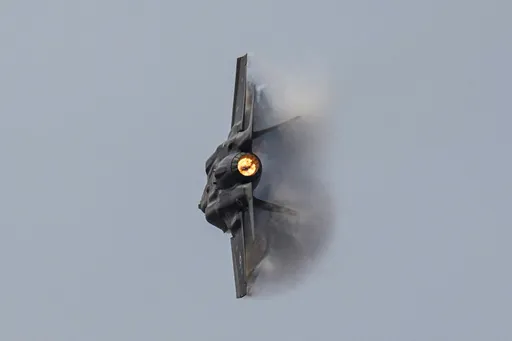
First and foremost, these are Sovereign Military Base Areas. The United Kingdom has actively used them during operations in Libya in 2011, against Daesh in 2014–2015, in Syria in 2018, in Yemen since 2024, and most recently, following the October 7th attacks, in support of Israel.
In effect, Britain possesses the world’s largest and cheapest ‘aircraft carrier’ in terms of operational cost—anchored in the Eastern Mediterranean—that never sinks, requires no port for fuel or supplies, and remains permanently deployed.
Winston Churchill once quipped, “If you want to ruin a country’s economy, give it an aircraft carrier,” pointing to the immense costs of operating such vessels.
The island of Cyprus lies at a critical point controlling access to, or from, the Suez Canal, through which passes a heavy flow of oil and commercial shipping.
In addition, the Levant Basin and the Arabian Peninsula, home to major global oil and gas reserves, are located nearby.
Through Gibraltar in the west, Malta in the centre, and Cyprus in the east, Britain maintains a permanent capacity to monitor and control the Mediterranean.
Especially given the political instability in its surroundings, having an unsinkable warship that requires no refuelling in the Eastern Mediterranean remains a tremendous strategic advantage for the UK.
But this advantage is not Britain’s alone. The United States is the number one customer and business partner of these facilities operated by the British.
The US maintains listening and radar facilities on the island in cooperation with the UK, with joint personnel and equipment stationed there.
On Mount Olympus, the 1,952-meter peak of the Troodos Mountains, the highest point on the island and one of the highest in the region, radar and listening posts have monitored Russia and the wider region since the Cold War.
In addition, fibre optic cables linking Eurasia and Africa run along the seabed of the Mediterranean, with relay stations located in the SBAs of Cyprus island.


This gives the US and UK near real-time access to information flows from both air and land, allowing them to provide intelligence and logistical support to allies in regional conflicts, as seen in the recent Israeli operations in Qatar.
The US U-2 reconnaissance aircraft also operates out of Akrotiri.
Given that Israel’s strike on Hamas officials in Qatar reportedly relied on aerial refuelling from UK tanker aircraft based in the region, one must carefully consider whom these bases might support, and under what circumstances, in scenarios of conflicting interests.
The EEZ and maritime disputes
From another perspective, the status of the SBAs, Akrotiri and Dhekelia, was the subject of lengthy and serious negotiations, especially regarding their size in an island geography with limited resources.
These negotiations led to the legal recognition that both areas, with their coastal access, would also possess territorial waters—provisions explicitly included in the agreements.
In the 1960 agreement establishing the “Republic of Cyprus” and the SBAs, it was also included that the SBAs, due to their coastal zones, possess territorial waters.
This has led some circles to interpret that, in addition to territorial waters, an Exclusive Economic Zone (EEZ) could also be declared.
However, one of the conditions for declaring an EEZ is to possess the status of an independent state. Yet the 1960 Agreement is clear: it proclaimed the SBAs under the sovereignty of the United Kingdom.
These areas are military zones, not states, and therefore cannot claim or negotiate rights that belong exclusively to states.
Moreover, such a development might bring new dimensions to ongoing questions of delimitation in the Eastern Mediterranean, where maritime boundaries remain largely unsettled.
Questions also concerning maritime delimitation would require negotiations, where different actors on the island could seek to protect their own interests through bilateral talks or early initiatives.
For instance, the EastMed project, designed to bypass Türkiye and the Turkish Republic of Northern Cyprus (TRNC), collapsed after Ankara signed the November 2019 Memoranda of Understanding with Libya on ‘delimitation of maritime jurisdiction areas’ and on ‘security and military cooperation’.
The Akrotiri and Dhekelia regions also face the coasts of Syria, Lebanon, Palestine, Israel, Egypt, Libya, and Greece.
If Türkiye and its neighbours fail to conclude delimitation agreements, any agreement signed by the SBAs as an independent state could affect both Türkiye’s ‘Blue Homeland’ maritime map and those of other countries in the region.
Enclaves and communities inside the cases
Another noteworthy issue within the SBAs is the enclaves’ settlements.
The Dhekelia base surrounds three Greek Cypriot villages, while the boundary of an SBAs bisects one Turkish settlement.
Together with British military personnel and their families, the Greek and Turkish Cypriots in these areas form a population of around 20,000.
All inhabitants of the Sovereign Base Areas are subject to the rules and laws of the bases, and legal proceedings fall under British jurisdiction, although certain civil matters may be coordinated with the local authorities.
This has occasionally led to disputes, particularly among the Greek Cypriot community, which sometimes seeks recourse through third parties. In recent years, residents voiced concerns over land use, claiming that the bases occupied excessive space.
In response, the UK government swiftly placed on the agenda the transfer of certain reserved areas, originally held back for military use, to local inhabitants, thus defusing tensions before they could escalate.
For the UK, past, present, and future, its presence on the island is non-negotiable due to the immense military and economic reasons outlined above.
In conclusion, Britain maintains both a hidden and visible presence in Cyprus island through its SBAs. By virtue of these bases, it occupies a central position in the island’s and indeed the region’s military and economic dynamics.
In an environment of increasingly dynamic and polarised alliances, intelligence operations, and economic cooperation, the British continue to place themselves, whether invited or not, at the very heart of every negotiation and dispute.