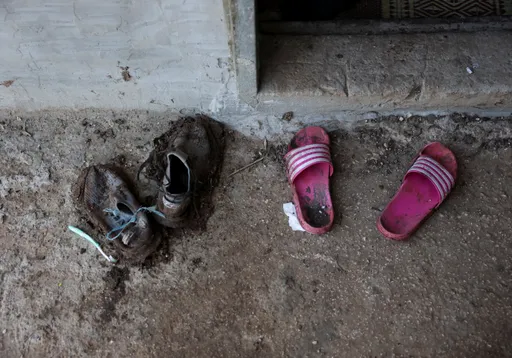
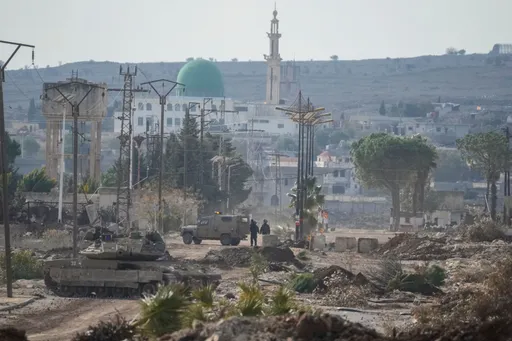
Children played on a Gaza beach as displaced families left their cramped shelters for a short break during the truce between Israel and Hamas, but amid the laughter their parents could not forget the hardships of war and homelessness.
As children splashed in the shallow water, jumping over small waves, adults in bare feet watched from the shore. Asmaa al Sultan, a displaced woman from northern Gaza, sat on the sand with her arm around her mother. The older woman was crying quietly.
More than 30 members of the al Sultan family are sheltering in a UN school in the town of Deir Al Balah with hundreds of other displaced people.
"We came to the beach to take a breather, to escape from the feeling of the crowded schools and from the depressing and polluted environment we are in," said Asmaa.
"People come to the beach to relax, to swim, for their children to have fun, they take food with them. But we are so depressed. We are on the beach but we want to cry."
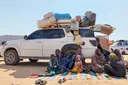
Hundreds of thousands of people have left their homes in northern Gaza, which has borne the brunt of Israel's military assault, to seek refuge in tents, schools or the homes of friends and relatives in the southern part of the strip.
The gruelling conditions in the tent camps and schools, with overcrowding, a lack of toilets and showers, and long daily queues for small rations of food and water, have been compounded by the psychological impact of bombardment and displacement.
The beach at Deir Al Balah has a row of fishermen's huts at the back, towards the bottom of a slope strewn with rubbish.
Some displaced people had taken up residence in the flimsy huts, clothes hanging on strings outside.


'What will happen to us next?'
Waleed al Sultan, one of Asmaa's younger relatives, was trying to untangle a net near the huts as he prepared to go out fishing in a small boat, hoping the truce would mean he could do so without danger.
"I brought nothing with me when I was displaced, so I thought I would make a living from fishing, but the (Israeli) guards stopped me and started shooting at us," he said.
Hamas broke through the militarised Gaza border on October 7 in an unprecedented attack. Israeli officials say about 1,200 people were killed and around 240 taken hostage.
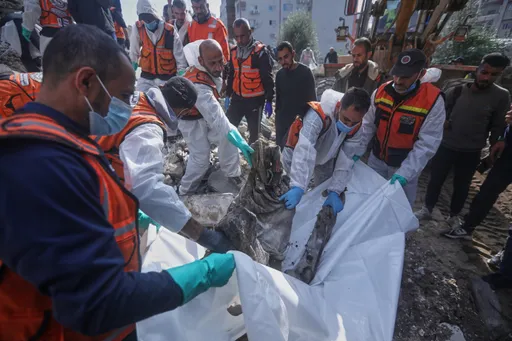
Relentless Israeli bombardments and a ground invasion on Gaza since then has killed 14,800 Palestinians, four in ten of them children under 18, according to health officials.
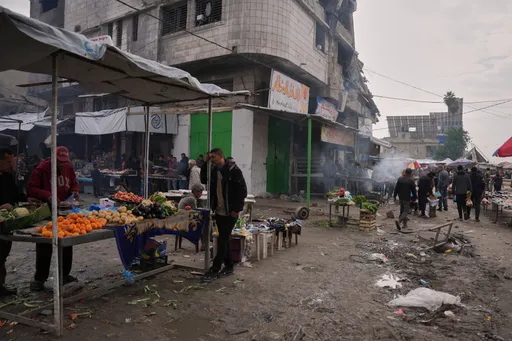
While some displaced people have seized the opportunity of the four-day truce, which began on Friday, to check on their homes, others have been too fearful to return to the north, much of which has been reduced to a wasteland.
"We are afraid about the end of these four days. We don't know what will happen to us next," said Hazem al Sultan, Asmaa's husband.
He said they and their relatives had not dared to head north for fear of being shot at by Israeli soldiers, and had no idea what state their homes might be in.
"We are afraid for our children, for ourselves, and we don't know what to do," he said.