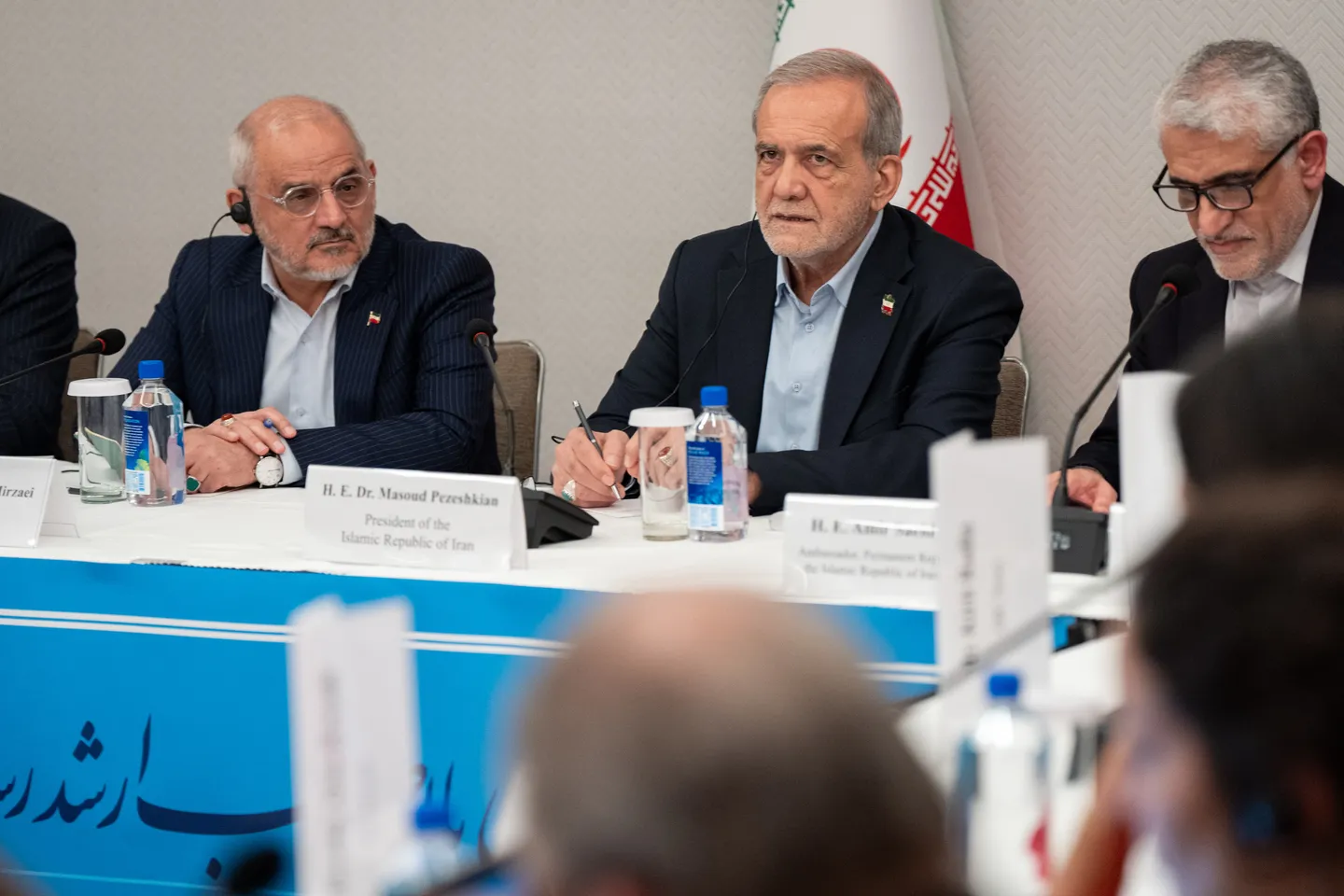
Iranian President Masoud Pezeshkian stated that his country would not withdraw from the Nuclear Non-Proliferation Treaty, even if UN sanctions are reinstated as expected this weekend.
"We do not intend to leave the NPT," Pezeshkian told reporters on the sidelines of the UN General Assembly, warning that foreign powers were seeking "a superficial pretext to set the region ablaze."
Meanwhile, the UN nuclear watchdog IAEA said it had resumed inspections in Iran this week following a hiatus in the wake of US and Israeli attacks on Tehran's atomic facilities.
"Inspections are confidential and we cannot confirm their location, but we can confirm that inspections have taken place this week," it said in a statement.
Earlier, Iran's Foreign Minister Abbas Araghchi left the door open to further talks ahead of the late Saturday deadline for a deal on Iran's nuclear program that would prevent deep economic sanctions from automatically taking effect.
Iran will "never bow" to pressure from the West over its nuclear program, the country's foreign minister has vowed after a failed push by Moscow and Beijing at the UN Security Council to delay sanctions.
"Diplomacy never dies," he said.
Russia said there would be "no snapback" of biting UN sanctions on Iran even after the failure of efforts by Moscow and Beijing at the Security Council to stave off the measures.
"There has been no snapback, and there will be no snapback. Any moves to resuscitate anti-Iranian Security Council resolutions, which were in effect prior to 2013, are null and void," Russia's deputy UN ambassador Dmitry Polyansky told the Council.
Respectful dialogue
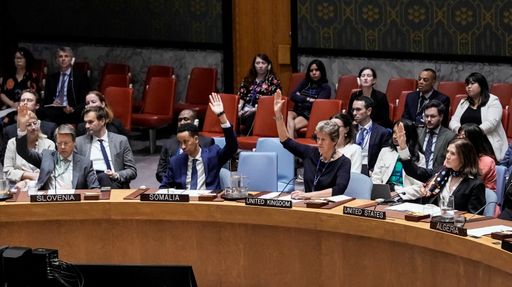
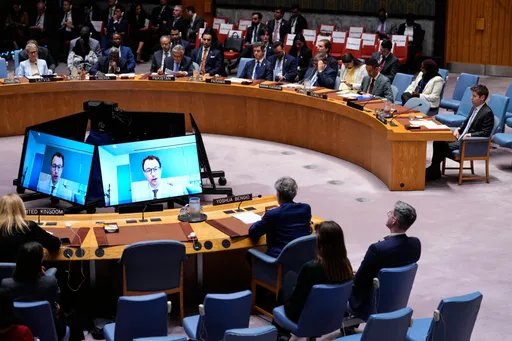
Russia and China expressed regret after the UN Security Council rejected their draft resolution to delay the re-imposition of sanctions on Iran, as the US and UK defended the move as necessary.
"Those members of the Security Council who supported this document reaffirmed their commitment to international law, to equitable and mutually respectful dialogue and to the task of maintaining international peace and security," Russia's Deputy Ambassador to the UN, Dmitry Polyanskiy, said at the Council's session on Iran sanctions.
He argued that "the adoption of this would have preserved a chance for the international community to reach a diplomatic resolution to the conflict in the context of the Iranian nuclear program."
Criticising Council members who rejected the resolution, Polyanskiy said, "We regret the fact that several Security Council colleagues were unable to summon the courage or the wisdom to support our draft."
China's Deputy UN Envoy Geng Shuang similarly expressed "deep regret" for the failure to adopt the draft resolution, emphasising that "dialogue, negotiations, and difficult means are the only viable options for resolving the Iranian nuclear issue."
He urged the US "to demonstrate political will by responding positively to Iran's proposal to resume talks and committing unequivocally to refrain from further military strikes against Iran."