 Mursel Dogrul
Security has always been a fundamental need for nation-states, pursued through military capability and strategic alliances.
For decades, smaller and middle powers assumed that aligning with a superpower would protect them from external threats.
However, in today's chaotic international system, where the old rules no longer apply, this assumption is becoming invalid.
Türkiye or other middle powers in Asia-Pacific must now forge their own paths in a multipolar world where trust is fragile and security promises are conditional.
The era of unchallenged US leadership is fading. Rather than being replaced by a stable alternative order, it is being replaced by a fractured one, marked by competing poles of influence, weaponised trade and alliances that prove fragile when tested.
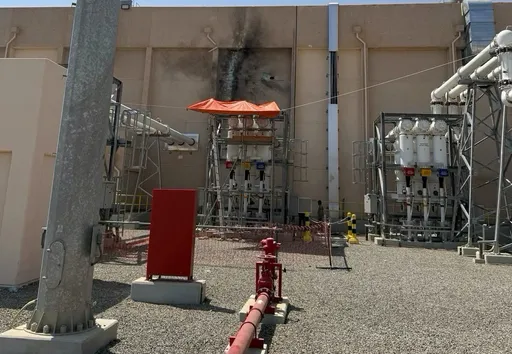
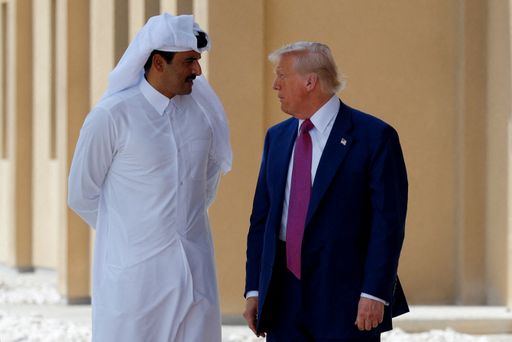
Few events illustrate this more starkly than the Israeli attack on Qatar on September 9 that shocked not only the Gulf but also caused ripples across Asia, where US allies are quietly rethinking their assumptions about Washington's reliability.
Qatar has long been a pivotal partner of the US, hosting military bases and mediating in regional disputes.
Even under the American security umbrella, its vulnerability has sent a chilling message from Tokyo to Canberra. As Henry Kissinger once warned, “It may be dangerous to be an enemy of the US, but to be its friend is fatal”.
This anxiety is nothing new. When Beijing halted barley imports from Australia amid a diplomatic dispute in 2023, Australia’s closest ally, the US, did not show solidarity.
Instead, it sold its own barley to China, profiting from its partner’s economic suffering. This episode reinforced the perception that US commitments are transactional and driven by immediate self-interest rather than enduring loyalty.
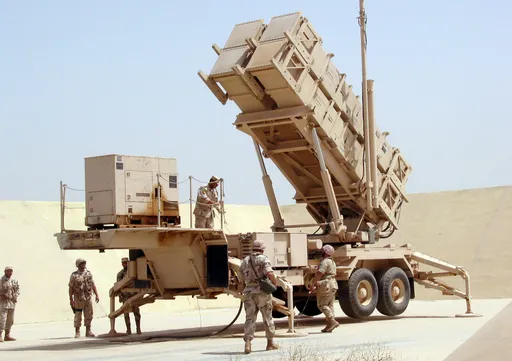
The attack on Qatar has reinforced that perception in the defence sector.
For many Asian allies, it confirmed the sobering reality that even close strategic ties with Washington can not guarantee protection.
This realisation is prompting middle powers to reconsider their overreliance on the US and explore alternative security strategies, such as regional defence compacts, hedging strategies or diversified partnerships.
For Türkiye and other nations of a similar standing, the message is clear.
Security in the 21st century can not be outsourced to the whims of a single hegemon. In a world of fragile alliances and shifting centres of power, middle powers must forge their own path, building resilience and broadening partnerships, and above all, refusing to mistake dependency for safety.
Asia's strategic mosaic: Beyond blocs and illusions
The rigid Cold War blocs can no longer explain the Asia-Pacific region.
Instead, it has evolved into a complex network of interconnected interests, where economic diplomacy is as important as military power.
Few powers have grasped this transformation as effectively as China. By combining commerce and strategy, Beijing is reshaping the balance of power in ways that Washington’s naval dominance and traditional alliance structures can not easily counter.
China’s naval expansion, port projects and diplomatic initiatives, stretching from the South China Sea to the Red Sea, are testament to this far-reaching ambition.
This assertiveness has prompted its neighbours to take action.
Japan, which has traditionally been cautious about military affairs, is undergoing its most dramatic rearmament in generations.
A record defence budget of $60 billion has been earmarked for drones, long-range missiles and cyber capabilities for 2025.
Tokyo is also reviving its previously stagnant defence industry and coupling this with investments in semiconductors through firms such as Rapidus, which is collaborating with IBM to produce 2nm chips. Security and technology are becoming inseparable strands of national resilience.
Australia and South Korea are also recalibrating their strategies. Canberra has deepened its defence consultations with Tokyo, formalising them through the Australia–Japan 2+2 foreign and defence ministers' dialogue.
Meanwhile, Seoul is expanding its involvement in multilateral formats, such as the US–Japan–Philippines security dialogue. These flexible arrangements are not just diplomatic experiments, but insurance policies against the volatility of an uncertain age.
A more complex phenomenon has emerged, which can be described as a strategic mosaic rather than a return to bloc politics.
This network of issue-based partnerships is intended to foster practical resilience rather than ideological unity. Countries are hedging their bets by balancing and diversifying their alliances to avoid becoming overly dependent on any single superpower.
Events such as the Gulf crisis and Europe’s energy shocks serve as reminders that dependency does not equate to security, as does the fluctuating reliability of US commitments. Countries cannot afford to outsource their defence to distant guarantors whose priorities may suddenly change.
Instead, they must cultivate diverse partnerships, strengthen their own capabilities, and recognise that economic security is inseparable from national defence.
The goal is to establish a flexible and resilient network based on hard-earned self-reliance.
Türkiye and Japan: A partnership of strategic complementarity





In today's turbulent geopolitical landscape, the emerging defence partnership between Türkiye and Japan exemplifies the concept of middle-power complementarity.
Both countries have advanced capabilities in certain areas and are committed to achieving greater strategic autonomy.
However, their strengths lie in different areas, meaning they reinforce each other rather than competing.
Türkiye has become one of the global leaders in drone warfare. Its combat-proven systems, most notably the Bayraktar TB2, have transformed modern warfare and caught the attention of Tokyo.
Turkish defence firms are now pushing the frontier further with AI-integrated UAVs such as the TB2T-AI. By contrast, Japan is a pioneer in semiconductors, sensors and advanced electronics, the very building blocks of next-generation defence systems.
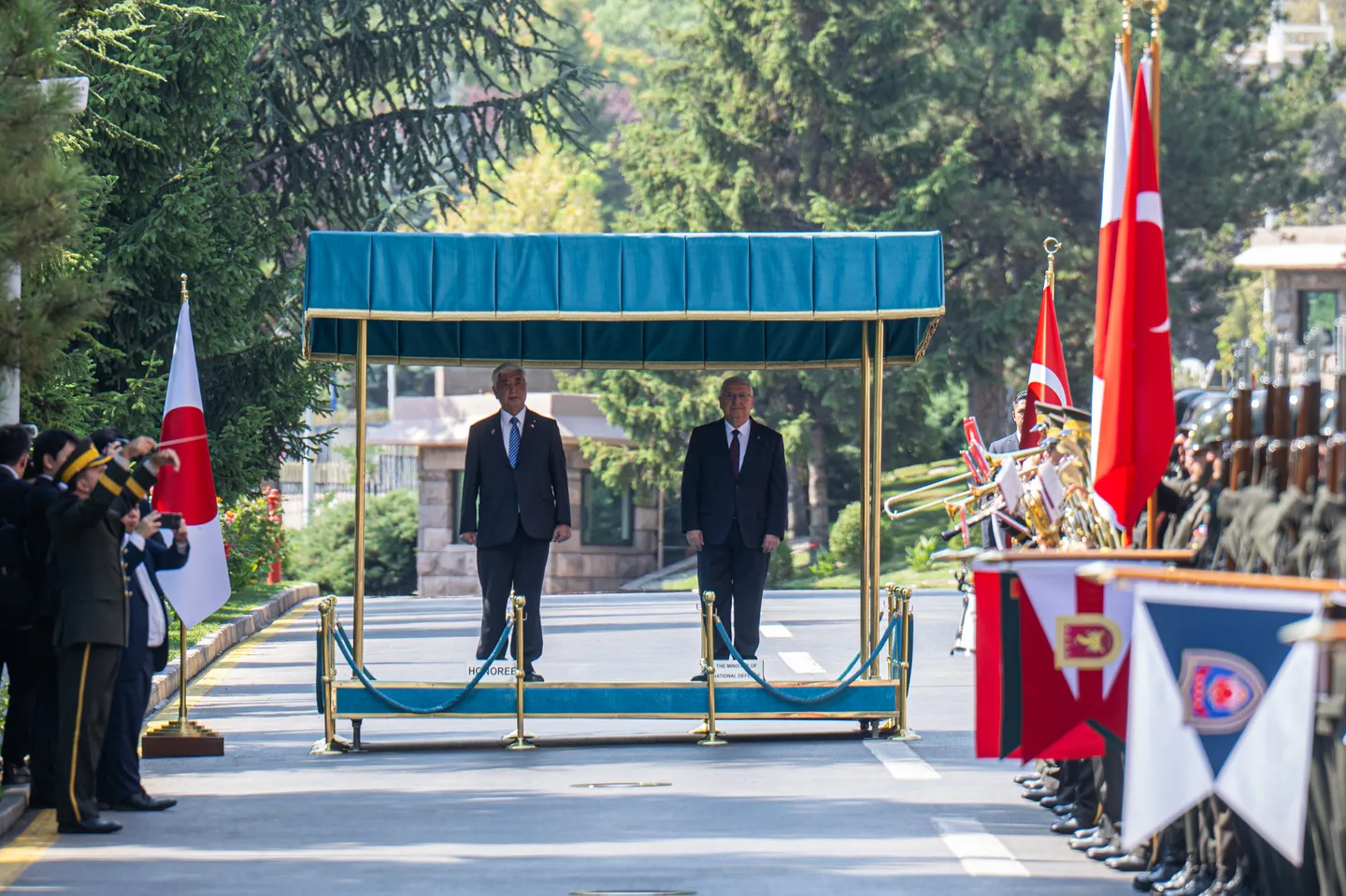
The convergence of these strengths has accelerated in recent months. In August 2025, Japan’s Defence Minister visited Ankara and İstanbul to discuss joint drone development and technological cooperation.
Shortly afterwards, President Recep Tayyip Erdoğan wrote an article for Nikkei Asia in which he declared that Türkiye and Japan, as 'the two ends of Asia', must work together to maintain global stability.
This alignment was further symbolised by the scheduled visit of a Japanese imperial princess to Türkiye in September 2025, during which she will speak on the theme of Turkish friendship.
This synergy aligns with Türkiye’s National Technology Initiative, which aims to establish the country as a leading global innovation hub.
Discussions are already underway regarding joint projects in autonomous systems, smart munitions and semiconductor manufacturing.
Japan’s technological expertise complements Türkiye's operational experience, offering the prospect of collaborative ventures that could set new standards in defence technology.
For both nations, this is a strategic investment, not merely a tactical alignment.
By working together, Türkiye and Japan are showing how middle powers can create networks of resilience, reduce their dependency on major powers and strengthen their position in an unpredictable global order.
The logic of middle-power diplomacy
The emerging partnership between Türkiye and Japan reflects a broader structural shift.
Middle powers are increasingly becoming rule-shapers rather than rule-takers.
As observed, these countries are forming flexible, issue-based coalitions to hedge against the unpredictability of the major powers.
In the Indo-Pacific region, this trend can be seen in Japan’s security pact with the European Union and its expanding trilateral dialogue with the US and the Philippines.
This is also evident in the joint investments of Japan, South Korea and Türkiye in semiconductor supply chains, which are intended to reduce reliance on the competing technological spheres of Washington and Beijing.
These moves demonstrate that middle powers are gaining leverage not through confrontation with great powers, but by establishing robust, diversified networks that offer greater autonomy.
Accessing Türkiye’s expertise in UAVs would reduce Japan’s dependence on US suppliers.
Meanwhile, for Türkiye, drawing on Japan’s advances in AI and robotics would accelerate its transformation into a high-tech defence hub.
Unlike cooperation with revisionist Russia or rising China, this is unlikely to trigger geopolitical backlash, as both Ankara and Tokyo are regarded as responsible middle powers, assertive but not destabilising.
Today's global turbulence is not just a sign of weakness, but a historic opportunity for both countries.
By navigating shifting alliances and power vacuums with agility, Ankara can establish itself as one of the leading players in the Asia-Pacific region.
Its partnership with Japan offers a model of pragmatism, mutual benefit and geopolitical acceptability.
This does not mean abandoning old alliances, but rather restructuring them on more equal terms. This shift marks a transition from dependency to strategic autonomy, where cooperation is based on mutual benefit rather than hierarchy.
This evolution enables Türkiye to transcend the role of junior partner and establish itself as an independent actor with a security strategy grounded not in the goodwill of a single superpower, but in a diverse network of allies.
Türkiye should pursue similar strategies with other regional countries, such as South Korea and Malaysia.
In a world where even friendship can be 'fatal', Türkiye is forging a new path based on independence, innovation and smart diplomacy.
This approach may soon come to define the future of middle powers in the Asia-Pacific and Middle East regions that seek to thrive, not just survive, in an increasingly multipolar order.