 Kazim Alam
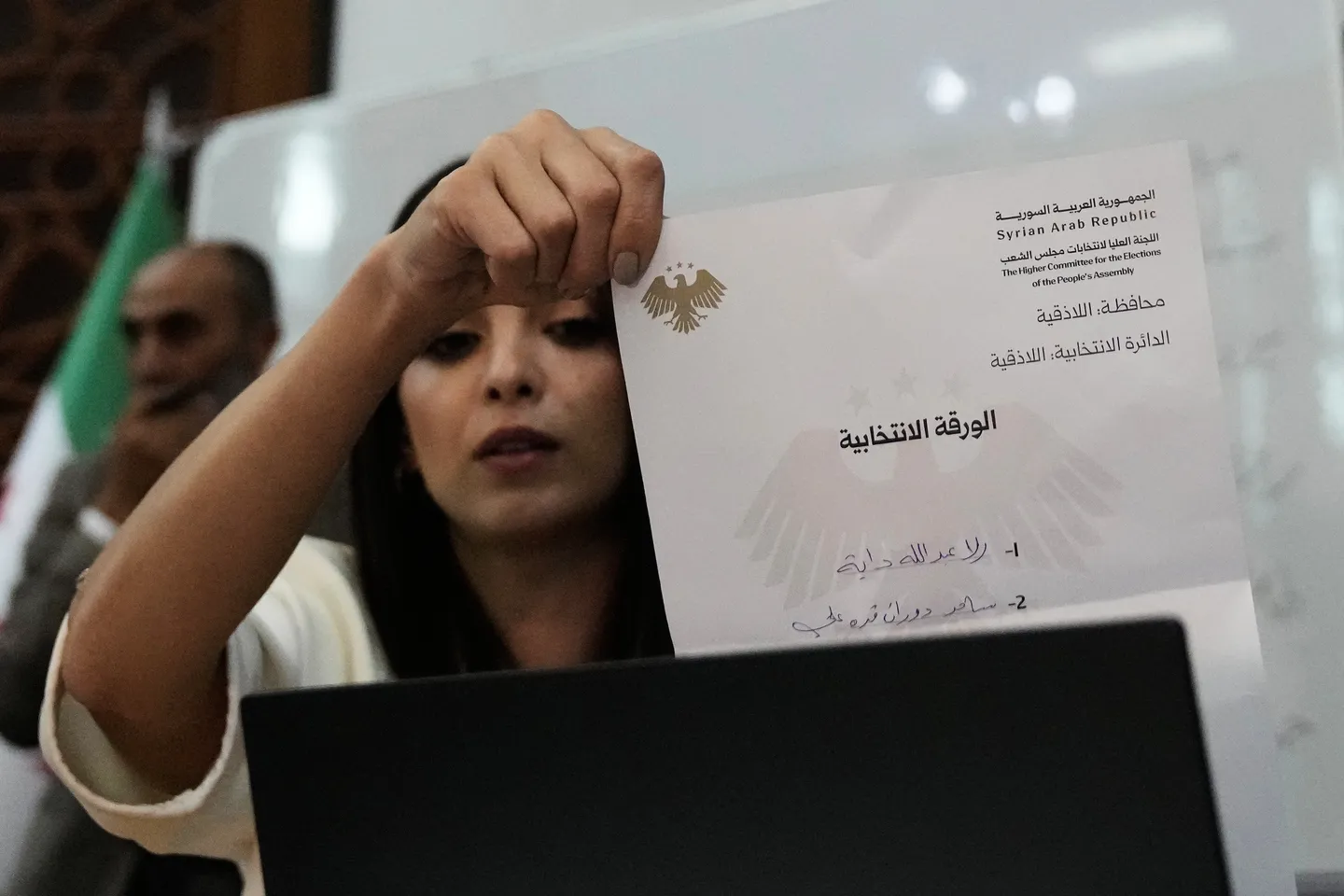
After decades of authoritarian rule and civil war, Syria held its first post-Assad elections on October 5, marking a pivotal moment in the country’s transition from autocracy to a fledgling democracy.
The Syrian Transitional Government under President Ahmed al Sharaa opted for indirect elections in view of incomplete voter registries and millions lacking proper ID documents.
About 6,000 members of electoral colleges across Syria voted for 1,578 pre-approved candidates for nearly two-thirds of the 210-member parliament. In the subsequent phase of the election, al Sharaa will directly appoint the remaining one-third of parliamentarians.
The main task of the newly elected People’s Assembly is drafting a new constitution by 2028, an exercise meant to set the stage for direct elections and a renewed social contract in the war-ravaged country.
Analysts say the elections should be considered a “significant achievement” for Syria despite their indirect nature, as the country tries to break free from the dark legacy of authoritarianism under the Baathist regime.
“The political transition in Syria reached a new milestone with the parliamentary elections,” Recep T Teke, a Levant Studies expert at the Centre for Middle Eastern Studies (ORSAM), tells TRT World.
“For the first time in decades, Syrians now have a political platform through which they can channel their grievances and demands to the governing authorities,” he says, adding that the polls mark a meaningful step towards rebuilding participatory politics.
He says the transitional government has a clear interest in ensuring the effective functioning of the new assembly, as its own legitimacy depends heavily on the success and credibility of parliamentary processes.
“A government seeking both international recognition and domestic legitimacy will be compelled to empower the People’s Assembly, allowing it to play a substantive role in shaping the country’s political future,” he says.
Yet challenges remain for the new parliament, ranging from reconciling a deeply fragmented society to cementing international support.
For example, Syria’s deeply diverse demographic landscape poses “inherent challenges”.
Reconciling the interests of many divergent interest groups will be critical to creating a framework that fosters unity rather than division, he says.
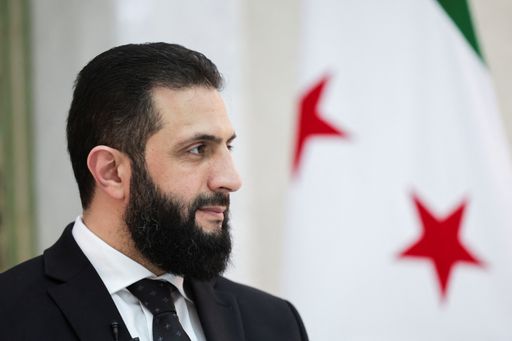
Al Sharaa’s transitional government has been operating under a temporary constitutional declaration that covers a five-year transition period since opposition forces toppled the decades-old Assad regime in December 2024 in a lightning-quick offensive.
He says drafting a new constitution to permanently define the country’s political system will be an “immensely complex and delicate task”.
This is because the country’s ethnic, religious, and sectarian make-up, consisting of sizeable pockets of Kurd, Druze, and Alawite populations, presents a formidable obstacle to consensus-building.
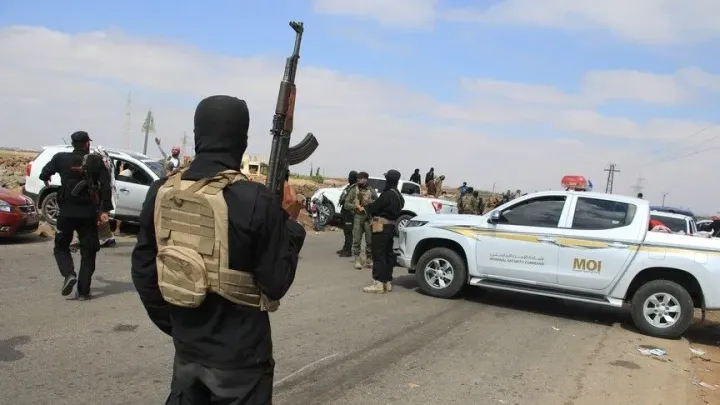
The indefinite postponement of polls in regions like the SDF-controlled northeast and Druze-controlled Sweida further complicates this task.
He warns that the exclusion of these areas from the polling exercise could possibly lead to instability and even outright rejection of the constitutional outcome by some communities.
Teke says Al Sharaa, while directly appointing 70 members to the parliament, is likely to prioritise representatives from those areas where elections were postponed.
“Al Sharaa is expected to use this prerogative to bolster the assembly’s legitimacy by selecting representatives from the excluded areas,” he says.
Unity through diplomacy
The Assad era was marked by widespread atrocities – war crimes, enforced disappearances, and torture – that left deep scars on Syrian society.
Sham elections would take place every four years under Assad’s rule, as the Baath Party always dominated the parliament, with two-thirds of total seats set aside for party loyalists.
The rubber-stamp parliament from the Baathist reign was sent packing when the opposition forces toppled the Assad regime last year.
Highlighting Al Sharaa’s engagement with Kurdish and Druze leaders since coming to power late last year, Teke says the Syrian government remains committed to restoring political unity through diplomacy.
Beyond territorial challenges, the assembly faces the task of addressing historical injustices and integrating marginalised voices.
He calls for “a dedicated transitional justice mechanism composed of independent jurists” to investigate these abuses.
He envisions a national truth and reconciliation commission to document past violations and promote healing, a step he deems “essential for fostering a durable peace”.
Such measures would signal a decisive break from the impunity that characterised the Assad regime, restoring public trust in governance, he says.
Taming ‘unrealistic’ expectations
Women’s representation in the Syrian electoral process leaves much to be desired. Only six female lawmakers were elected in the October 5 polls, despite women comprising 14 percent of candidates.
The stark underrepresentation points to the need for long-term, structural reforms.
Women’s participation in politics has been one of the central demands of the international community. Teke urges the new assembly to introduce gender quotas in legislative committees and the constitutional drafting process.
Omar Alhariri, an independent Syrian journalist, tells TRT World that he expects Al Sharaa to correct the gender imbalance by directly appointing women to the parliament.
However, he warns people against having “unrealistic” expectations when it comes to women’s participation in parliamentary democracy.
“It would be unrealistic to expect Syria to have a parliament comparable to those of other countries at this stage,” he says, adding that the Syrian nation is still striving to “rebuild, recover, and move beyond” the decades-long ruin perpetrated by the Assad regime.
Alhariri adds that the formation of the assembly itself is a powerful signal to the world, demonstrating that Syria is “rapidly regaining its vitality and strength”.
He says the parliament forms part of the broader narrative that Syria is building “for its people first, its neighbours second, and the world at large third”.
Garnering international support
Analysts say the success of the newly elected assembly will hinge on its ability to secure international support, particularly from Western governments whose sanctions and aid policies could shape Syria’s recovery.
The transitional government has already made strides in gaining global recognition, with Syrian officials welcomed at the UN General Assembly in New York last month.
“Western governments have largely embraced the new administration,” Teke says, citing their optimism about the elections despite their imperfections.
However, sustaining this support requires tangible progress.
Western states, mindful of violent incidents in areas like Sweida, have called for transparent investigations and accountability.
“They expect fair judicial proceedings and concrete measures to prevent the recurrence of such abuses,” he says.
For sanctions relief and aid inflows, the parliament must prioritise political inclusivity, institutional reform, and human rights.
“Only by demonstrating a genuine and consistent commitment to these principles can the transitional leadership preserve international confidence and secure lasting legitimacy,” he says.