 Noureldein Ghanem
Israel's bombardment and ground invasion have turned much of northern besieged Gaza into an uninhabitable moonscape.
Whole neighbourhoods have been erased. Homes, schools and hospitals have been blasted by air strikes and scorched by tank fire. Some buildings are still standing, but most are battered shells.
Nearly one million Palestinians have fled the north, including its urban centre, Gaza City, as ground invasion intensified.
When the war ends, any relief will quickly be overshadowed by dread as displaced families come to terms with the scale of the calamity and what it means for their future.
Where would they live? Who would eventually run besieged Gaza and pick up the pieces?
"I want to go home even if I have to sleep on the rubble of my house," said Yousef Hammash, an aid worker with the Norwegian Refugee Council who fled the ruins of the urban refugee camp of Jabalia for southern Gaza.
"But I don't see a future for my children here."
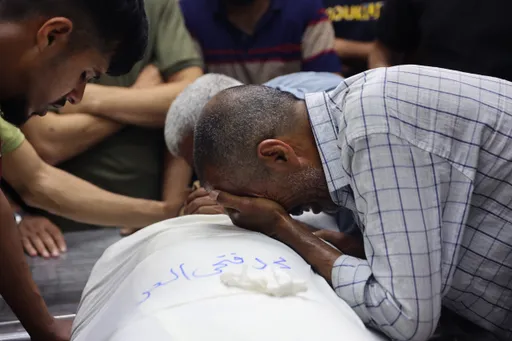
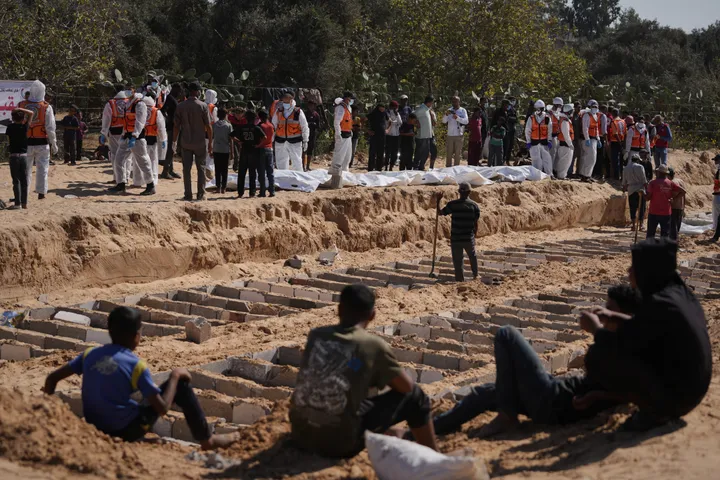
The Israeli army's use of indiscriminate powerful explosives in tightly packed residential areas has killed nearly 15,000 Palestinians and led to staggering destruction. More than 7,000 Palestinians are missing or buried under rubble of bombed homes, authorities say.
"When I left, I couldn’t tell which street or intersection I was passing," said Mahmoud Jamal, a 31-year-old taxi driver who fled his northern hometown of Beit Hanoun this month.
He described apartment buildings resembling open-air parking garages.
Israel's bombardment has become one of the most intense air onslaughts since World War II, said Emily Tripp, director of Airwars, a London-based conflict monitor.
In the seven weeks, Israel unleashed more munitions than the United States did in any given year of its invasion campaigns in the Middle East — a barrage the UN describes as the deadliest urban bombardment since World War II.
'Nothing to return to'
In Israel's grainy thermal footage of air strikes, fireballs obliterate everything in sight.
"The north of Gaza has been turned into one big ghost town," said Mkhaimer Abusada, a political scientist at Al Azhar University in Gaza City who fled to Egypt last week.
"People have nothing to return to."
About half of all buildings across northern Gaza have been damaged or destroyed, according to an analysis of Copernicus Sentinel-1 satellite data by Corey Scher of the CUNY Graduate Center and Jamon Van Den Hoek of Oregon State University.
The war has knocked 27 of 35 hospitals across Gaza out of operation, according to the World Health Organization.
The destruction of other critical infrastructure has consequences for years to come.
"Bakeries and grain mills have been destroyed, agriculture, water and sanitation facilities," said Scott Paul, a senior humanitarian policy adviser for Oxfam America.
"You need more than four walls and a ceiling for a place to be habitable, and in many cases, people don't even have that."
Across the entire enclave, over 41,000 homes — 45 percent of Gaza's total housing stock — are too destroyed to be lived in, according to the UN.

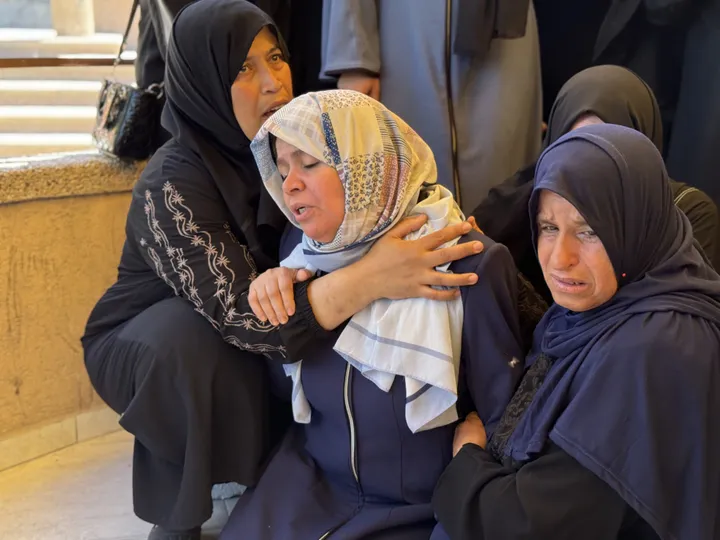


"All I left at home was dead bodies and rubble," said Mohammed al Hadad, a 28-year-old party planner who fled the Shati refugee camp along Gaza City's shoreline.
Southern Gaza — where scarce food, water and fuel has spawned a humanitarian crisis — has been spared the heaviest firepower, according to the analysis.
But that's changing. In the past two weeks, satellite data shows a spike in damage across the southern town of Khan Younis.
Residents say the military has showered eastern parts of town with paper ultimatums.
Israel has ordered those in southern Gaza to move again, toward a slice of territory called Muwasi along the coast.
'This is our nakba'
"This is our nakba," said 32-year-old journalist Tareq Hajjaj, referring to the mass exodus of an estimated 700,000 Palestinians during the 1948 war surrounding Israel's creation.
"We will never return home," said Hajjaj, who fled his home in Shijaiyah in eastern Gaza City.
"Those who stay here will face the most horrific situation they could imagine."
The 2014 Israel-Hamas war levelled Shijaiyah, turning the neighbourhood into fields of inert grey rubble.
The $5 billion reconstruction effort there and across Gaza remains unfinished to this day.
"This time, the scale of destruction is exponentially higher," said Giulia Marini, international advocacy officer at Palestinian rights group Al Mezan.
"It will take decades for Gaza to go back to where it was before."
No one to pick up after
It remains unclear who will take responsibility for that task.
At the recent security summit in Bahrain, Jordanian Foreign Minister Ayman Safadi vowed Arab states would not "come and clean the mess after Israel."
Israeli Prime Minister Benjamin Netanyahu wants the army to "restore security", and American officials have pushed the seemingly unlikely scenario of the occupied West Bank-based Palestinian Authority taking over the enclave.
Palestinian President Mahmoud Abbas, regarded by many Palestinians as weak, has dismissed that idea in the absence of Israeli efforts toward a two-state solution.
Palestinians say it's not only shattered infrastructure that requires rebuilding but a traumatised society.
"Gaza has become a very scary place," Abusada said. "It will always be full of memories of death and destruction."