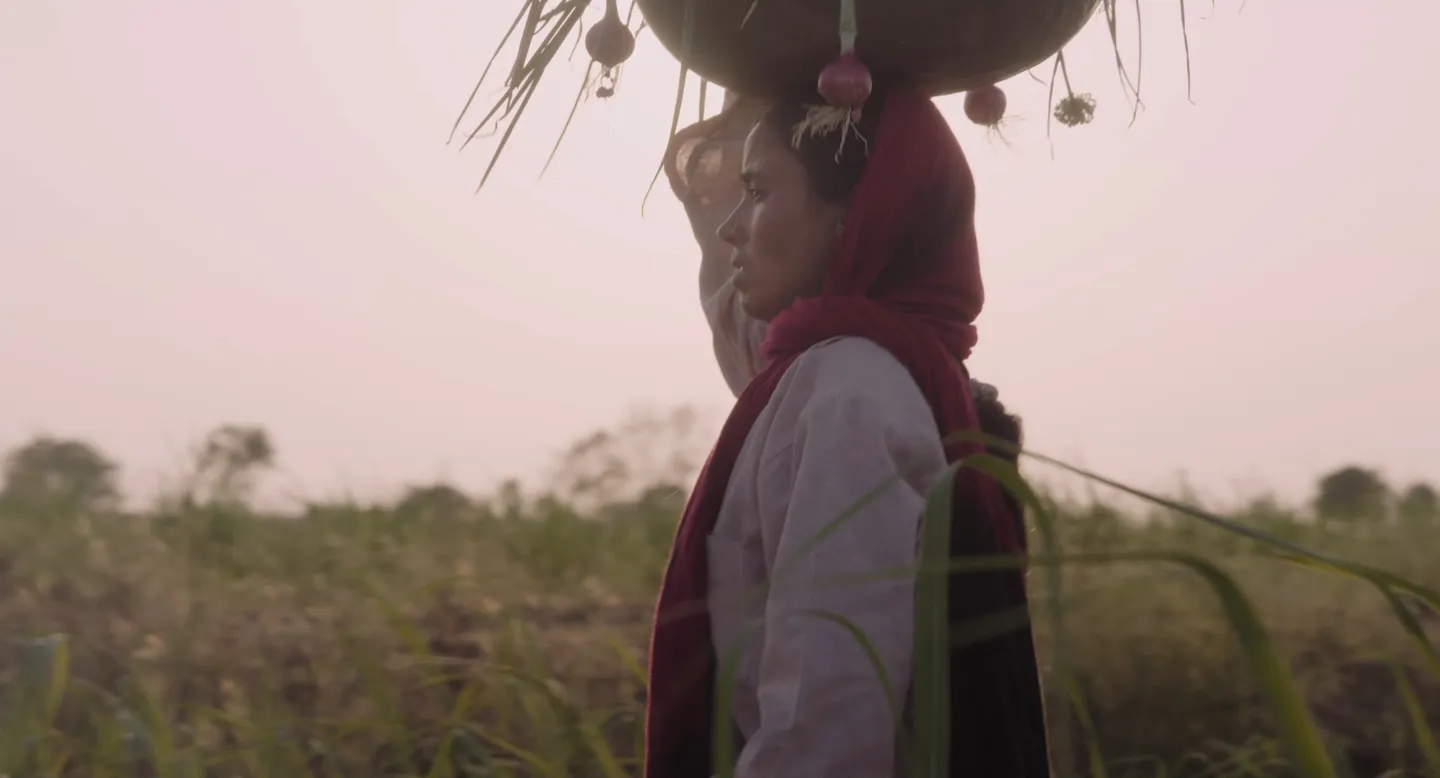
Intent on providing a better life for herself and her children after her farmer-husband’s suicide, Sanjivani struggles against her culture’s traditional abandonment of widows, until she joins a discussion group with other farmer-suicide widows. Empowered by community, shared stories of resilience, and unexpected solidarity, Sanjivani forges a path forward.
[NOTE: Marching in the Dark available until December 15, 2025.]
DIRECTOR’S STATEMENT
By Kinshuk Surjan | Director
When I traveled to the areas in Maharashtra with the highest rates of farmer suicides in India, I was struck by the resilience of women, taking care of their families, responsible for repayment of their husband’s loans after the suicide of their husbands, and having to rebuild their lives from scratch as they deal with their own grief, but they must do so from a position out of sight. The invisible casualties of this crisis.
A strange paradox exists: widows in this part of the country are seldom/not always welcome in public life, and not allowed to conduct transactional business freely, without a man speaking for them and yet this is also the land of most influential, progressive and tradition defying women leaders/reformers like Savitribai Phule. (Also called as mother of Indian feminism).





Shaken and propelled by anguish after meeting numerous grieving families affected by suicide, a question naturally arose: could there be a safe space for a women’s group, a place to heal from grief and depression? This question became the catalyst for connecting Dr. Potdar with the NGO Manaswini, with the film aiming to create more than just a narrative, but also a safe space for women, each at different stages of their grief. In this way, through group therapy and by sharing their grief and stories of resilience, we hoped they could find strength and healing.
Dr. Potdar is an activist and a psychologist who has worked on preventing farmer suicides and conducting workshops for male farmers centering around depression, since 2014.
Manaswini, the women’s wing of NGO MANAVLOK, has been combating violence and discrimination against women since 1984. Additionally, Maharashtra has a longstanding culture of empowerment through women’s financial savings groups in villages since independence.
Eventually, the group turned into a friendship group which questioned the traditional social and patriarchal norms and taboos; asking questions like “Why don’t women farmers commit suicide?”, and celebrating festivals that society had ostracised them from. It also became, quite simply, a place to meet friends. The women shared practical life recipes for dealing with bureaucracy, such as getting a new gas connection, where to send kids to school, and so on.
I’ve always wondered if the impact of the film is only after the film is made, distributed and seen, or can the prolonged process of documentary itself be a structure to affect change. The film-making process thus endeavored to be a bridge to bring the changemakers - psychologist, women, and the local agencies together.
Storyteller airs every Sunday at 1800 GMT.