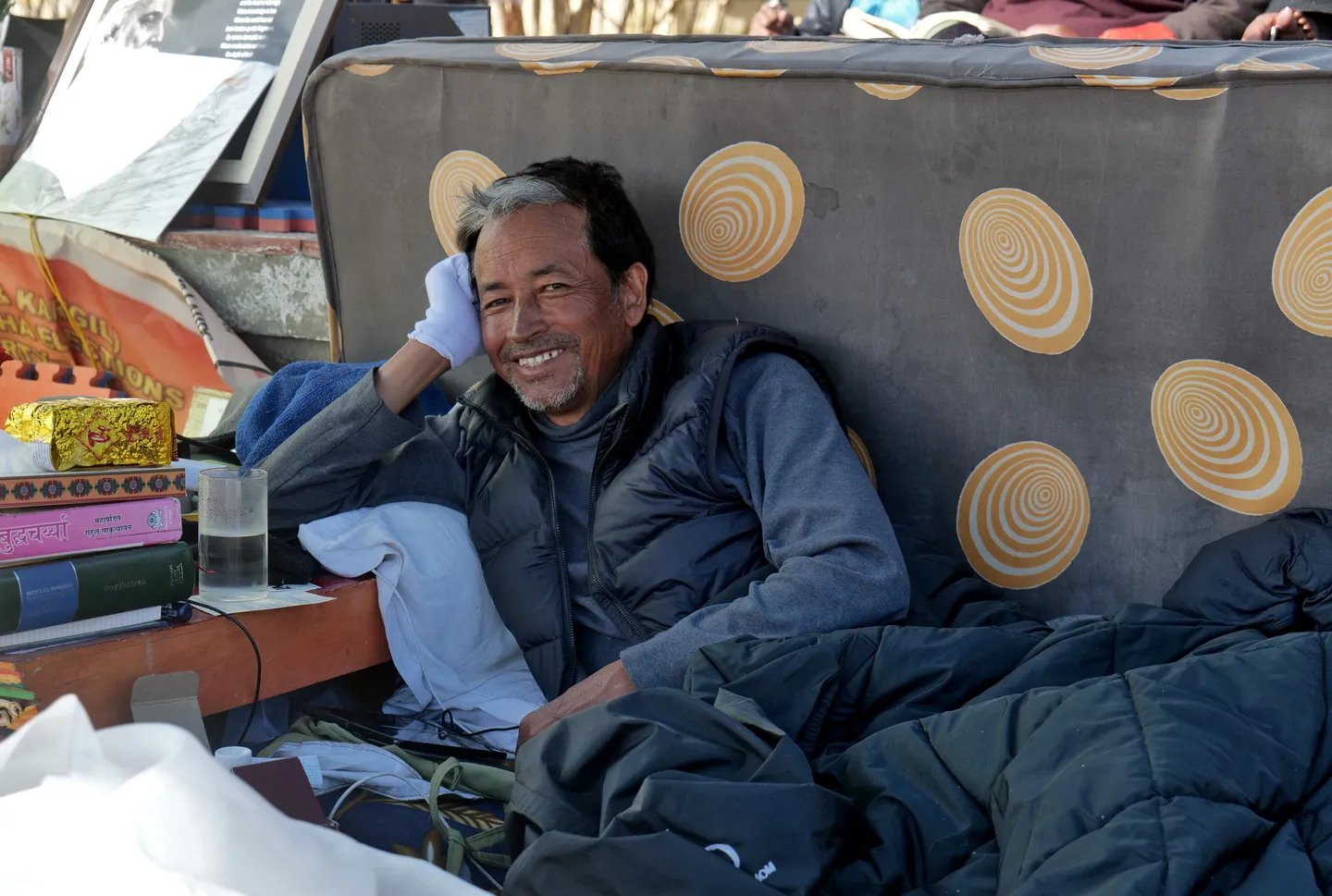
As fires raged through parts of Leh — the main town of India’s Ladakh region, formerly a part of India-administered Kashmir — last week and clashes between protesters and police left at least four dead and dozens injured, one name stood at the heart of it all: Sonam Wangchuk — engineer, environmentalist, education reformer, and now the unlikely face of dissent in India’s cold desert.
To many outside Ladakh, Wangchuk is best known as the real-life inspiration for Phunsukh Wangdu, the quirky genius played by actor Aamir Khan in the 2009 Bollywood blockbuster ‘3 Idiots’.
But in Ladakh, he is something more: a local hero, a reformer, and now, a man facing criminal charges under the National Security Act (NSA) for allegedly inciting a mass uprising.
What’s Sonam Wangchuk’s story?
Wangchuk, 59, was born in 1966 in Uleytokpo village in the Ladakh region.
He studied mechanical engineering at the National Institute of Technology in Srinagar, in India-administered Kashmir, and later pursued earthen architecture in France.
Wangchuk is no stranger to innovation or defiance.
In 1988, he co-founded the Students’ Educational and Cultural Movement of Ladakh (SECMOL) to address the high dropout rate among Ladakhi students in government schools.
His solution: rethinking education entirely, with an emphasis on local knowledge, sustainability, and hands-on learning.
Later, he pioneered “ice stupas”, which are artificial glaciers that slowly release water to parched Himalayan villages and launched the Himalayan Institute of Alternatives, Ladakh (HIAL) to promote context-based education.
The parallels between Wangchuk and Wangdu, the idealistic inventor and teacher in ‘3 Idiots’ are not just literary.
Director Rajkumar Hirani was influenced by Wangchuk’s education work when creating the character.
In a previous interview, Wangchuk shared that Aamir Khan even visited SECMOL in Ladakh during the making of the Bollywood movie.
From ice stupas to statehood demands
But over the past few years, Wangchuk’s work has taken a political turn.
The turning point came in August 2019, when the Indian government revoked Article 370, stripping India-administered Kashmir of its special status and splitting it into two federally governed union territories — Jammu and Kashmir, and Ladakh — effectively ending their statehood and semi-autonomy.
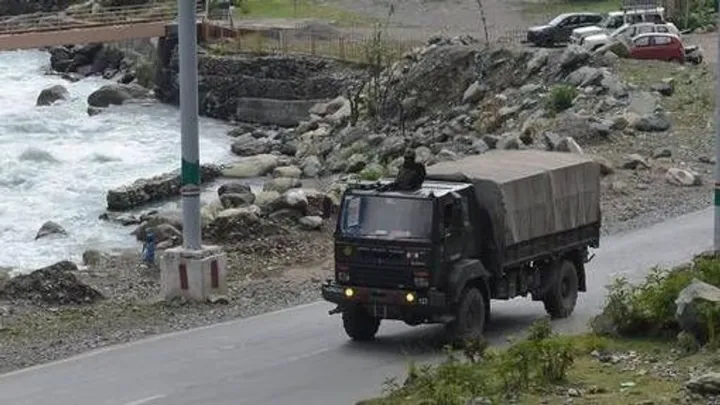
Nestled between India, Pakistan and China, demands for political rights in Ladakh have intensified in recent years.
Without a legislature of its own, the local residents of the region, known as Ladakhis, soon began raising alarms over environmental degradation, unchecked industrialisation, and the erosion of tribal identity.
The protests are part of a larger movement in the federally governed region seeking statehood and constitutional provisions from the Indian government to gain autonomy over land and agriculture decisions.
Wangchuk became a vocal supporter of the demand to include Ladakh under the Sixth Schedule of the Indian Constitution, which grants special protections to tribal regions in the country.
In early 2023, he staged a five-day fast in sub-zero temperatures to highlight environmental concerns.
In early 2024, he led a 21-day hunger strike and organised the “Pashmina March”, a symbolic protest where locals walked hundreds of kilometres with their herds to highlight the threat to pastoral livelihoods.


Wangchuk and other leaders have called for statehood for Ladakh, a full restoration of democratic rights, and constitutional safeguards.
The Leh clashes and his arrest
On September 24, demonstrations in Leh escalated after protesters threw stones at officers trying to stop them from marching in the high-altitude town of Leh, demanding greater autonomy from the Indian government for the Himalayan territory.
Police fired bullets and tear gas and swung batons at demonstrators, killing four people and injuring dozens more, police and residents said.
The protests were sparked by a local group’s call for a strike after two residents collapsed while participating in a hunger strike with more than a dozen residents who were making statehood demands.
India’s Home Ministry said in a statement that police fired in “self-defence” and blamed the violence on “provocative speeches” by Wangchuk, who had led the hunger strike since September 10.
Wangchuk called off the strike after the clashes.
Shortly after the clashes, Wangchuk appealed for calm.
He told reporters that their movement was peaceful and that they did not want instability in Ladakh.
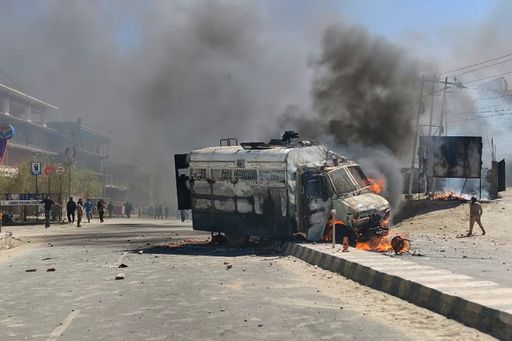
The violence was the deadliest civil unrest in the Ladakh region in decades and signalled residents’ growing frustration with Indian authorities over the self-rule issue.
Roughly half of Ladakh’s residents are Muslim, who are mainly concentrated in the Kargil district while around 40 percent are Buddhist, predominantly residing in the Leh district.
Two days later, on September 26, Wangchuk was arrested from his residence under the NSA, a law that allows preventive detention for up to a year without trial.
Authorities alleged that his “provocative speeches”, references to the Arab Spring-style movement and Gen Z protests in Nepal incited the unrest.
Wangchuk is an internationally renowned activist and, among other honours, has won the Ramon Magsaysay award, one of Asia’s highest humanitarian honours.
In the same week, India’s Ministry of Home Affairs cancelled the Foreign Contribution Regulation Act (FCRA) license of SECMOL, cutting off the NGO’s access to foreign donations.
Wangchuk’s arrest has sparked an outpouring of support from civil society, academics, environmentalists, and opposition leaders.

Activists compared his detention to the jailing of tribal rights defenders in central India.
They called Wangchuk a national asset, not a national threat and decried that to criminalise peaceful protest is to criminalise democracy itself.
International environmental groups, too, have spoken up.
With Wangchuk behind bars and Ladakh under heightened security, the movement faces uncertainty.
The government insists it is open to dialogue, but only within constitutional bounds.
Protesters say nothing short of statehood and Sixth Schedule protections will do.
For now, Ladakh waits.